


 Heine Beautiful Day, my dear
Born at the very end of the 18th century (1797) in Düsseldorf, Christian-Johann-Heinrich Heine is an innovative German poet. Committed artist, he was a friend of Karl Marx. Heine chose to exile in Paris where he died in 1856. At the Montparnasse cemetery, his tomb was desecrated by the Nazis nearly a century later …
A Discussed Writer
More than a century after his death, Heine remains a controversial writer, especially in his own country. Without being denied talent, his person is often questioned and his name excites debates. Author of lieder, and among the most popular in German-speaking countries, it would seem that he should thus escape controversy; but his lyrical work also has large satirical parts whose features carry and awaken ancient wounds. (Encyclopedia Universalis)
Henrich Heine is considered both as the ‘last poet of Romanticism’ and as the one who overcame him. Heine elevated common language to the rank of a poetic language, cultural rubric and travel narrative to the rank of an artistic genre and gave German literature an elegance and lightness hitherto unknown. (Wikipedia)
Having failed as a playwright and novelist, Heine discovered, with the travel account, a flexible form, capable of withstanding all digressions and all variations, and he knew, with exceptional virtuosity, to mix prose and verses, reverie and mockery, the good words and the suddenly revealing insights. Also, he was a journalist throughout his life, mainly in Paris where he came after the July Revolution.
See this excerpt from a travel story that has all the makings of a prose poem.
Beautiful Day
We will have a beautiful day, my travel companion shouted at me from the back of the car. Yes, we will have a beautiful day! whispered my heart, and it leaped with tender melancholy and joy. Yes, it will be a beautiful day, the sun of freedom will warm the earth with more happiness than all this aristocracy of stars. A new generation will bloom, born from freely consented kisses—and no longer from a servile layer under the control of the Church’s customs officers.
Men will be born free, and with this freedom they will also acquire free thoughts and feelings, of which we, who are born slaves, have not the slightest idea… Oh! how difficult it will be for them to imagine how awful the night we lived, and what a horrible fight we had to sustain against hideous spectres, obtuse owls and criminal tartuffs! Unfortunate fighters that we who have spent our entire lives in this fight, we find ourselves tired and pale when the day of victory shines! The flame of the rising sun will not be enough to color our cheeks or to put some warmth in our hearts; we must die like this moon that sets.
I don’t know if I deserve to have a laurel crown placed on my coffin one day. Poetry, whatever my love for it may have been, has never been for me anything but a sacred toy or the instrument of heavenly ends. I have never attached great importance to the glory of the poet and it doesn’t matter to me whether my songs are praised or blamed. It’s a sword that you will place on my coffin, because I was a brave soldier of the war for the liberation of humanity. ~~ Heine, Excerpt from Travel Images.
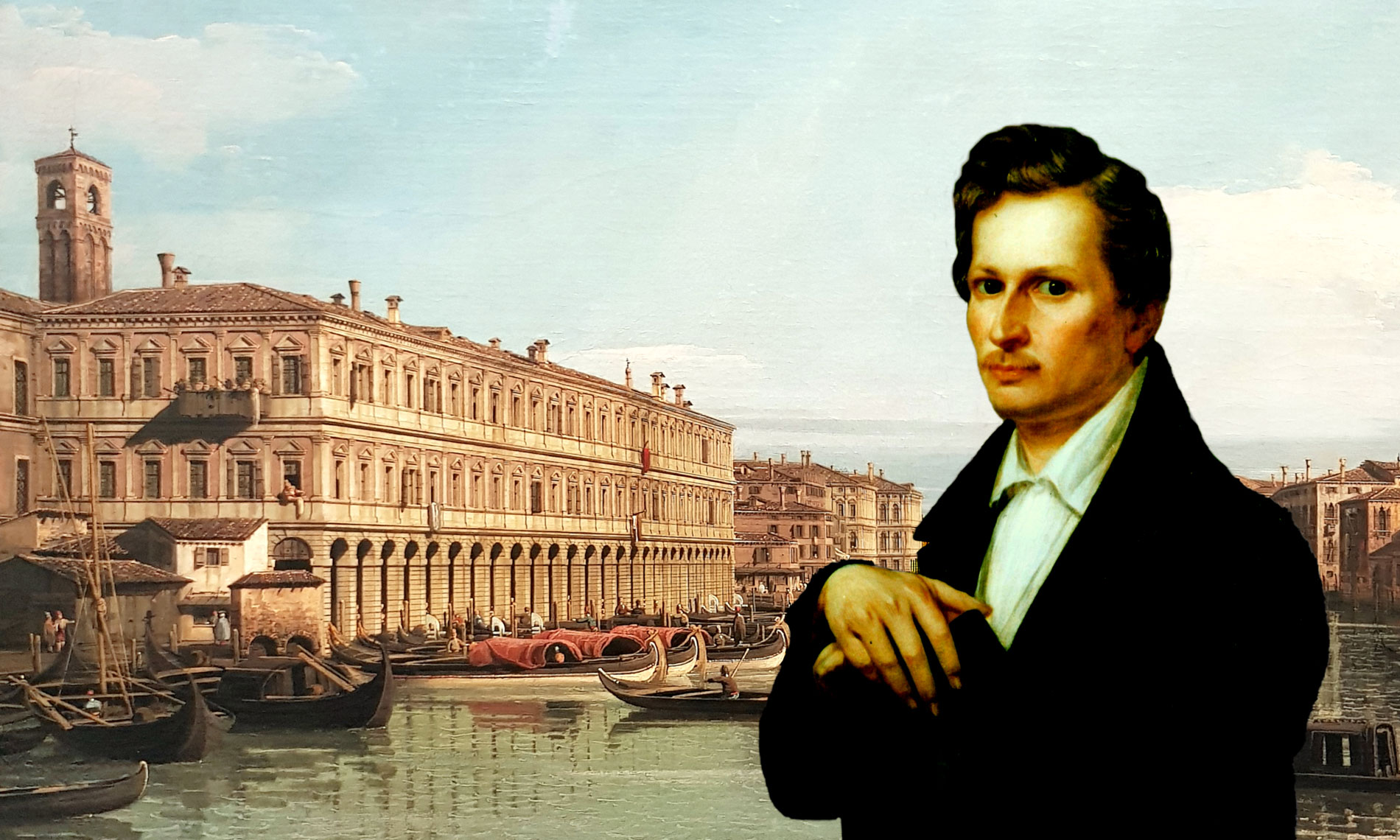
In Göttingen
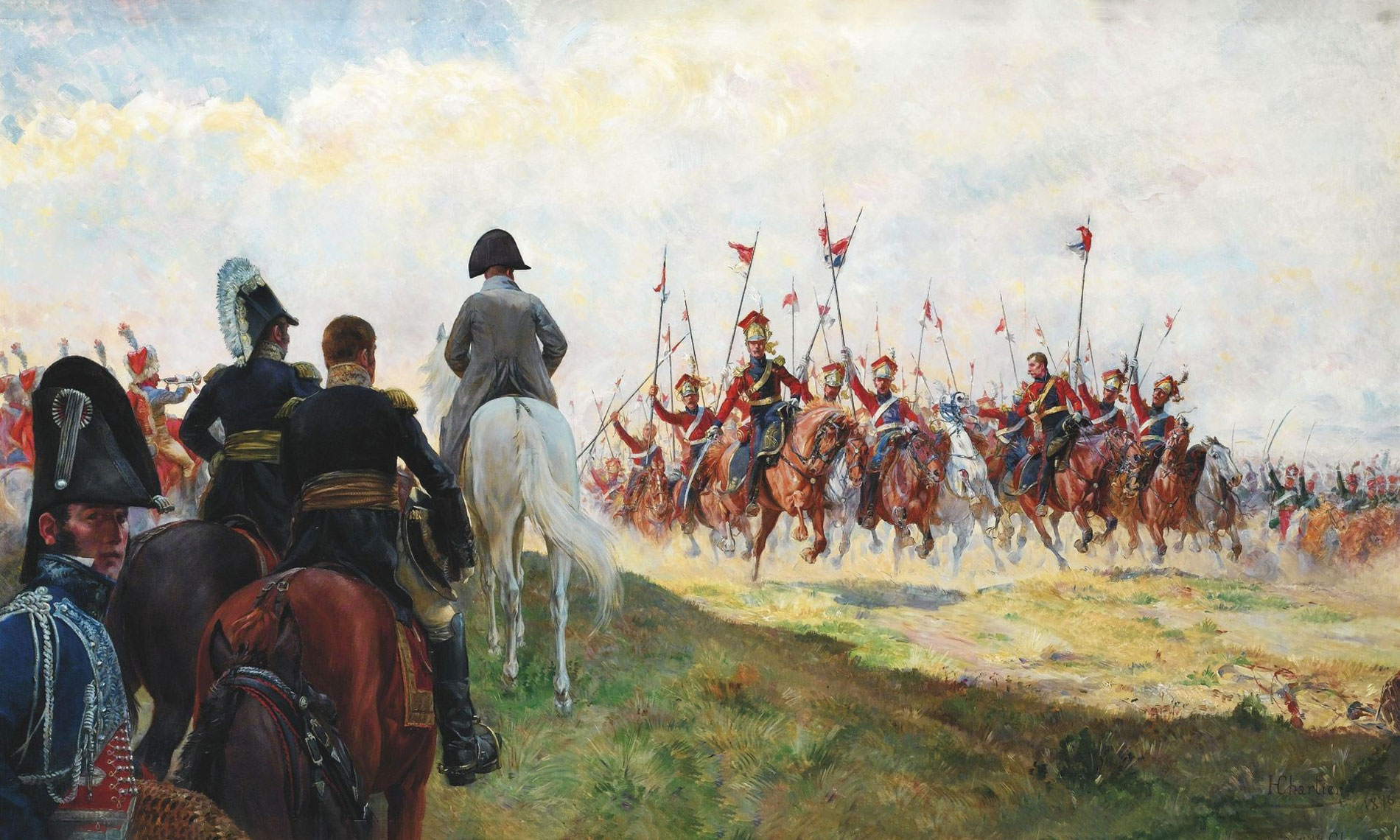
 In 1811, thirteen years old, Heine attends the entry of Napoleon into Dusseldorf. In 1806, King Maximilian I of Bavaria ceded his sovereignty over the Duchy of Berg to the Emperor of the French.
In 1815 and 1816 Heine worked first as an intern at the French banker Rindskoppf. It was in the Judengasse (Jewish street) of Frankfurt that he discovered the existence of oppressed Jews in the ghettos, a life that had until then remained foreign to him.
During his high school education, Harry Heine had already tried poetry. Since 1815 he has been writing regularly. In 1817, for the first time, poems by him were published in the journal Hamburgs Wächter.
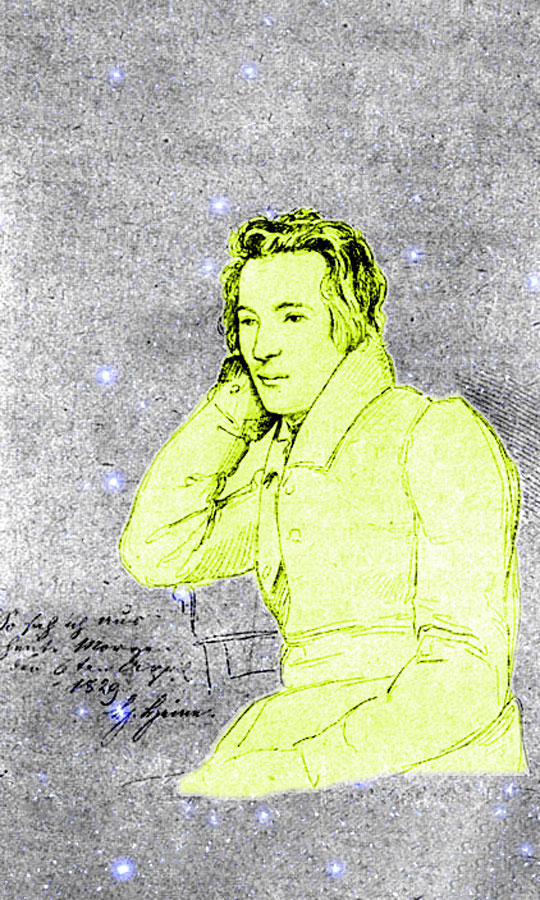
During the winter semester of 1820 he attended the university of Göttingen, which he had to leave, however, after only a few months, following a duel case
In 1821, at Göttingen, he became a member of the Corps Guestphalia. A few years later, with much sarcasm and irony, he writes in The Journey to the Harz, about Göttingen:
“The inhabitants of Göttingen are divided into students, professors, philistines and cattle, four states between which the lines of demarcation are very marked. The state of livestock is the most widespread.
Reporting here the names of all the students and all the ordinary and extraordinary professors would be too long; moreover, at present, I do not remember the names of all the students, and among the professors, some have no name at all.
The quantity of philistines from Göttingen must be very great, like sand, or, to say better, like the mud of the seashore.
To tell the truth, when I saw them every morning with their dirty faces and their large notebooks to fill out, planted in front of the door of the academic holy of holies, I had difficulty understanding how God could have created so many such great canailles.”
~~Heinrich Heine, Reisebilder, Travel Tableaux
 The Platen Case
In 1829, a literary dispute pitted him against the poet August von Platen, which degenerated into personal confrontation.
Heine sees it as a campaign to derail his application for the professorship at the University of Munich.
“When, first of all, the priests attacked me in Munich and went after the Jew in Heine, I did nothing but laugh: I considered this maneuver as a simple folly.
But when I had discovered the system, when I saw the ridiculous ghost gradually become a vampire, when I penetrated the intention of satirizing Platen, then I girded up my loins, and hit as dru, as quickly as possible.”
~~Heinrich Heine, Unpublished correspondence
Indeed, when Heine was attacked on his Jewish origins, Platen wrote: «I would not want to be his little darling, because his kisses secrete a scent of garlic.»
Hence the allusion by Heine who sees the ridiculous ghost gradually becoming a vampire.
Before the climate became frankly antisemitic, Heine had the unfortunate idea to be baptized. Which only fueled the criticism…
“I repent very much for having been baptized; I do not see that, from then on, things have turned out better for me: on the contrary, I have had, since then, only misfortune.” ~~Heinrich Heine, Unpublished correspondence
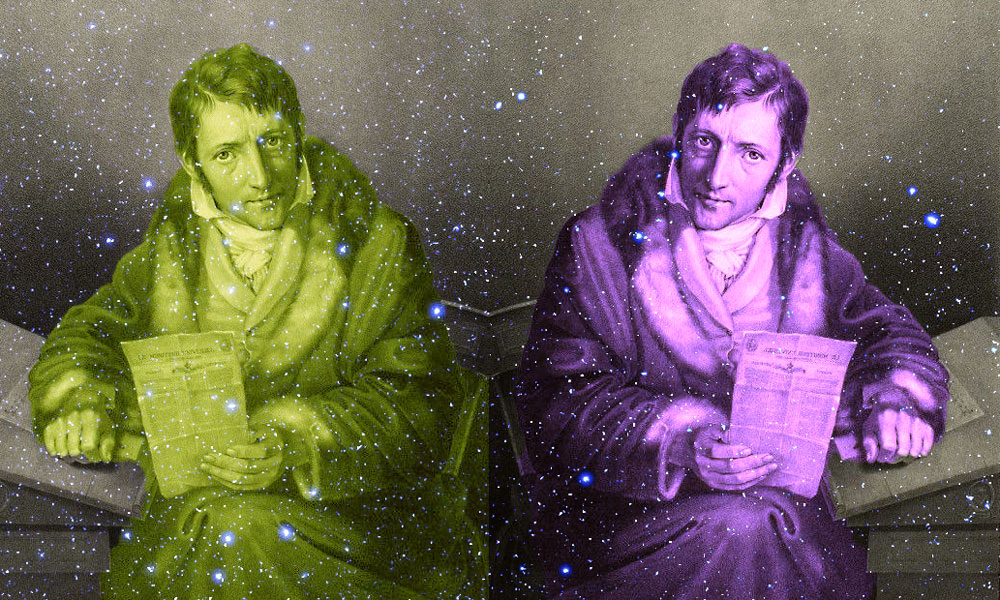 Carl Ludwig Börne, (1786-1837) German writer considered as the leader of the movement of Young Germany.
Börne and Heine
Carl Ludwig Börne, born on May 6, 1786 in Frankfurt am Main, died February 12, 1837 in Paris, was a German writer, journalist and literary and theater critic. He is considered the leader of the Young Germany movement.
Attracted to Paris by the events of 1830, Börne settled there and became the spokesman for the democrats in exile. Also exiled, Heine will describe his passionate but dogmatic ardour as ‘the sans-culottism of thought‘.
Later, Heinrich Heine will do the same and join in Paris his eldest of eleven years. Börne and Heine being both German Jewish writers turned away in Paris, we quickly put them in the same bag. They are both affected by the ban imposed on writers from Young Germany.
Very close if not by age, they seem interchangeable in the spirit of the time, hence their common condemnation. This similarity becomes a dangerous confusion. They oppose each other more and more strongly and become enemy brothers.
By standing out from Börne, it was his own identity that Heine had to define by inscribing in his book the central themes of his work. The book on Börne is a fragment of intellectual autobiography.
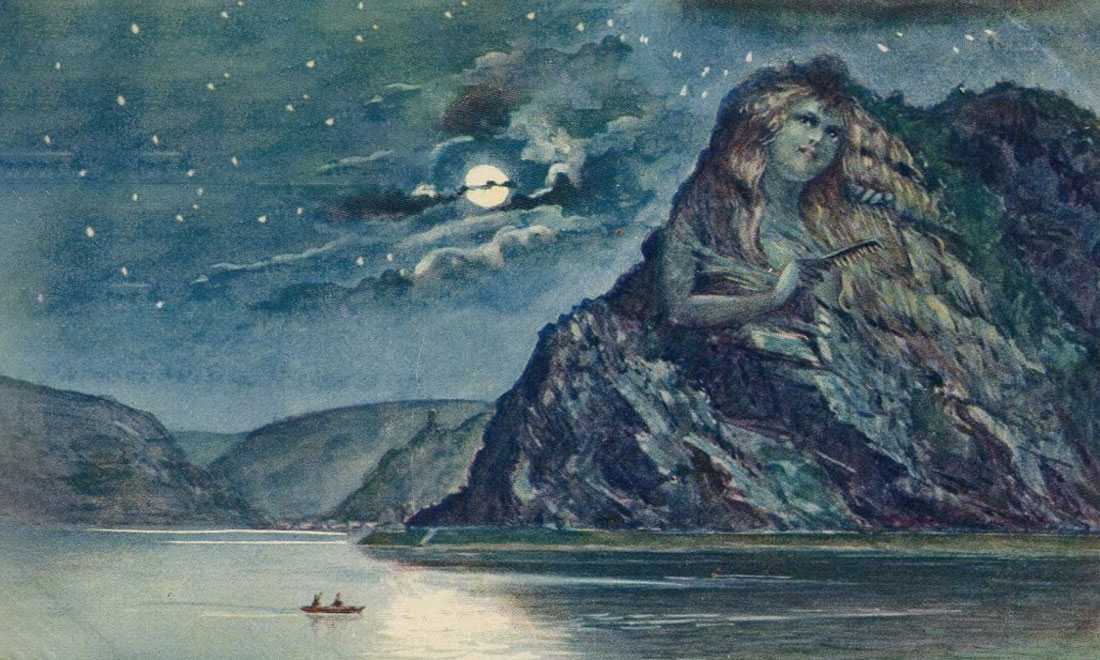
Heine, die Lorelei
Few works by German-speaking poets have been so often translated and set to music as his. Critical and politically engaged journalist, essayist, satirist and polemicist, Heine was as much admired as feared. His Jewish origins as well as his political choices earned him hostility and ostracism. This role of marginal marked his life, his writings and the eventful history of the reception of his work.
“The city of Düsseldorf is very beautiful, and when in the distance one thinks of it and by chance was born there, one feels quite funny. I was born there, and in those cases I think I have to go home right away. And when I say go home, I mean the Bolkerstrasse and the house where I was born…” ~~ Heinrich Heine, 1827, in Idées, Le livre de Le Grand
His masterpiece Die Lorelei is one of the most famous German poems. Often set to music, it finds here its most frequent melody; there, the more dreamy of Liszt; and there, more dramatic, that of Clara Schumann.
Here is first the English version by Richard Stokes. You will find the original in German further on.
The Loreley
That I should feel so sad;
There is a tale from olden times
I cannot get out of my mind.
The air is cool, and twilight falls,
And the Rhine flows quietly by;
The summit of the mountains glitters
In the evening sun.
The fairest maiden is sitting
In wondrous beauty up there,
Her golden jewels are sparkling,
She combs her golden hair.
She combs it with a golden comb
And sings a song the while;
It has an awe-inspiring,
Powerful melody.
It seizes the boatman in his skiff
With wildly aching pain;
He does not see the rocky reefs,
He only looks up to the heights.
I think at last the waves swallow
The boatman and his boat;
And that, with her singing,
The Loreley has done.
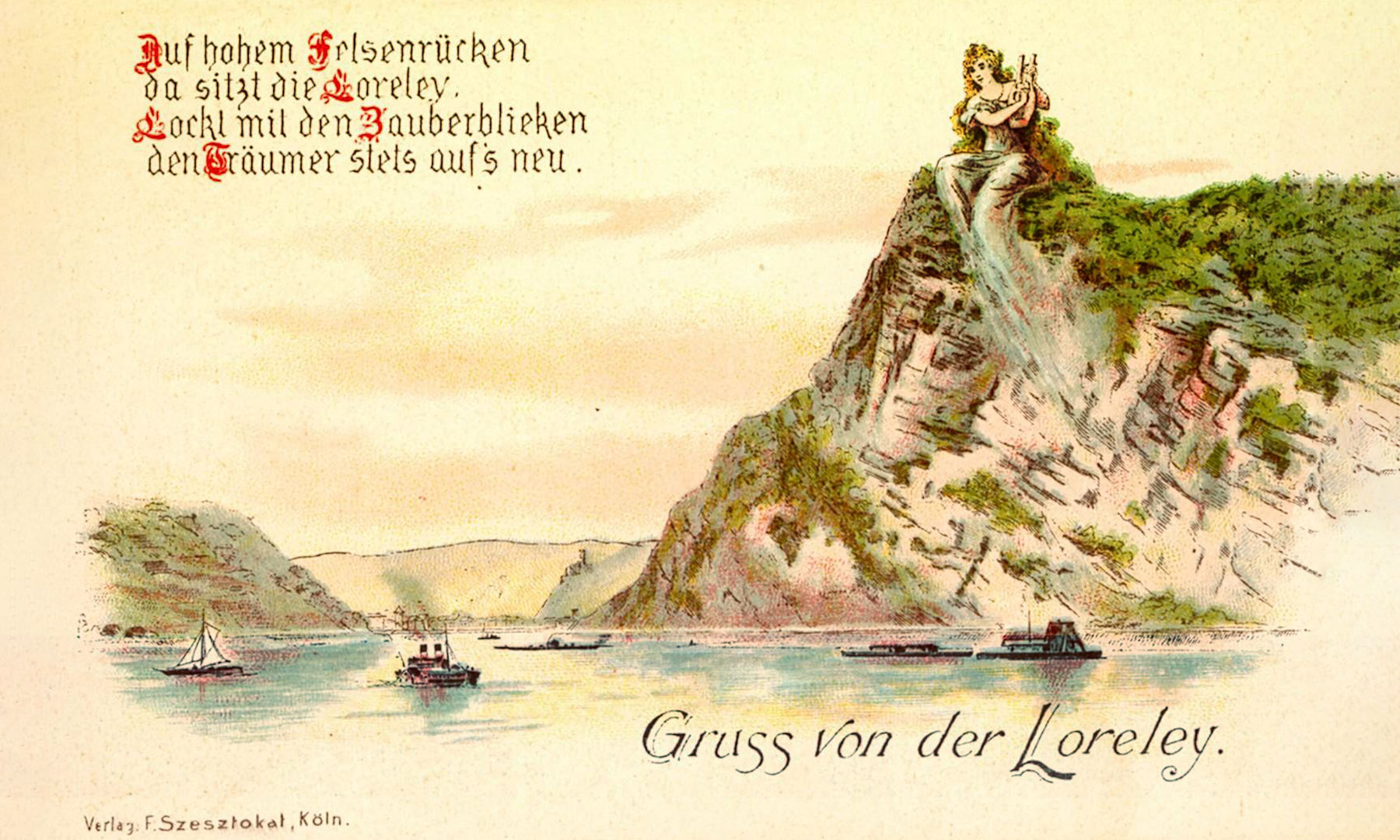
Die Lorelei
Heinrich Heine
Ich weiß nicht, was soll es bedeuten,
Daß ich so traurig bin,
Ein Märchen aus uralten Zeiten,
Das kommt mir nicht aus dem Sinn.
Die Luft ist kühl und es dunkelt,
Und ruhig fließt der Rhein;
Der Gipfel des Berges funkelt,
Im Abendsonnenschein.
Die schönste Jungfrau sitzet
Dort oben wunderbar,
Ihr gold’nes Geschmeide blitzet,
Sie kämmt ihr goldenes Haar,
Sie kämmt es mit goldenem Kamme,
Und singt ein Lied dabei;
Das hat eine wundersame,
Gewalt’ge Melodei.
Den Schiffer im kleinen Schiffe,
Ergreift es mit wildem Weh;
Er schaut nicht die Felsenriffe,
Er schaut nur hinauf in die Höh’.
Ich glaube, die Wellen verschlingen
Am Ende Schiffer und Kahn,
Und das hat mit ihrem Singen,
Die Loreley getan.
(in Das Buch der Lieder, 1827)
Forever Poets
 Alain Souchon dit La Souche, par Iks24