


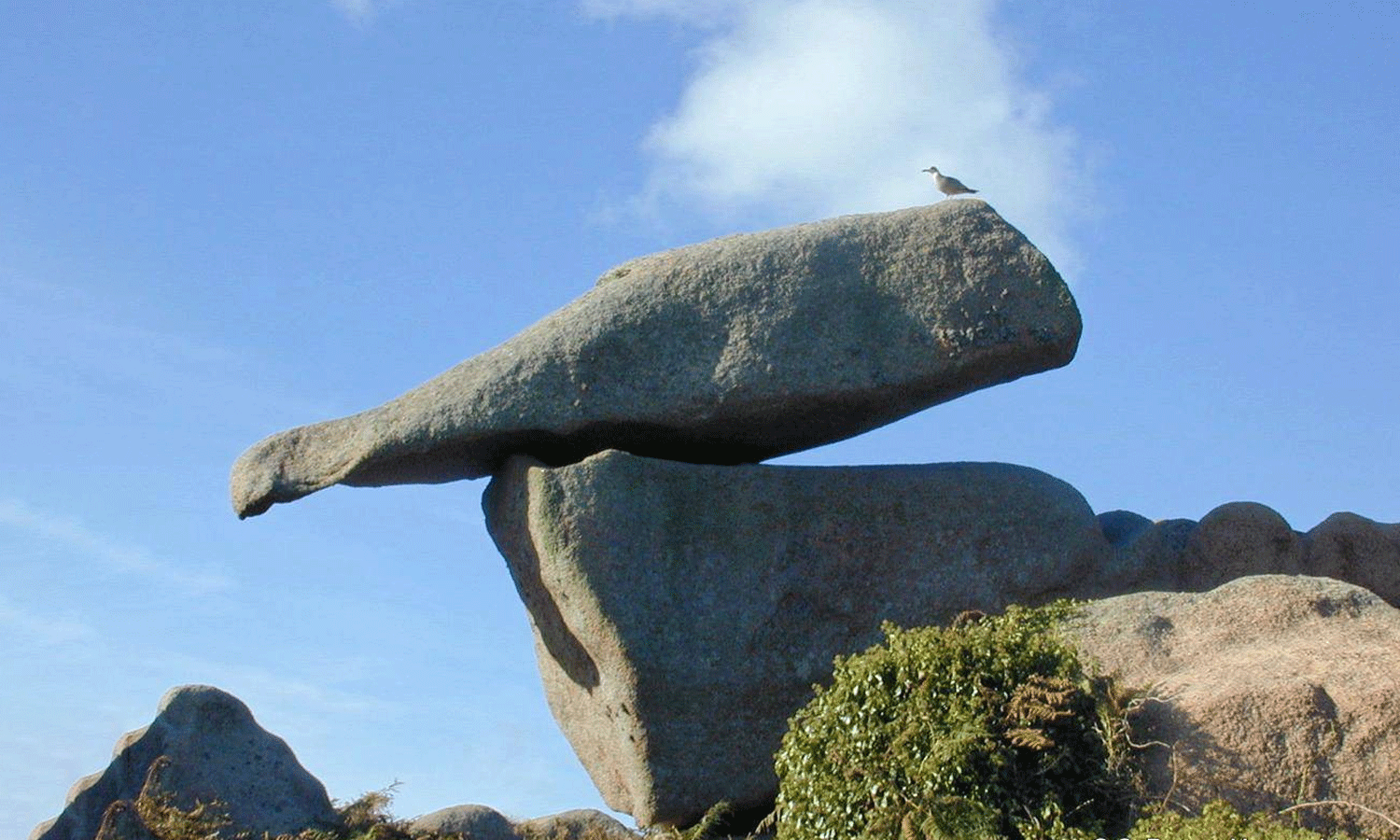
If the pink granite coastsee below also has its bestiary of stone, the Fontainebleau forest contains some very strange rocks with such forms you’d swear that nature had fun reproduce humans or animals, especially animals. And many other places worldwide offer the same show …
Artifacts?
Robert Charroux drew surprising conclusions: these stone bestiaries would be the laboratories where nature developed animal forms.
Through a bold prosopopoeia, Charroux lends to nature a human behavior, too human which discredits his pretty thesis. A touch of freshness in this world of brute? Or one hell of a dose of naivety?
Charroux is one of the first authors I read in this field. He has published many books in the collection J’ai Lu with a black cover. There are many puzzles to discover, but the solutions he offers are sometimes, let’s say, a bit fast… He is one of those I call dreamers of reality.
Some would gladly classify me, but they would be mistaken: for me, what they take for reality is the dream. Our life is a dream, like time, like space, like matter. But let’s stay with the unexplained rocks…
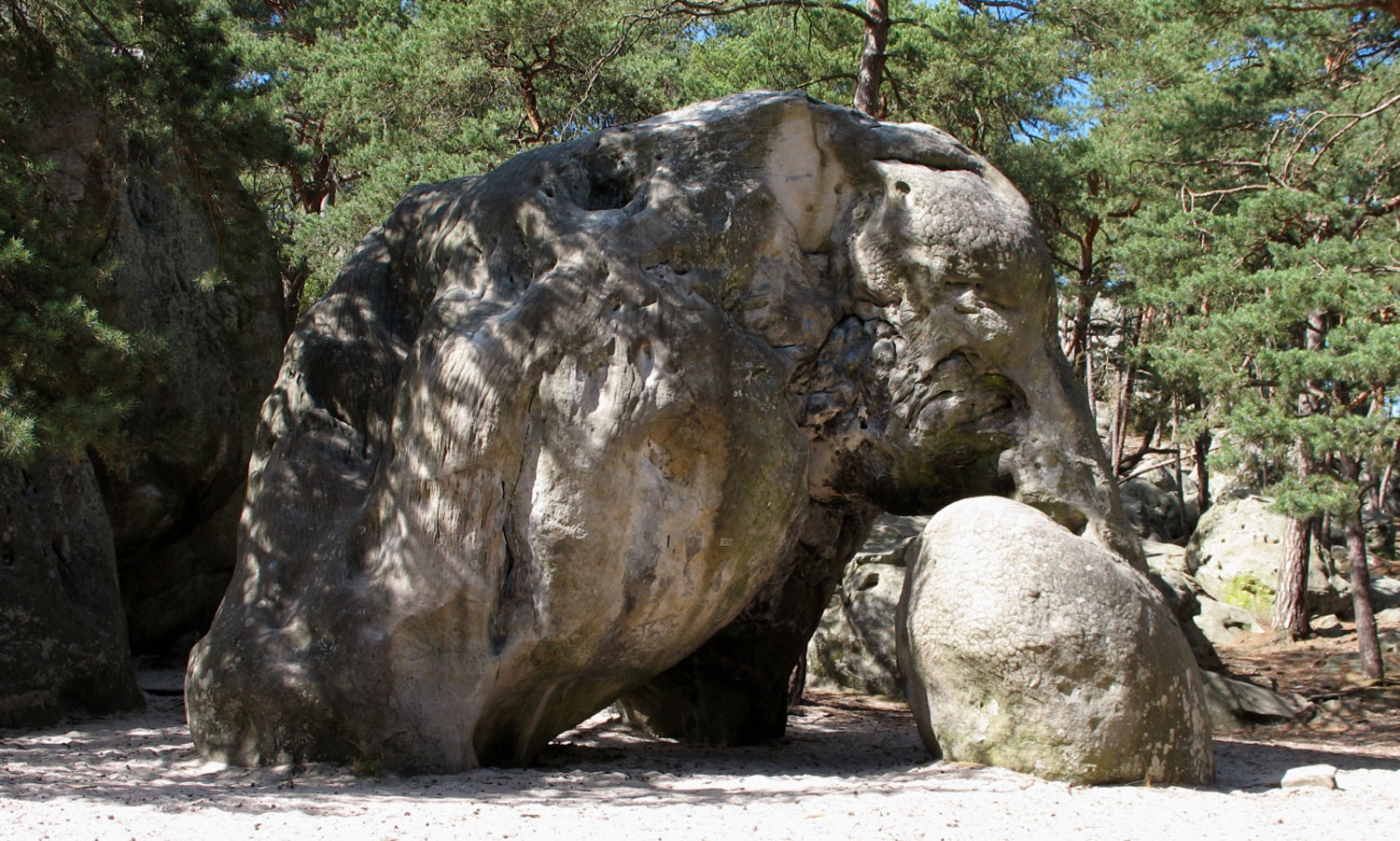 Fontainebleau forest, France
Without going so far as to make nature a sculptor artist, one can still wonder if these animal forms are really natural. Or if someone wouldn’t have helped nature a little. This someone, a giant in love with the big stones of the whole world, undoubtedly belonged to the megalithic civilization.
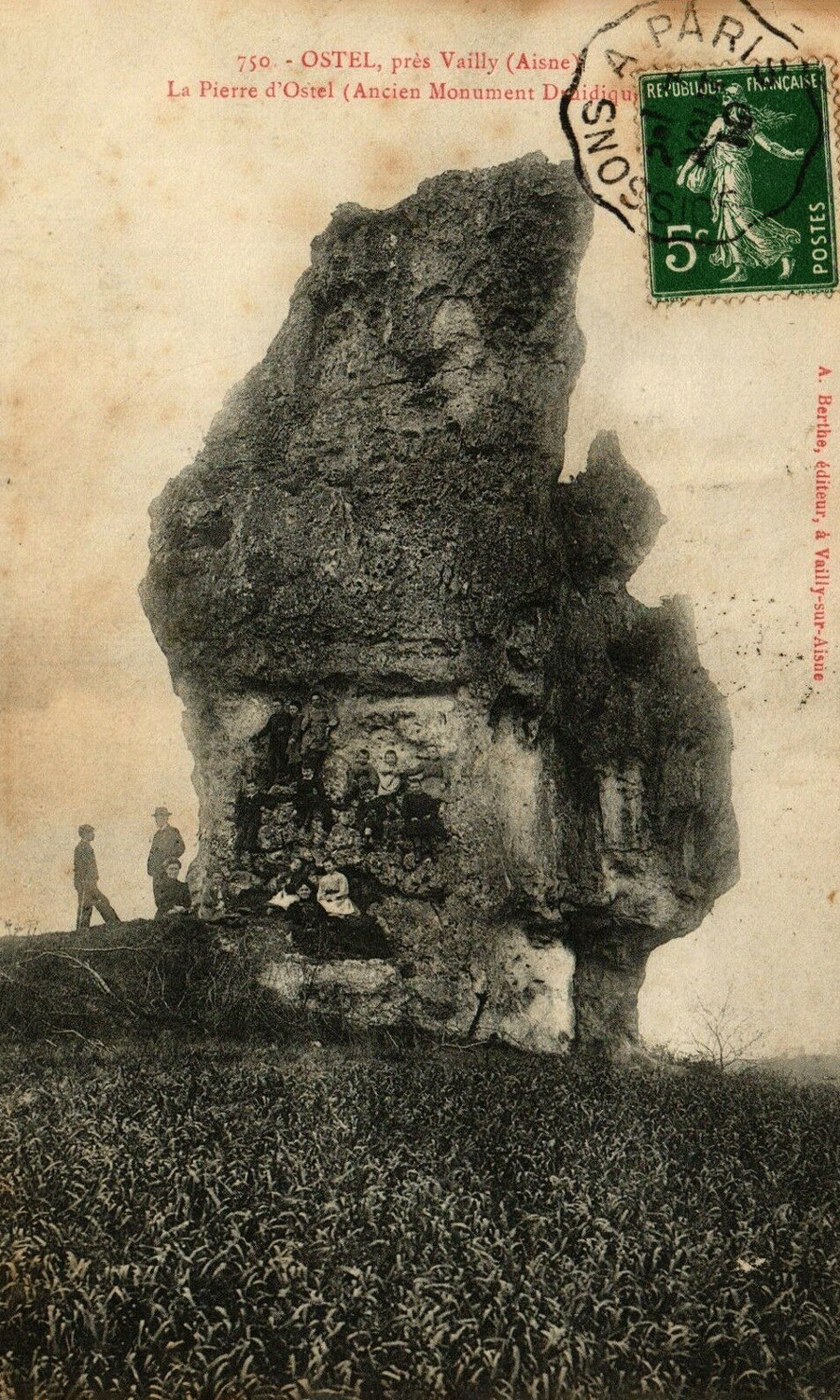 He didn’t carve all those rocks without help, nor without tools. A rock fusion technology, like these modern tunnelers…
See opposite the Pierre d’Ostel, in Aisne (France). On the vintage postcard, one can read “ancient druidic monument“see below… It was then believed that these strange stones had once been used for rituals, which is very likely.
This civilization of the megaliths could show us again on many chapters. Still, it would be necessary to admit its existence.
The traces she left us are trivialized, antedated or simply ignored, like these stones yet eloquent. It is an ancient stone-working technique that respects the lines of life.
No dolmen, no menhir is squared or polished. The raw aspect of the megaliths testifies to the deep respect for nature that animated their authors.
They were not artists, in the current sense of the term. Like the misnamed negro art, these non-works are not art, they belong to the sacred, spiritual register, forbidden to laymen. Nature has a good back, really.
In any case, for me, the matter is clear: these are indeed artifacts, manufactured products. I chase the natural, will it return at a gallop?
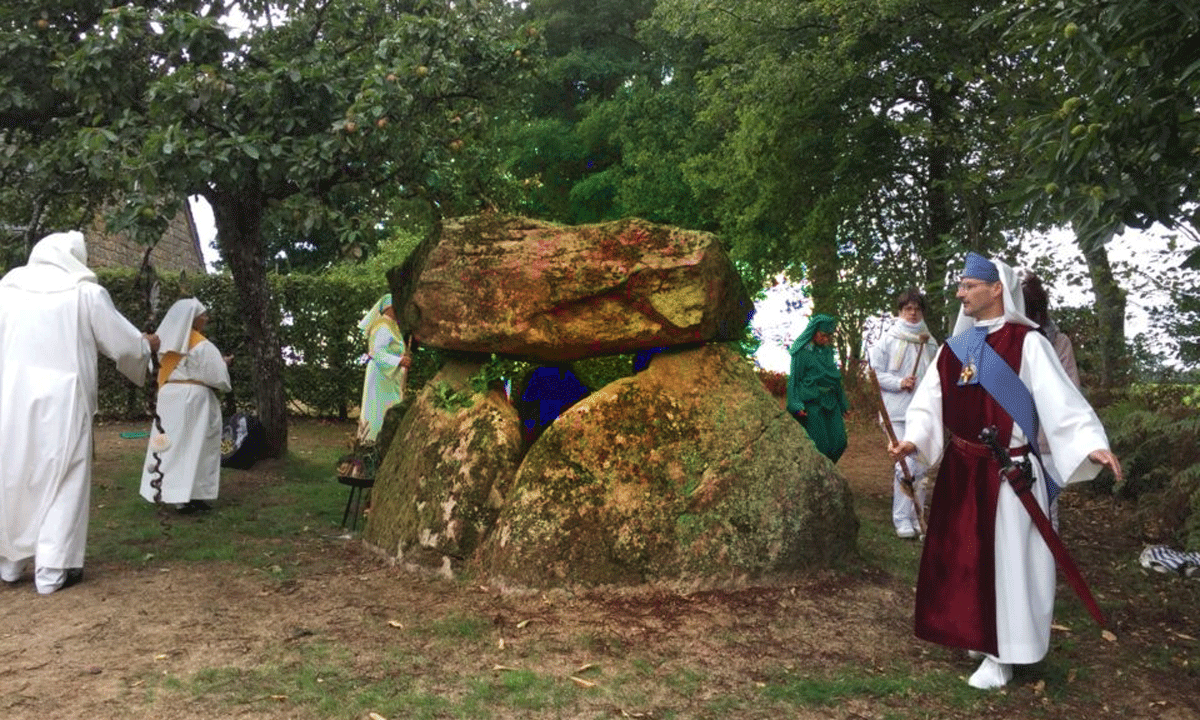 Cérémonie “Druidic” ceremony near Vire, Normandie
If the Druids and Druidesses of ancient times played a role that no priest, pastor or rabbi could assume, today’s druids are caricatures. Children who dress up to play pretend.
Ploumanac’h, Brittany
The magnificent rounded rocks of the Pink Granite Coast, in Brittany, have been our comodel for thousands of years. the rounded forms so harmonious, their often monumental size and especially their staggering number in such a small perimeter raise many questions, without providing any satisfactory answer.
Why these rocks carved only here? Pink granite is not rare in Brittany. But the sea has deigned to work only these. One is entitled to wonder why.
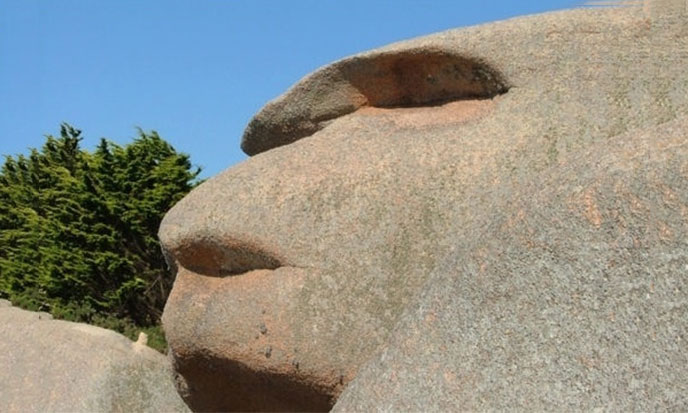
Above the Gorilla’s rock. They don’t all have a name, some have several, others none.
The pink granite coast stretches for twenty kilometers from Perros Guirec to Ploumanac’h, in the Côtes d’Armor. But it is especially the four kilometers of Ploumanac’h that bring together a maximum of monumental scluptures. At the top of the article is one of these pink granite rocks.
When you are there, it is often difficult to imagine the real size of these sculpted granite massifs. In the photo below, I slipped into one of them to give you the real scale of the mastodont.
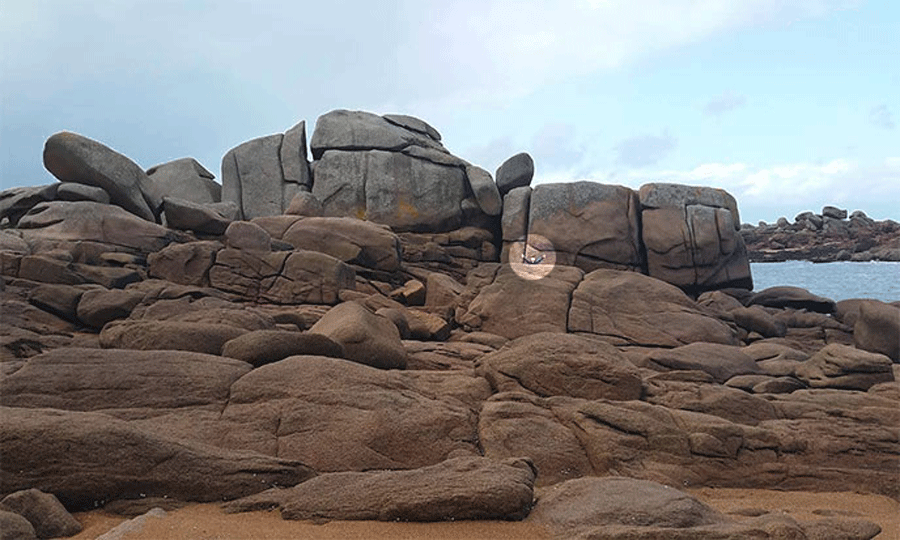 The Mastodont, Ploumanac’h
If I hadn’t surrounded myself with a clearer circle, you wouldn’t have even noticed me… Nothing replaces a visit. Not even these magnificent photos that are only there to make you want to come and see for yourself. You will not be disappointed.
These monumental sculptures will leave you breathless. They are all magnificent, impressive, incredible. Just like the one that follows, the famous Otter Rock.
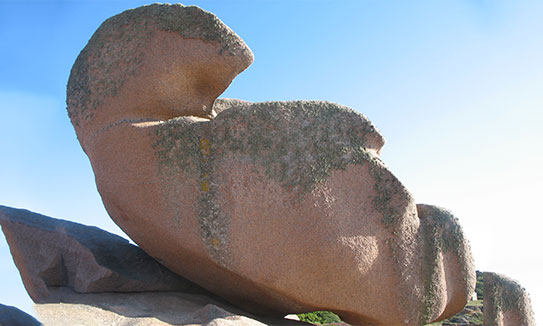 Otter Rock, Ploumanac’h
Ar Manac’h
In Breton, plou manac’h translates as the parish of the monk. Because the monk, ar manac’h, was an essential person for daily life — especially thanks to the precious book he brought once a year and which contained agricultural advice, tide times and a thousand other indispensable indications. This book was named after him, the almanach, book of the monk…
The child reads the almanac near his egg basket.
And, apart from the Saints and the weather it will be,
she can contemplate the beautiful signs of the heavens:
Goat, Bull, Ram, Fish, and coetera.
So, can she believe, little peasant,
that above her, in the constellations,
there are markets, similar with donkeys,
bulls, rams, goats, fish.
It’s probably the Sky market that she reads.
And, when the page turns at the sign of the Scales,
she tells herself that in heaven as at the grocery store
one weighs the coffee, the salt, and the consciences.
(Francis Jammes)
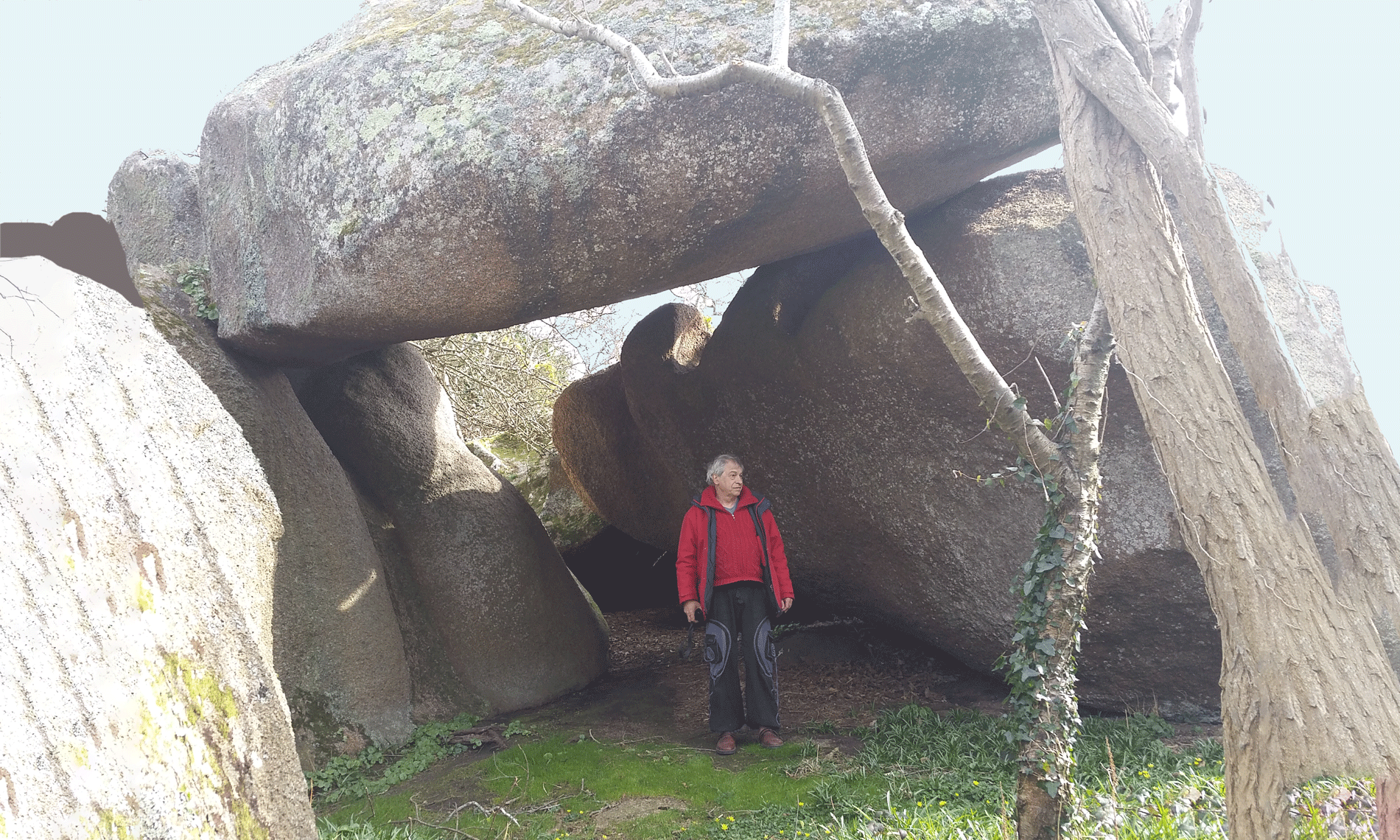
Here I placed under a dolmen everything that is natural. It is the sea that carried this rock to gently place it on two providential supports… Yes, here as elsewhere, all the strange rocks of the world are exclusively the work of nature.
But there are many others… Go see them, you will tell me about them. And on your way, stop at my place in Erquy, the most beautiful borough of Europe. What do I say? From the world!!!
I stop here my bragging. I must close this review with the prodigious granite Shark Rock, which is also called Shark’s Head.
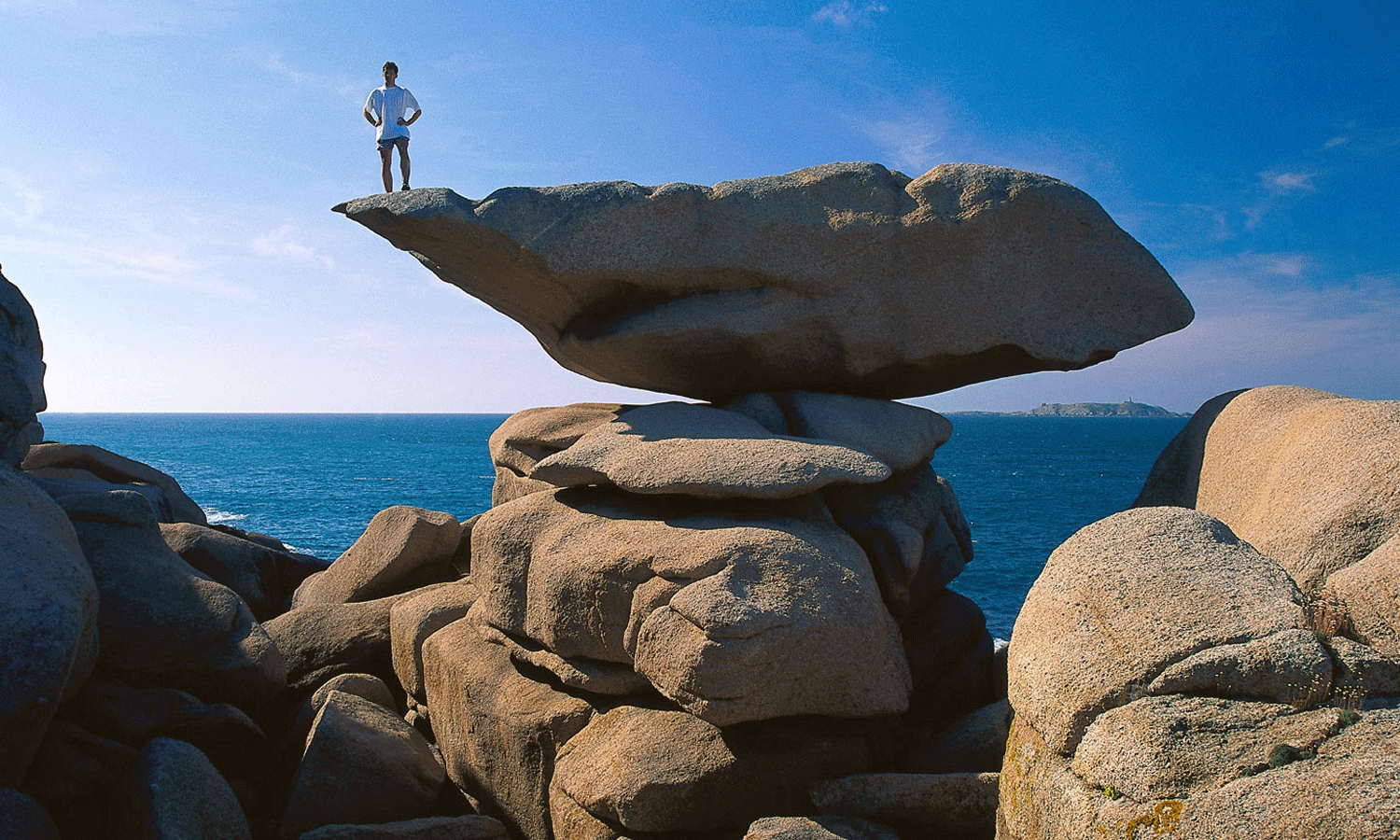 The Shark’s Head, Ploumanac’h
Ardeche
See below The Lovers Rock, Païolive Wood, Ardeche, Rhône-Alpes, France. This figurative rock is not unanimous on its subject, since it is also known as the Rock of the Bear and the Lion…
Nothing prevents one from thinking, given their embrace, that the Bear and the Lion were also lovers…
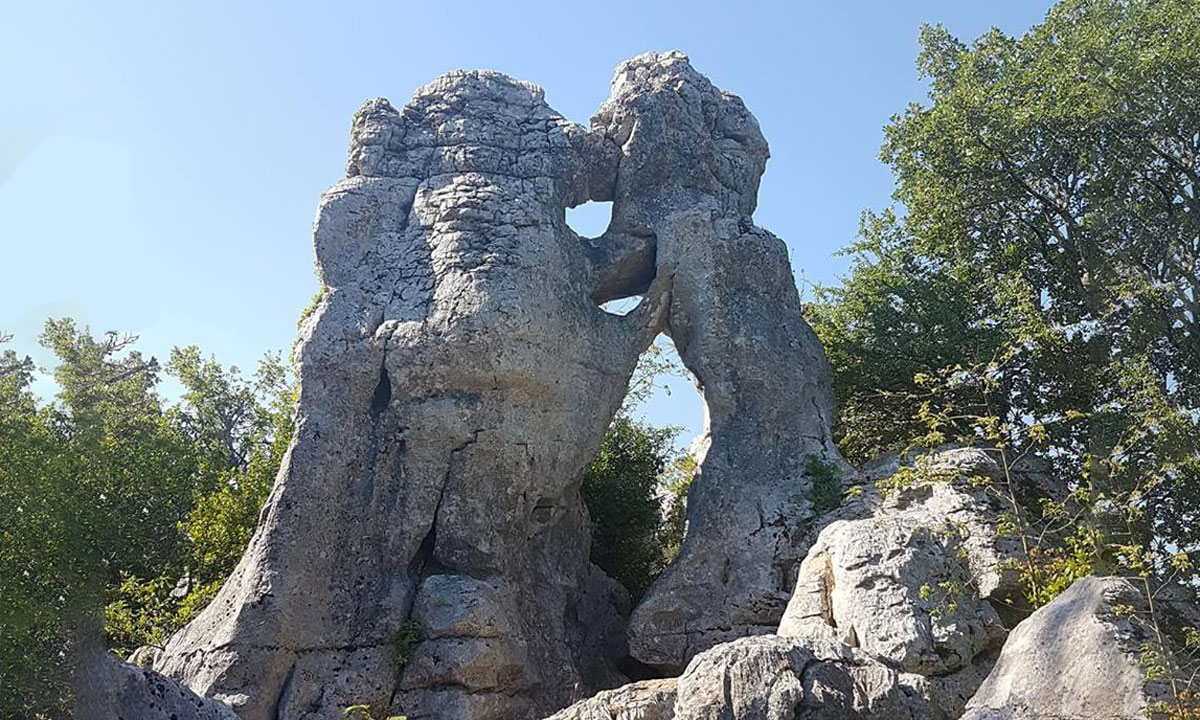
Païolive is an amazing sea of petrified rock and white oak that extends over more than 16 km near Les Vans.
The wood of Païolive forms a series of labyrinths, like certain hills of the Trois-Pignons forest in Milly-la-Forêt below.
In both cases, and in others, these labyrinths were created by erosion: it is the geologists who affirm it, one must believe them. But I admit having trouble…
And always the same question comes back:
why the erosion here and not everywhere?
Why these ‘natural phenomena’
are so localized?
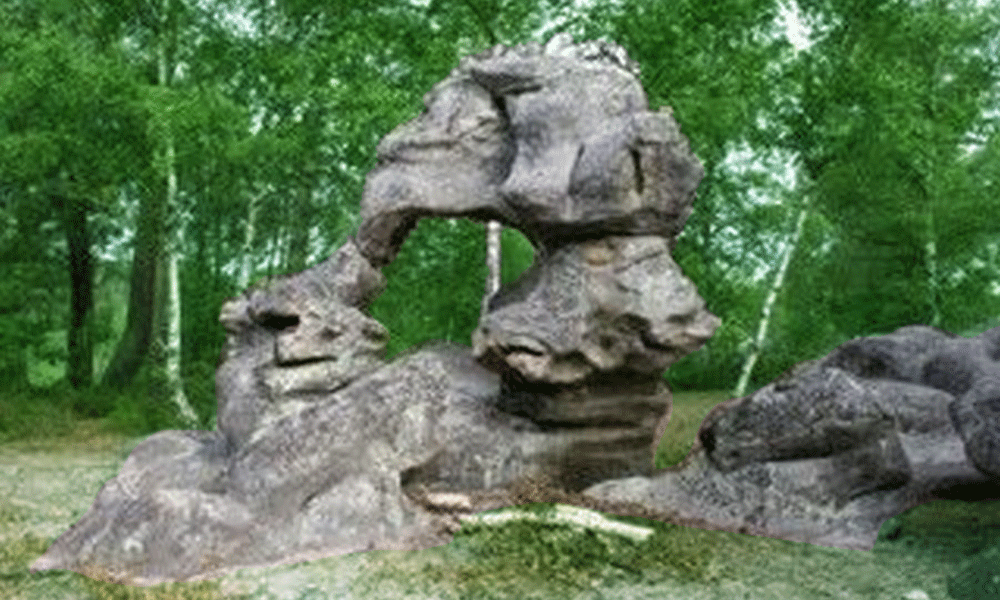 Forêt des Trois-Pignons, Milly la Forêt
Païolive is a mineral and vegetable ocean that contains natural or so-called such sculptures. A curiosity of nature, the fauna and flora are exceptional.
The region has been inhabited by man since the Upper Paleolithic, or even earlier, as evidenced by the famous cave paintings of Chauvet in Vallon Pont d’Arc. The Ardèche plateau has vast standing stones (dolmens menhirs), erected thousands of years ago.
Or maybe millions of years, who knows? Thus, would this or that dinosaur-shaped rock have been carved by an artist and megalo diplodocus? In any case, I have great difficulty seeing the work of nature there…
Was there a human lineage in those distant times to carve these animal forms? Giants maybe? Cyclops 50m high?
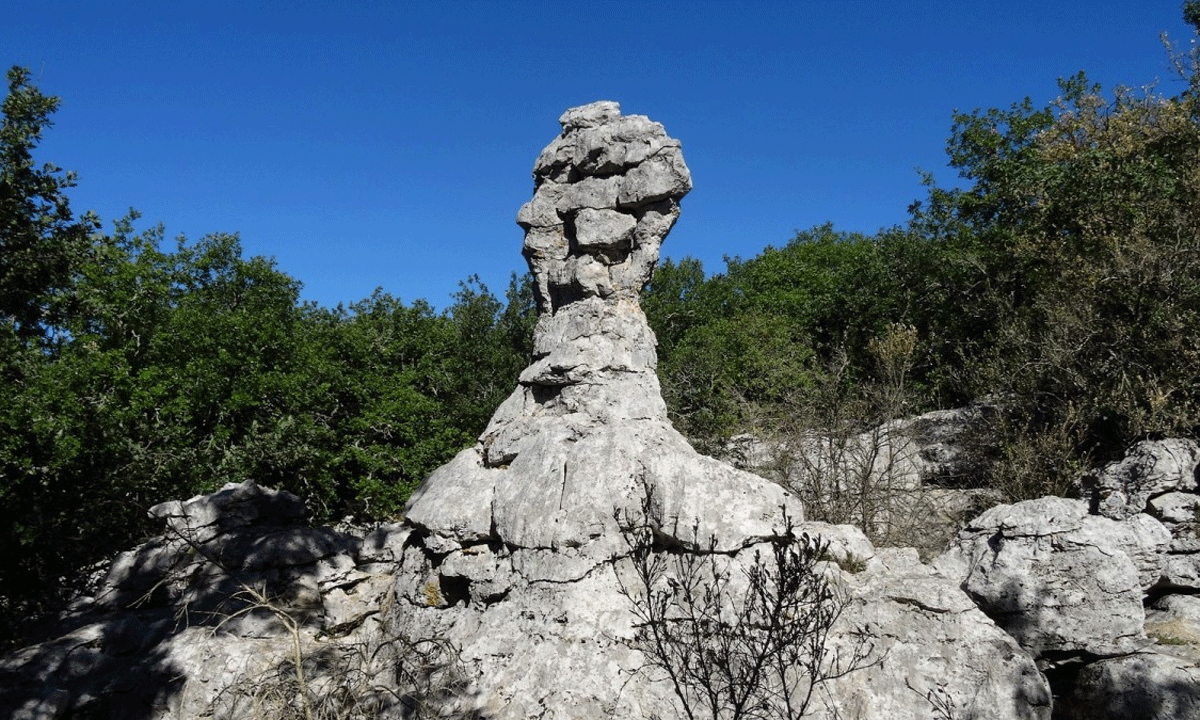 Païolive, the Tintin’s Head
In any case, the name of this rock does not date from prehistory…
Iceland
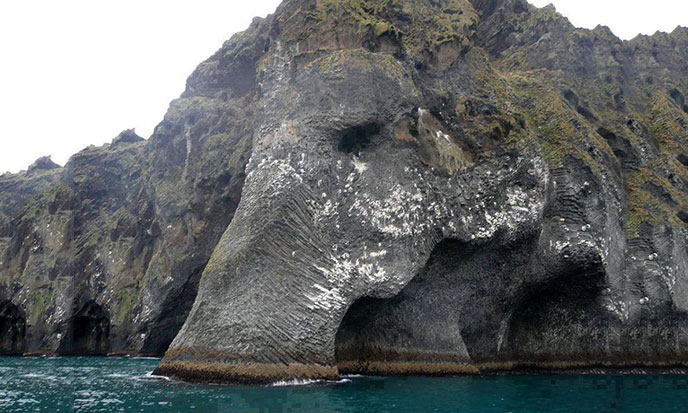
Land of Ice and Fire, Iceland has many rocks with distorted shapes, shaped by molten lava that solidified on contact with icy water. Some of these rocks are somehow troubling.
Here a monumental elephant head appears from the depths of time, a time that was not ours, but that of large animals and giants.
Sardinia
Strangely shaped rocks, are found on all continents. Which doesn’t mean they are natural. Giants were supposed to live worldwide. And they were natural too.
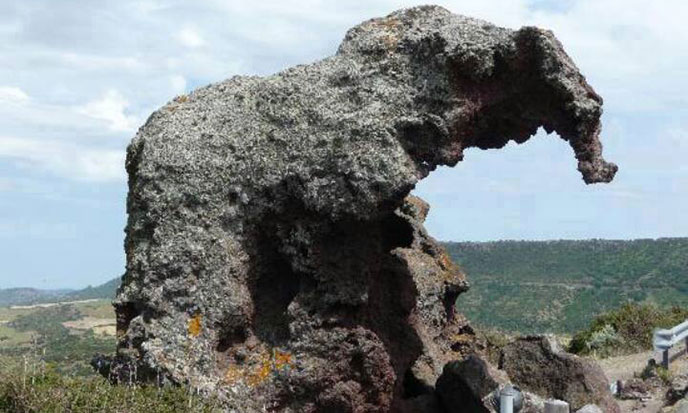
Still in Europe, the famous sculpted rocks of Sardinia, which has more of an archaeological wonder. Or geological?
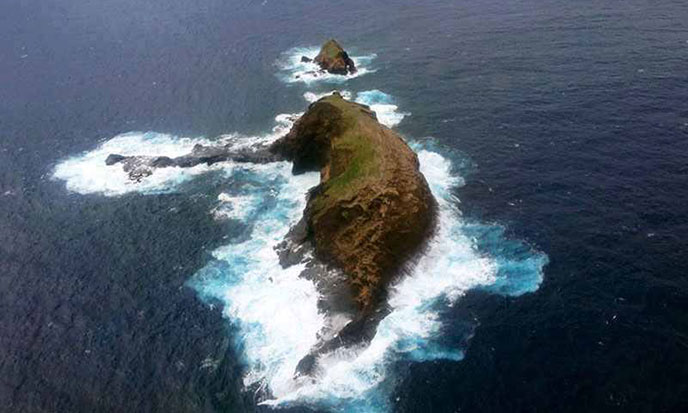
These rocks really seem to have been shaped by nature alone, like the rocks of Fontainebleau or those of Ploumanac’h. Their natural aspect, that’s what makes them so disturbing. But they are natural, protest strong spirits. Should we believe them? In general, one calls strong spirit someone who has none at all, and who sticks to what they have been told.
The rounded, languorous forms of rocks lapped by the waves of Ploumanac’h contrast with the splintered rocks that seem to have been cut with flint, such as those of Capo d’Orso in Sardinia, like the elephant immersed above.
New Zealand
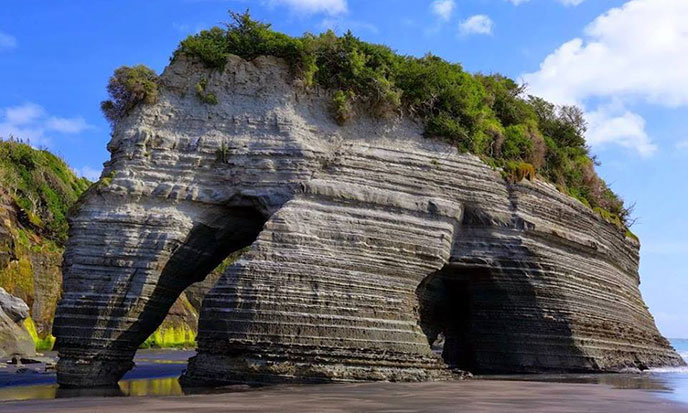
That’s a lot of elephants, I say. We can find -naturally- this powerful figure in many other rocks around the world. Here in New Zealand, an austal island that has never, to our knowledge, known living stock of elephants, apart from those in zoos.
Hawaii
Once again, I tell you! This one comes from Molokai, Hawaii, USA. But what is the buzz with these big beasts? Animals without tusks as you noticed.
Just the beginning of a tusk, in the shadows at the corner of the mouth. The realism of the imitation is too perfect to be attributed to the blind elements.
Otherwise we must admit that the wind, fire, ice, earthquake, landslide and all causes that contributed to this artwork are conscious entities as we are, and artists better than we are.
Anyway, if you have knowledge of a elephantine rock around you or in your walks, do not hesitate to send me a photo. How many are they on this planet?
Sahara
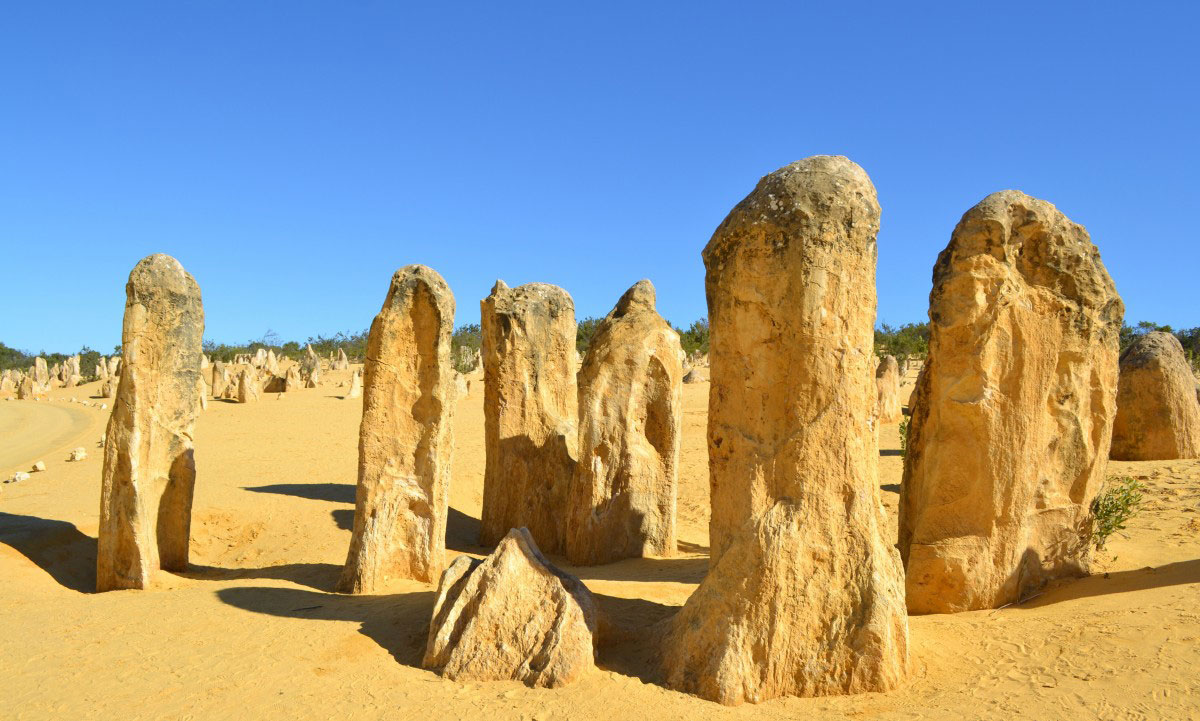
These sculptures can not be the work of chance, since it does not exist. Some rock formations, like the one below the Sahara are considered entirely natural. This does not preclude an unknown artist to have a little remodeling.
Peru
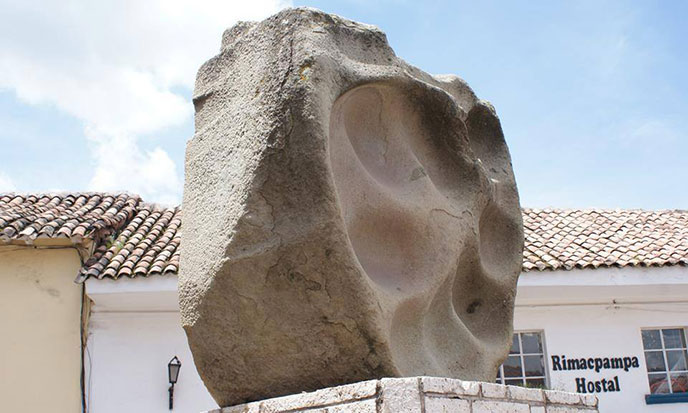
In megalithic wonderland, besides the gigantic blocks carved to perfection, we also find rocks that look natural, but do not have the song. Here it imposing block decorates the courtyard of a tourist hotel in Cuzco. There are cups and bowls in large numbers, the distribution affects a spiral shape.
Thailand
In Thailand, in the natural park of Phu Pha Toep, many bizarre rocks are the delight walkers. Despite the patter of geologists, it pays a lot to nature, I think.
To the extent that we now know that Civilization Pyramid was global, insofar as we found megaliths and Cyclopean walls on five continents, one wonders if these rocks are not a category that we dolmens had escaped so far.
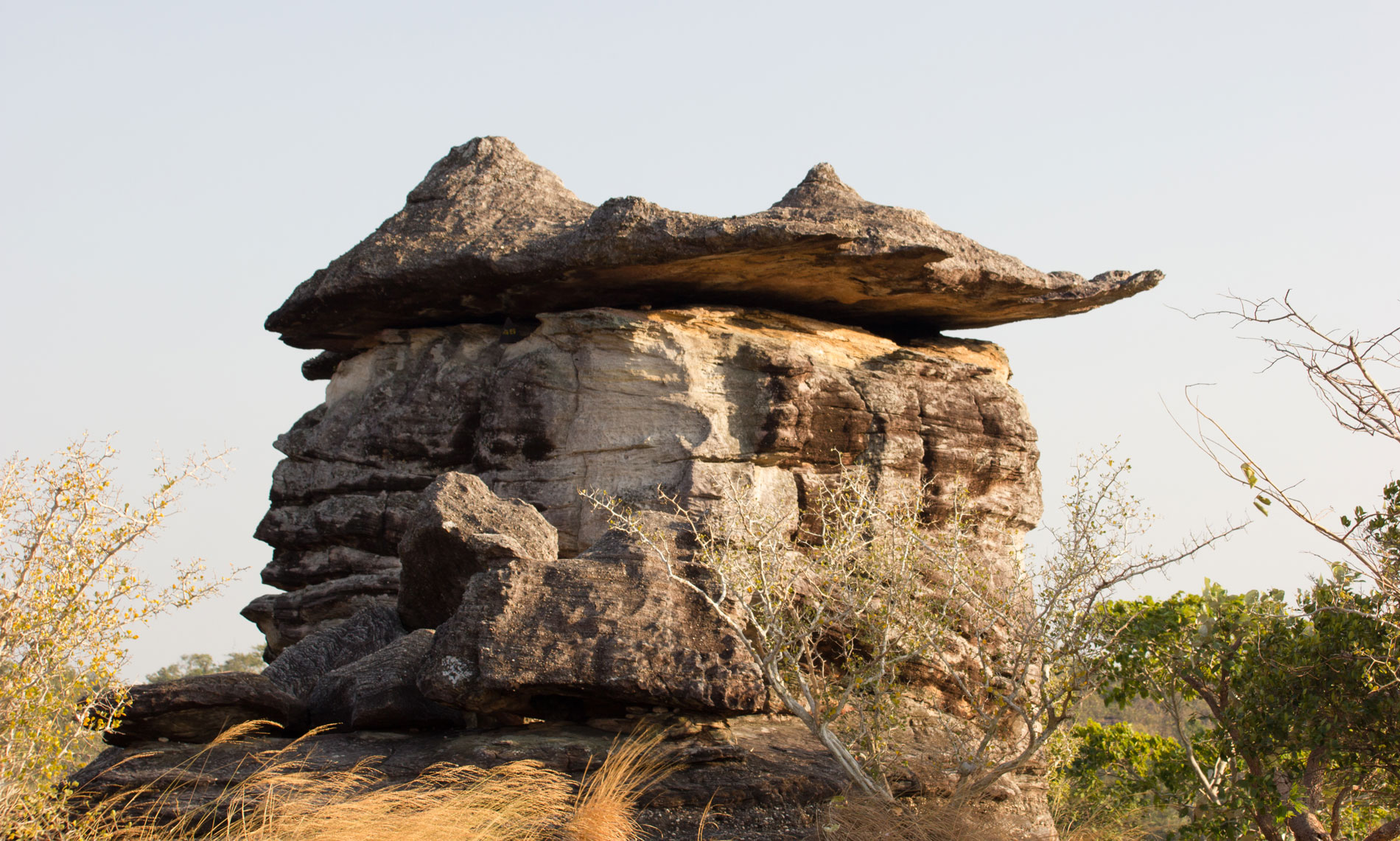 The Rock of the Pagoda at Phu-Pha-Toep
Insofar as we now know that the Civilization of the Pyramids was planetary, insofar as we have found megaliths and cyclopean walls on all five continents, one may wonder if these rocks are not a category of dolmens that had escaped us until now.
Seeing these astonishing wonders, we don’t know what to think. The uncertainty of their origin makes them all the more fascinating. Are they artifacts? Are they purely natural?
All stone lovers around the world are kindly asked to send me their photos of strange rocks, where they live, or elsewhere. If the photos are numerous enough, a new approach to megalithism will become possible thanks to you.
The Civilization of Pyramids
- Pyramids And Megaliths
- Pyramids of Europe and Africa
- Pyramids of America and Antarctica
- Pyramids of Asia
- Dolmens and Long Barrows
- Dolmens Were Not Tombs
- The Other Side of Stonehenge
- Uluru
- The Deep Mystery Of Stones
- Strange Rocks At Fontainebleau
- Spheric Boulders
- Soft Stones
- Flying Stones
New Archaelogy
- Bosnia: Pyramid Of The Sun
- Bosnia: Osmanagic Adventure
- Bosnia: Visoko Pyramids
- Bosnia: The Ravne Tunnel
- Teotihuacan Mercury
- Wiltshire Crop Circles
- Bermuda’s Triangle
- Devil’s Sea, Japan
- Many Mounts Thabor
- Altamira : High Vision
- The Altamira Case