


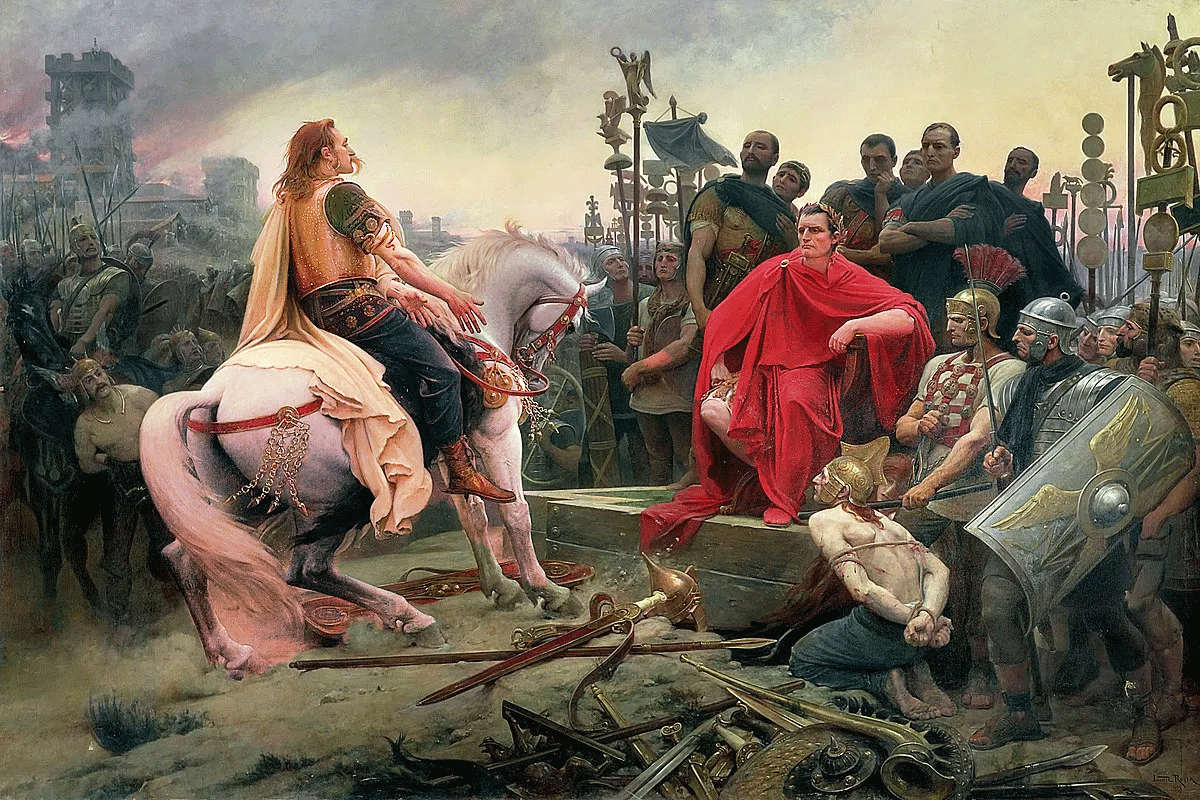
 Lionel Royer – Vercingetorix throwing down his arms at the feet of Julius Caesar
Between 58 and 52 BC, Julius Caesar conquered the Gauls, feat of arms supposed to ensure his glory and wealth against Crassus and Pompey. Caesar himself, as the conquest progressed, tells about the war to establish his reputation in Rome, in the De Bello Gallico. The beginning of the book opens with a very famous description of the peoples of Gaul. (National Library of France)
All of Gaul is divided into three parts, of which the Belgians inhabit one, the Aquitanians another, and in the third those who are called Celts in their language and Gauls in ours. All differ among themselves in language, institutions and laws.
The Garonne river separates the Gauls from the Aquitanians, and the Marne and the Seine the Gauls from the Belgians. The Belgians are the bravest of them all, because they are furthest removed from the culture and civilization of the Roman province of Narbonne. (Caesar, De Bello Gallico, I, 1)
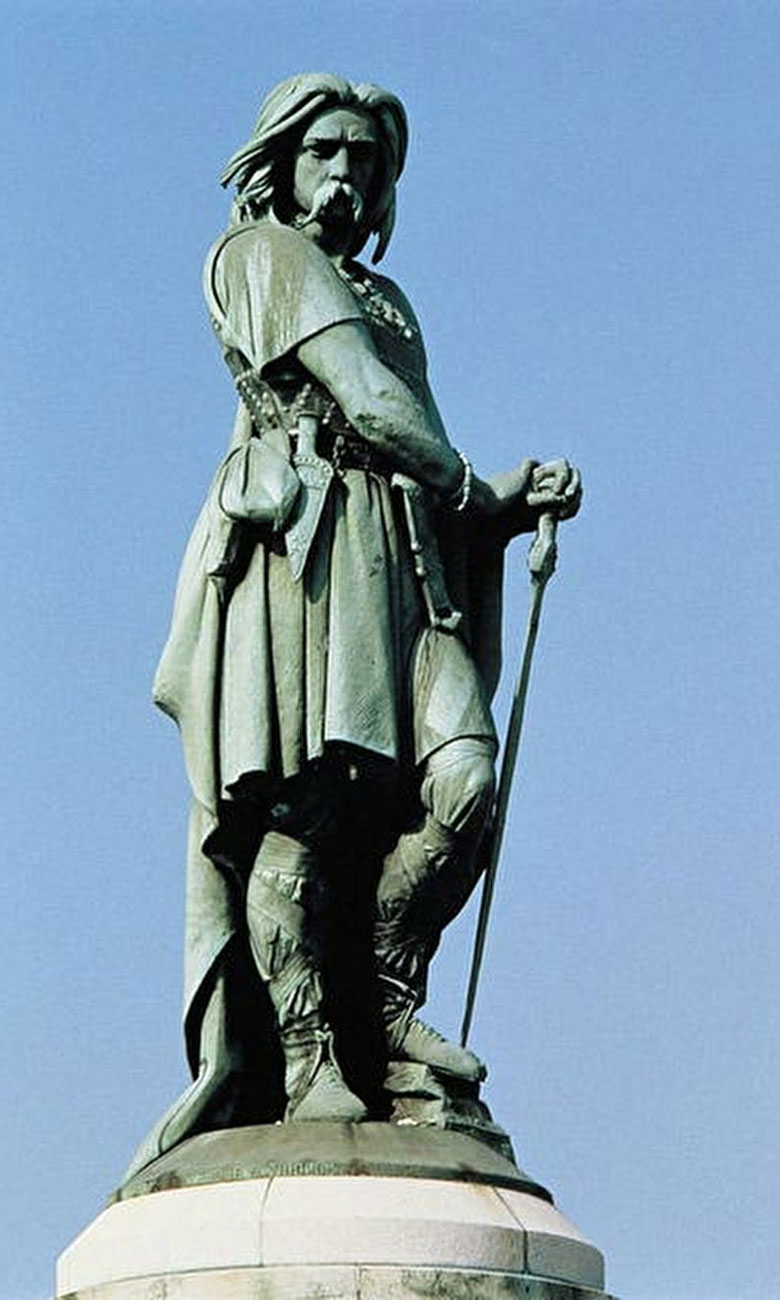 Vercingetorix of Auvergne
Vercingetorix, born around 82 BCE before the common era on Arvern territory, now Auvergne, and died in autumn 46 BCE before the common era in a prison in Rome, is the leader and king of the Celtic people of Arverns. It federates part of the Gaulish peoples as part of a revolt against the Roman forces during the last phase of the Gallic War of Julius Caesar.
The Arverni are one of the main Celtic peoples of independent Gaul, from the century BC to the Roman conquest. During the imperial era, they constituted the inhabitants of a Gallo-Roman city bearing their name (civitas arvenorum) and attached to the province of Gallia Aquita.
They occupied in Antiquity a territory corresponding to the region of Auvergne which also owes it its name. The most famous Arverni in history are the kings Luernos, Bituitos, his son, and Vercingetorix, son of Celtillos, who was one of Julius Caesar’s opponents during the Gallic War.
Caesar of Rome
Caesar was born in Rome in 100 EEC before the common era, into the family of the Julii, with modest means but of illustrious origin: these patricians claimed to be descended from Venus, which was not without advantages, because this goddess loved both galipettes and battles.
He followed solid studies that made him a perfect bilingual Latin-Greek, which allowed him to access an abundant military literature. Several official missions served him as a school of application. But, like all his kind, he had to wait a long time before coming to power and lived on credit until 59 BCE before the common era, when he received a command over Gaul. (National Geographic)
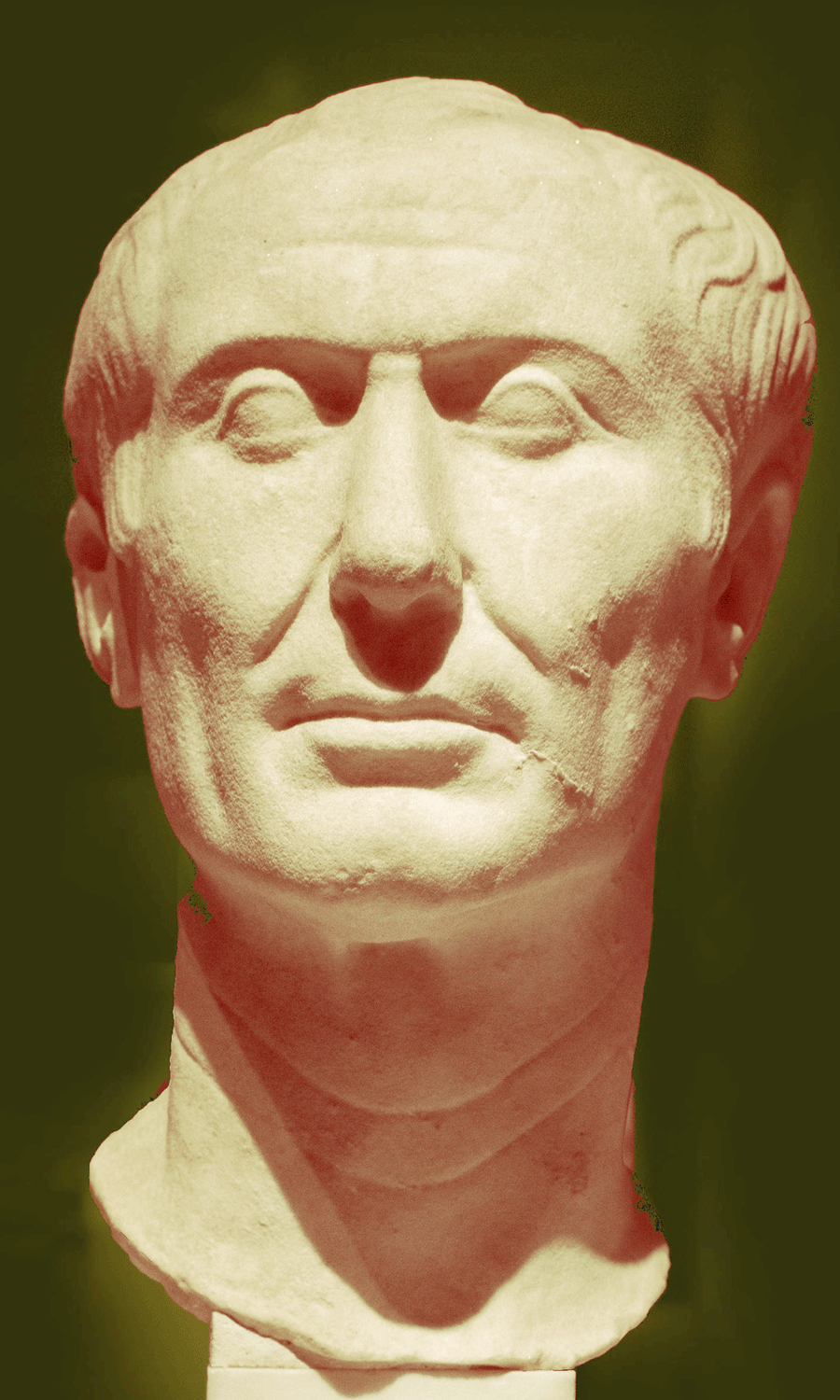 His real career therefore begins when he is 41 years old. Before, drowned in the mass of anonymous officers, he vegetated, waiting for his hour. But as soon as she came, he jumped on it with a craving made devouring by the years of waiting.
And his success will seal an exceptional destiny. He is in a first indecisive campaign, and the duties of politics remind him of Rome. Under penalty of losing the advantage of this war of conquest and being degraded, he must indeed prove to the Senate that Gaul deserves to become a Roman Province.
Indeed, until then, both Gaul and Egypt were cultural poles rich in a glorious past. All Roman citizens with a good level of studies had to stay there, even more than in Egypt, on the decline, conquered by Greece. The Roman Senate was therefore very shocked to see an unknown general decide alone on the course of action to be taken against Gaulish warriors furious at this intrusion and ready to fight.
When Caesar returns to Rome, his military fate is less than certain. He has made many powerful enemies, and his modest family background does not provide him with any protection. He begins alone a questionable fight with an uncertain outcome…
The common rumor that Caesar, occupied in Rome by party quarrels, would not return before a long time, the Gauls plan a new revolt. It is to this new war that the very long book VII is devoted. Vercingetorix, an Arverne, raises all his clientele and gathers the majority of the peoples of Gaul under his orders. Invested with supreme powers, he proves to be a rigorous and effective commander. The Gallic project to take Narbonne makes Caesar leave for the Province. (wikipédia)
The Roman Province in question is Narbonnaise, which has a strategic value because it connects Rome to the Iberian Peninsula, which will be Roman. In the end, all the white areas on this map of Europe were conquered and developed by the Romans.
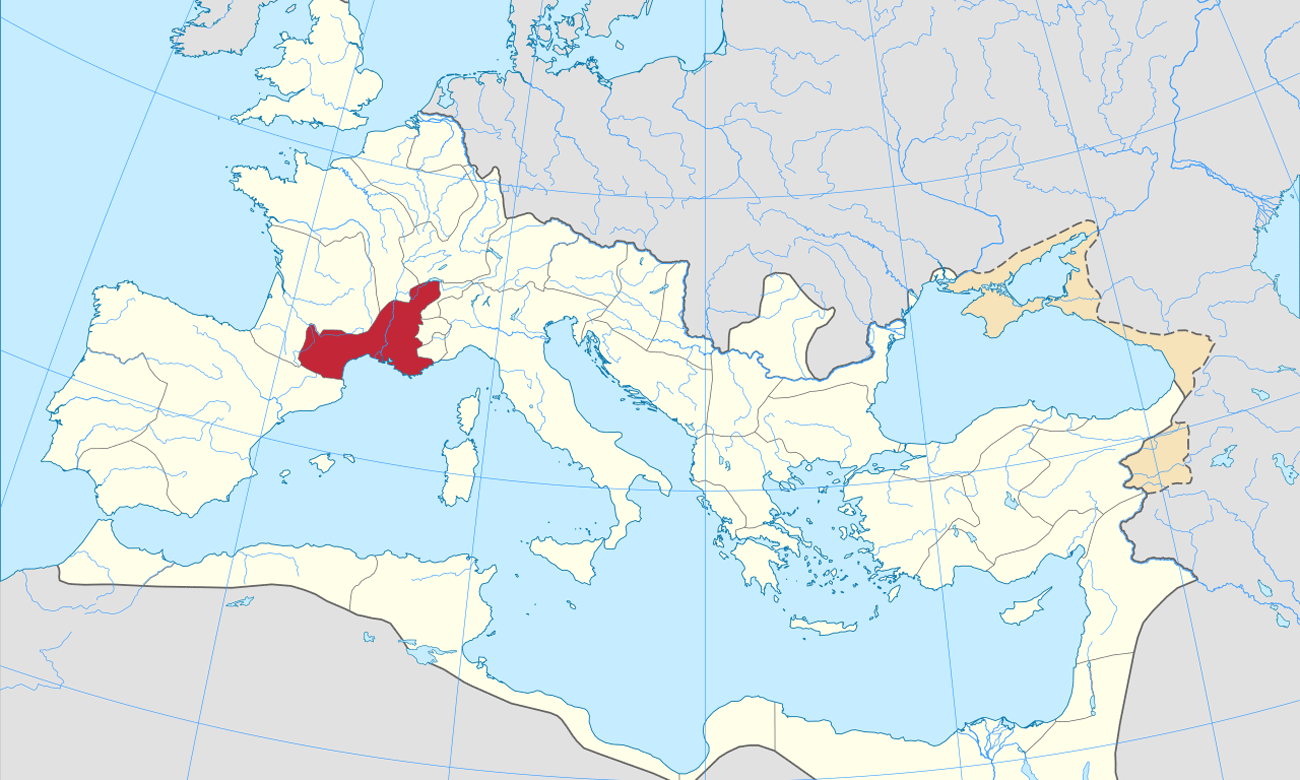 Map of Narbonnaise (in red)
The Siege of Bourges
At the cost of great effort, he crosses the Cévennes in the middle of winter and launches his cavalry to attack the Arverns. After a record march up the Rhône and Saône, he joined Labienus and the bulk of the army at Agedincum, chastised Cenabum, went to the aid of besieged Gorgobina, then against Avaricum (Bourges).
The Roman legions, who were beginning to suffer from hunger, laid siege to Avaricum, capital of the Bituriges Cubes. Vercingetorix had implemented a scorched earth policy. But the Bituriges had not burned their capital that they believed to be impregnable.
The first assaults were a series of failures for the Romans: many siege towers were burned; the besieged also dug underground galleries which caused the collapse of the siege ramps. For his part, Vercingetorix worked with his cavalry and light infantry to destroy all the supply convoys intended for the Romans. But after several days of failure, the Romans, taking advantage of bad weather, managed to enter the city and seize it. (wikipedia)
Vercingetorix burns everything that could be used by the Romans. The siege is very hard and ends with the massacre of the population. The army ends winter in cantonment at Bourges. It is time to apply to Caesar the motto of Vauban: “Any city besieged by Caesar, city taken, any city defended by Caesar, impregnable city.”
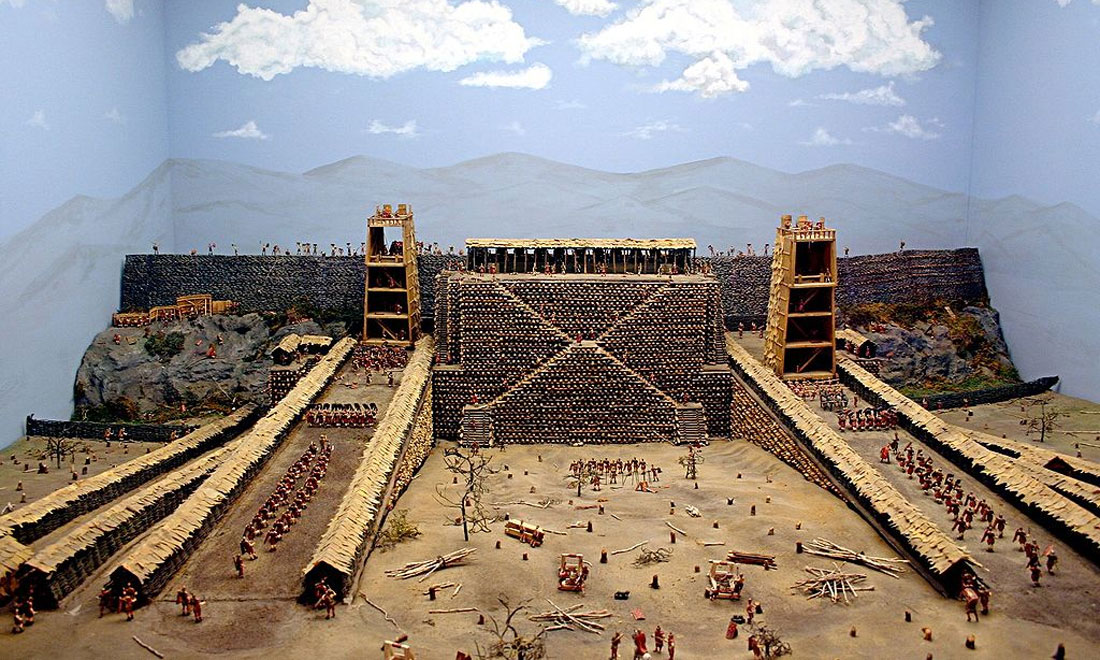 Reconstruction of the headquarters of Avaricum (Bourges) – Model by Rolf Müller
The Siege of Gergovia
In the spring, a disputed election among the Eduens calls Caesar as an arbiter at Decize. Then he shares his forces. He sends Labienus to Lutetia and leaves for Gergovie by going up the Allier. Vercingetorix, mobile on the left bank, fails to prevent him from crossing, and overtakes him at Gergovie. Caesar plans to siege the square. A revolt among the Aedui forces Caesar to leave Gergovie: he narrowly succeeds in keeping them on his side and returns immediately.
Against Gergovie, he has the idea of a trick: relying on the impulsivity of the Gauls, he hides a legion at the foot of the ‘second hill’ that he would like to conquer, sends the cavalry to show up at the back of the city where the Gauls are busy with fortifications and stealthily rise in force to assault the city parked ahead. But his soldiers are really attacking the city. The massive counterattack by the Gauls knocks them out.
A legion leaves the small camp to support them, they manage to retreat, but the losses were heavy. The Gauls do not pursue them. A few days later, César withdraws, crosses again the Allier, the Loire in flood, at a passage where no one waits for him and joins Labienus. In front of Lutetia, after a first success by Labienus, the Gauls are revigorated by the Roman defeat of Gergovia; the Romans then seek to disengage, succeed by choosing the field and return to Sens. In Bibracte, Vercingetorix is confirmed in his command at the head of the Gallic league.
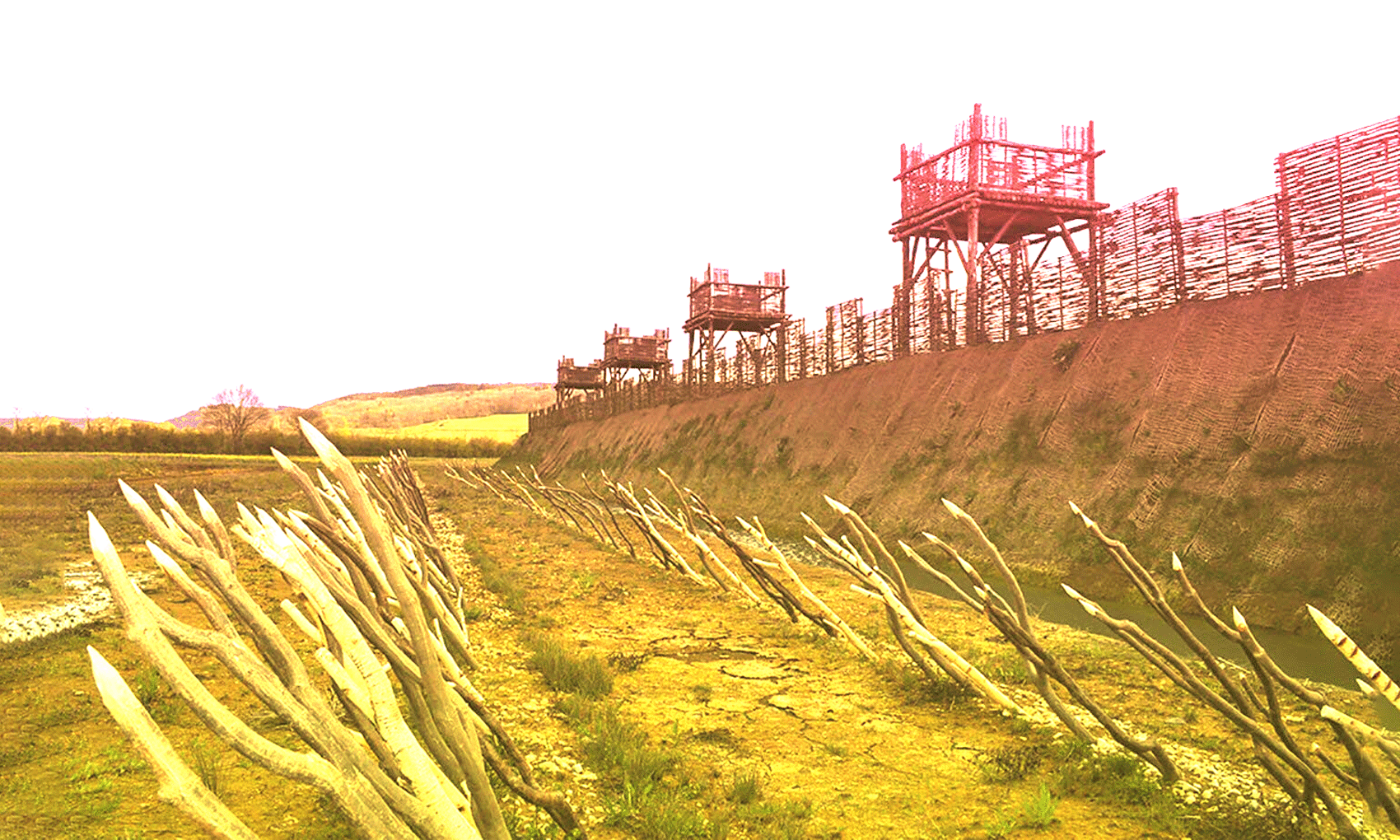 Reconstruction of a Roman entrenchment — Gergovie
The Siege of Alesia
Caesar, after having gathered all his army and received a reinforcement of Germanic cavalry, meets the Gallic coalition, defeats the cavalry and pursues it in Alesia.
Begins a long siege, of which Caesar meticulously describes the works. A Gallic relief army is set up thanks to the emissaries sent by Vercingetorix. Once arrived in Alésia, she attempts a night attack, which fails. She subsequently launches a new column attack on the weak point of the Romans, allowing them to cross the Roman investment lines. The junction with the besieged is imminent.
On the spot, Titus Labienus blocks the passage with a remnant of the legion. In extremis, Caesar arrives as reinforcement at the head of the German cavalry. There then occurs an immense ovation, over kilometers of rampart. Amazed, the rescue army lets itself tumble and cut into pieces. Vercasivellaunos captured, the Gallic army unravels. The next day, Vercingetorix surrenders or is delivered to Caesar, who after the battle decides to spend the winter at Bibracte and divides into Gallic the cantonments of his legions. ~~Commentary by BelloGallico, Julius Caesar (Wikipedia)
As we can see, everything we know about the Gallic War was written by Julius Caesar, who wanted to make himself attractive and hide some horrors in order to enter into the good graces of the Roman senate. We have no Gallic archive giving us another point of view. Quite a shame for our national pride.
Vercingetorix was imprisoned in the Tullianum in Rome for almost six years before being publicly displayed at the first of Caesar’s four triumphs in 46 BC. He was strangled after the ceremony at the Temple of Jupiter Optimus Maximus after the triumph.
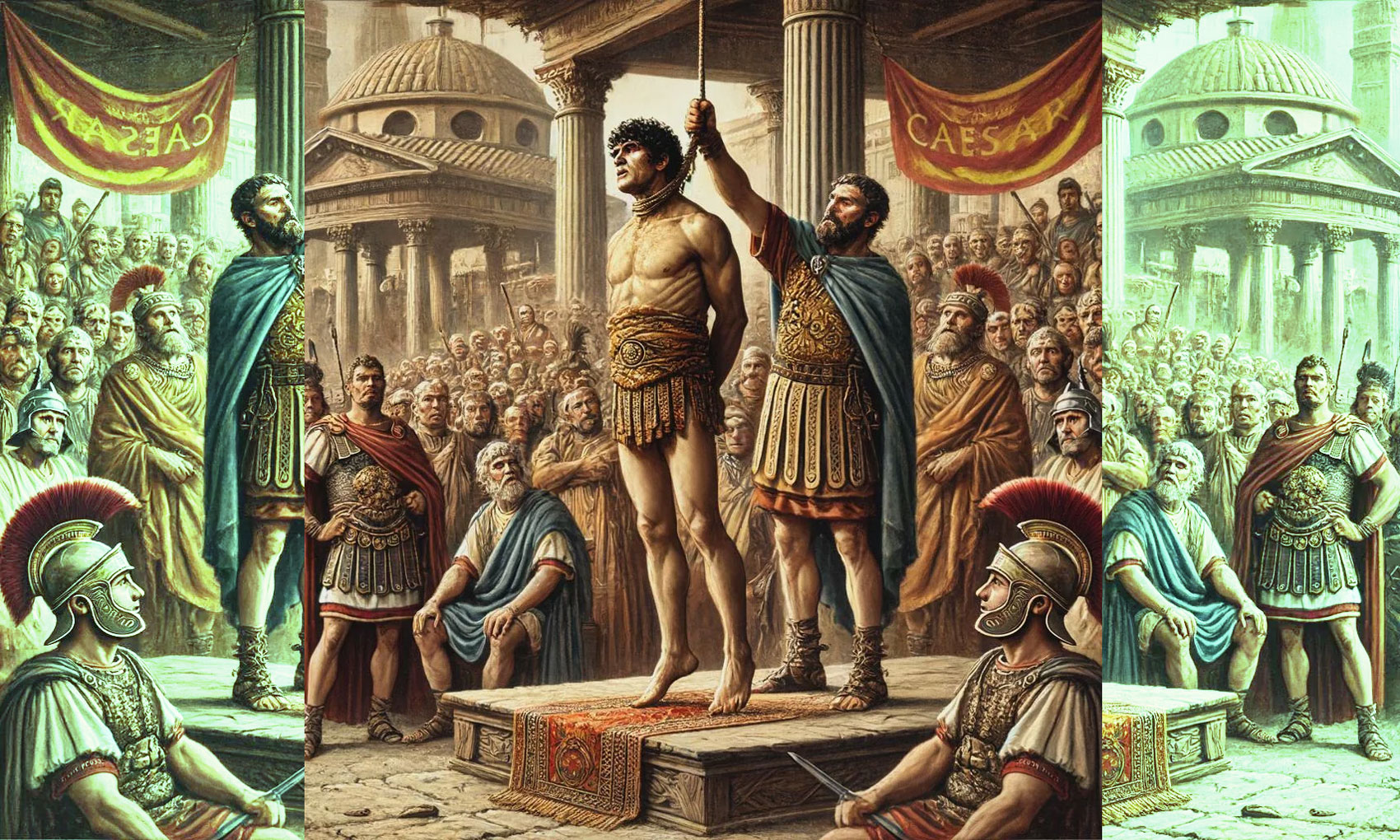 Vercingetorix strangled in Rome
Why did you keep the Gallic leader alive so many years after his surrender, in 52 EEC before the common era? A passage from the Verrines, written by Cicero in 70 EEC before the common era, gives an answer: Now even those who are going to receive the triumph and for this reason keep the leaders of the enemies longer alive, so that their presence in the triumphal procession offers the Roman people the spectacle and the most beautiful fruit of victory, make them lead to prison, when the tanks begin to turn from the Forum towards the Capitol, and the same day sees the end of the power of the victors and the life of the vanquished” ~~Cicero, Verrines.
Showing Vercingetorix defeated, probably in chains, evokes not only the victory of Caesar, but also that of the entire Roman people against the Gallic enemy who inspired fear (Metus Gallicus) since the sack of Rome by Brennus in 390 EEC before the common era.
An anecdote, told by Suetonius, fills the tale of the triumph over Gaul: “while crossing the Velabre, Caesar was almost precipitated from the top of his chariot, whose axle had broken and he climbed to the Capitol in the light of the candles that carried forty elephants in candelabra, on his right and left” ~~Suetone, Lives of the Twelve Caesars. (source)
Roman Empire
- The Reign Of Rome
- Caesar’s Calendar
- Deus Ex Machina
- The Apotheosis of Constantine
- Christ Imperator Constantine
- Previous Lives ?
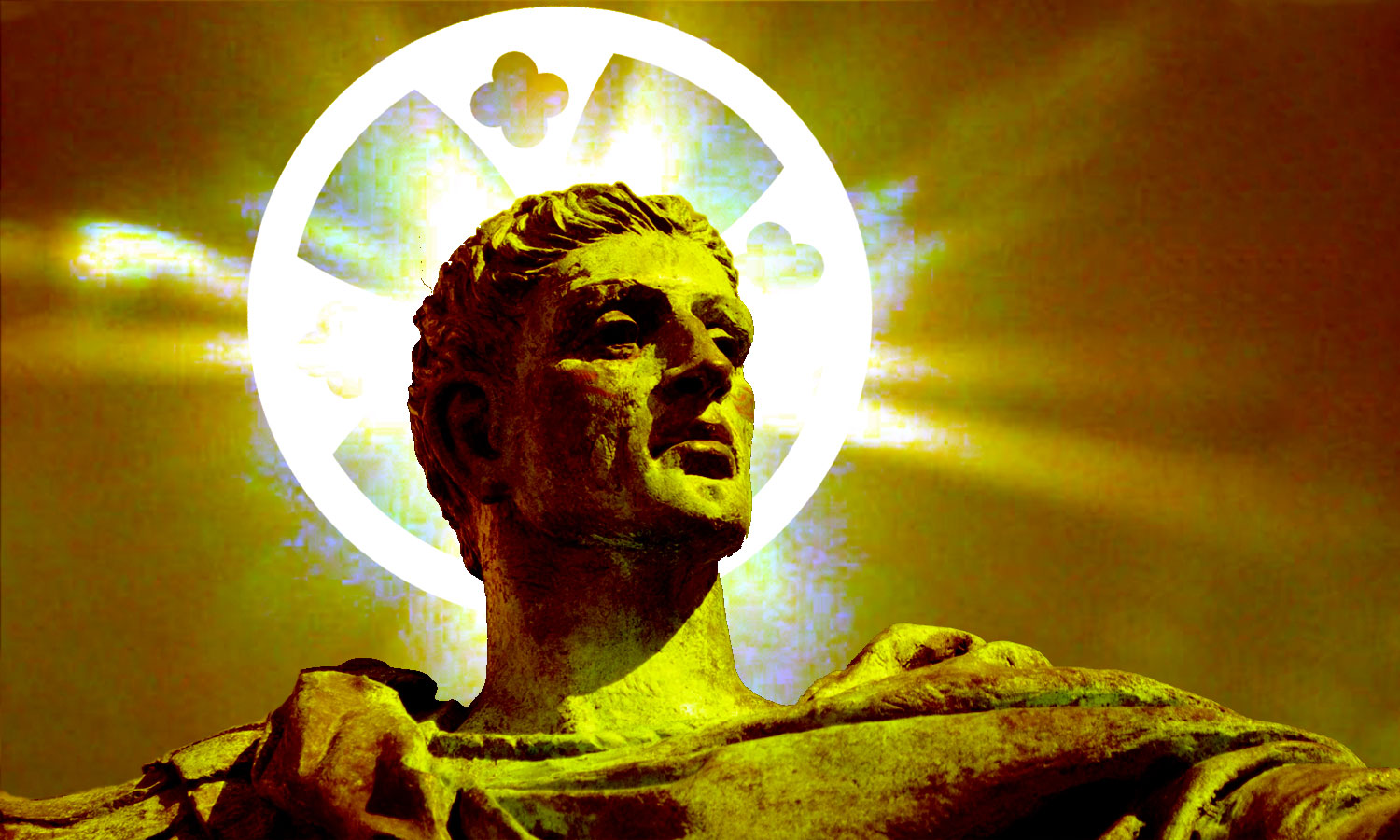 The Apotheosis of Constantine