In a street that smelled of lukewarm coffee and haste, there was a house just like one grows everywhere: wise facade, dull shutters, ringing bell. Nothing announced that this shell concealed a retreat of people, a corner of clandestine countryside, an enclave where nature, instead of fighting, adapts itself as one adapts to a whimsical parent: without approving, without condemning, while waiting for reason to return.
Enough
It was enough to open a small wooden door, a little askew, to leave the city without traveling. We entered a tiny garden ¥ yet vast in its strange way. The walls encompassed it like cliffs. Above, the electric wires and antennas made staves of music where lively notes were being played. The city kept barking outside, but its noise became a distant backlash, a sea around the garden.
The man who lived there had passed the age when people believe that they have to earn anything. He did not look like a hermit, a prophet, or a grumpy activist. Only the look of a guy who has stopped running and is discovering greater speed in immobility. He woke up early, not out of virtue but because dawn was still a joy for him. In the small kitchen, he prepared his coffee with envy. Then he took the battered box where seeds, crumbs, remnants of nuts were piled up — and he went out.
It was cold in winter, wet in autumn, and sweltering under the tiles in summer; he would go out anyway. He went up to the rust-bitten bench and followed his ritual with sacristan care: fill the feeder, rinse the trough, straighten a plank, check the birdhouses. And he sat in silence. He did not whistle, did not imitate the songs, was not aroused like miracle lovers. He waited with respect. The birds took care of the rest.
They came free, it was the pact. No cage, no greenhouse, no net. He offered them a place, they decided to take him. At first, he thought it was enough to throw bread. He had quickly learned that birds, like men, have their tastes, their moods, their stories. The sparrows come in flocks, quarreling, noisy, convinced of having acquired rights over everything that falls. The tits come by lightning, take, fly, thieves of elegance. The merles inspect the ground in suspicious notaries, as if the earth was hiding a secret and that it was necessary, before believing it, to make an inventory.
What
What always struck him was their ability to come to terms. In the so-called “wild” nature, you are told that everything is a struggle: the strongest, the fastest, the most voracious. Here, in this city rectangle, these same species, considered hostile or at least poorly bred, seemed to conclude armistices. There were arguments, of course: a flick of the wing, a race, a sharp cry. But it quickly fell back, as if the proximity imposed by the narrowness of the place forced them to invent a politeness. The garden was small; there wasn’t room for total war. So we composed. We tolerated each other. We waited for their turn. We were learning, without knowing it, a discipline that men, in their assemblies, still struggle to practice.
The city does not consent to anything, it demands. It imposes its speed, its codes, its badges, its schedules, profitability down to the smiles. He has seen it change, this city. He had known the slow display windows, the sidewalks where we chatted, the trees that we let grow without disturbing them. Then came the illuminated signs, the deliveries at all hours, the benches that were removed to prevent a body from resting there for too long. We even managed to make the silence suspicious.
In this era when everything must produce, simple contemplation seems like a mistake.
And yet, despite our extravagances, nature continues to come. She does not manifest, she does not petition, she tries herself. A bird, it doesn’t say “je refuse”, it tries, it seeks the interstice, it is housed in a cornice, in a blind, under a gutter, it raises little ones between two air conditioners. Birds do not judge. They wait for the days of reconciliation, the days when man, tired of taking himself for a project, would become a neighbor again.
One Day
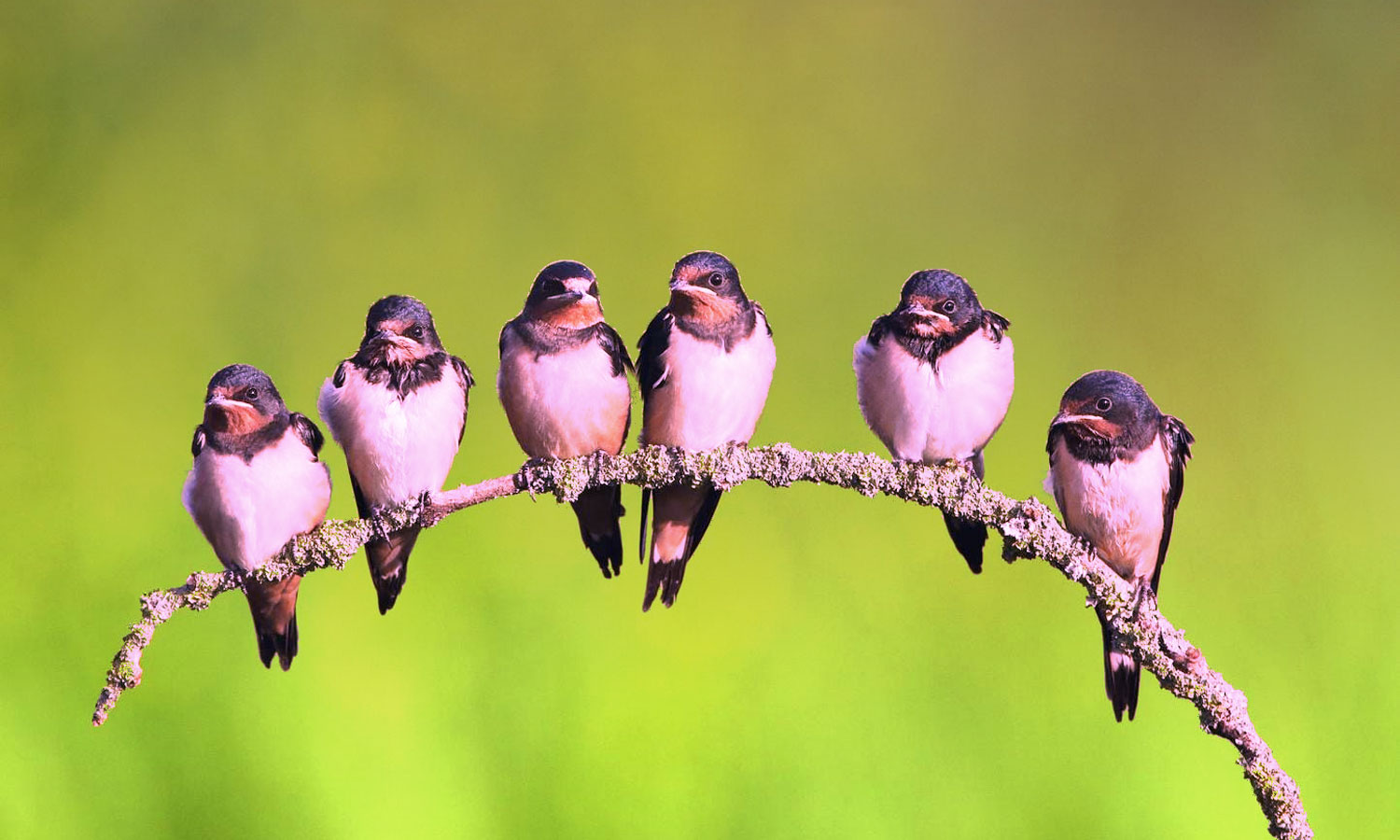
One day, this neighborhood took the shape of a swallow. He didn’t see it fall but found it. On a sidewalk, near the post office, between a gray puddle and a crushed can. A small black and white thing, barely feathered, hardly breathed, the beak wide open like an exclamation mark. He crouched down. Around him, people were passing by in a hurry, their heads full of screens and lists. No one looks at the city, this great organism that forgets its cells.
He picked up the swallow as one picks up a lost phrase. He slipped it into his hand, without holding it tightly. In the garden, routine was in full swing. The chickadees argued over a piece of grease, a merle surveyed the ground, sparrows on the wall held a council of war. He placed the little beast in a shoebox on an old sweater. Then began absurd and magnificent days.
He knew nothing. Feeding free birds doesn’t teach you how to save a condemned bird. He consulted books, found vague memories, did a bit of internet. He made himself a pipette, mixed some sweet water, and stirred a porridge of egg and crumbs. In a shop where a teenager stared at him like a castaway, he bought insects to feed him. The swallow protested, opened its beak, flapped its wings like a thought that refuses to die. He whispered to it: “Gently. Not all at once. There you go.”
At The End
At the end of two days, she sat up. At the end of three, she got lost. One morning, she made a wingjump, a comma. The next day, she crossed the garden in a trembling line. Then, one day, without notice, she dashed above the wall and disappeared into the city. He stood for a long time, empty-handed. One quickly attaches oneself to what escapes. He did not tell the story to anyone. The miracles we tell become stories, and the stories degrade into anecdotes. He preferred to keep the case intact, in the silence of the garden.
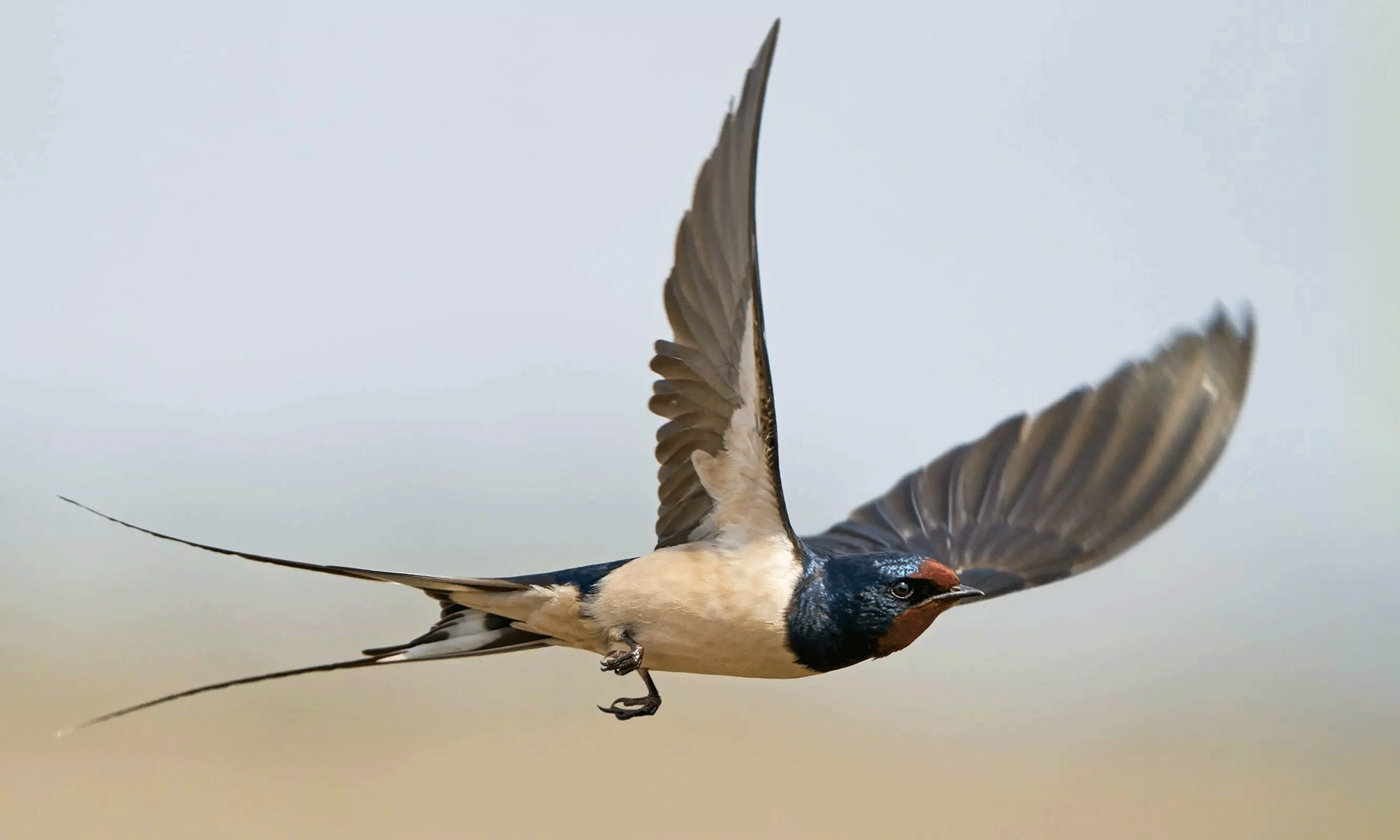
The following spring, the city had changed its hairstyle: a new construction site at the end of the street, barriers, vans, guys in fluorescent vests measuring the air. He had learned to be wary of fluorescent vests: they rarely announce birds. One morning, however, above the roof, a black and white arrow cut through the sky. She made two circles, then landed under the eaves, exactly where a shadow made shelter. He held his breath. She stayed, then left. The next day, she came back with mud in her mouth.
Was it the same swallow? He never knew. Maybe. Maybe not. Fidelity, in birds, looks like a science that has forgotten to be arrogant. What he understood above all was that nature was not resentful. That a being saved on the road could come back, not to thank, but because the place, despite our extravagances, still offered a margin of confidence.
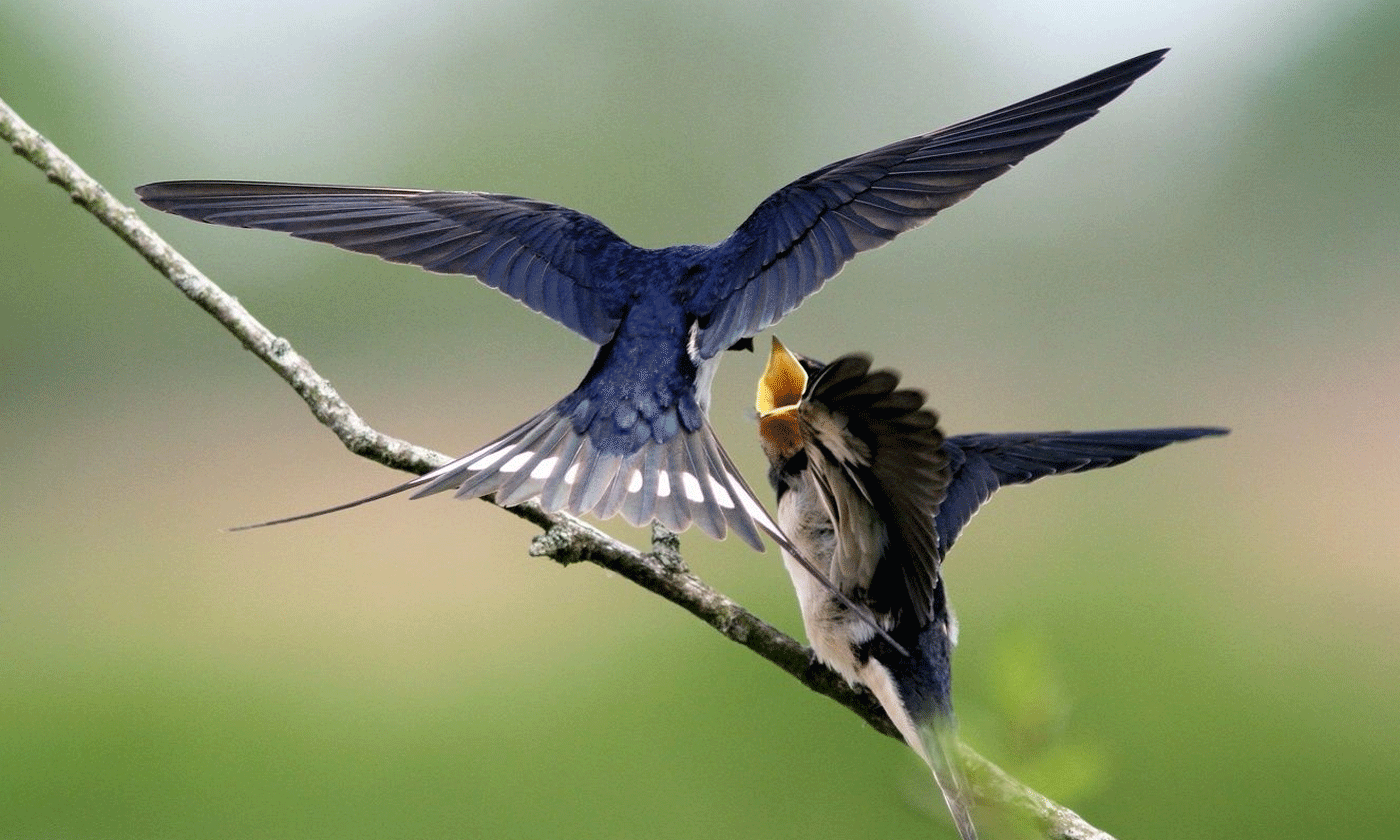
When the little ones were born, he heard them before seeing them: a crackling of beaks, a thirst for heaven. He observed from afar, out of modesty. He no longer opened the window abruptly. He passed under the eaves as one passes in front of a sleeping child’s room. On rainy days, he would raise his head to make sure everything stayed up. On sunny days, he would sit in the garden and watch his parents go by, come back, go by again, without ever getting angry at the city that was growling at him.
The rest in three days : Nesting Swallow
Alain Aillet Sayings
- Ineffable Ararat
- The Legend of Pyrene
- Stables Threshold
- The Leather Notebook
- Aide-memoire
- Song of Roots
- The Chickadee
- Aurora Into Resonance
- Harvey the Elder
- The Garden of Facts
- The Hardware Fault 2
- Shadows Hardware 1
- Message in a Bitter
- The Distorted I
- Star Traveler
- The Purple Ribbon
- Immortals Café
- Aurochs Ford 2
- Aurochs Ford 1
- The Sons of Light
- Eternally