


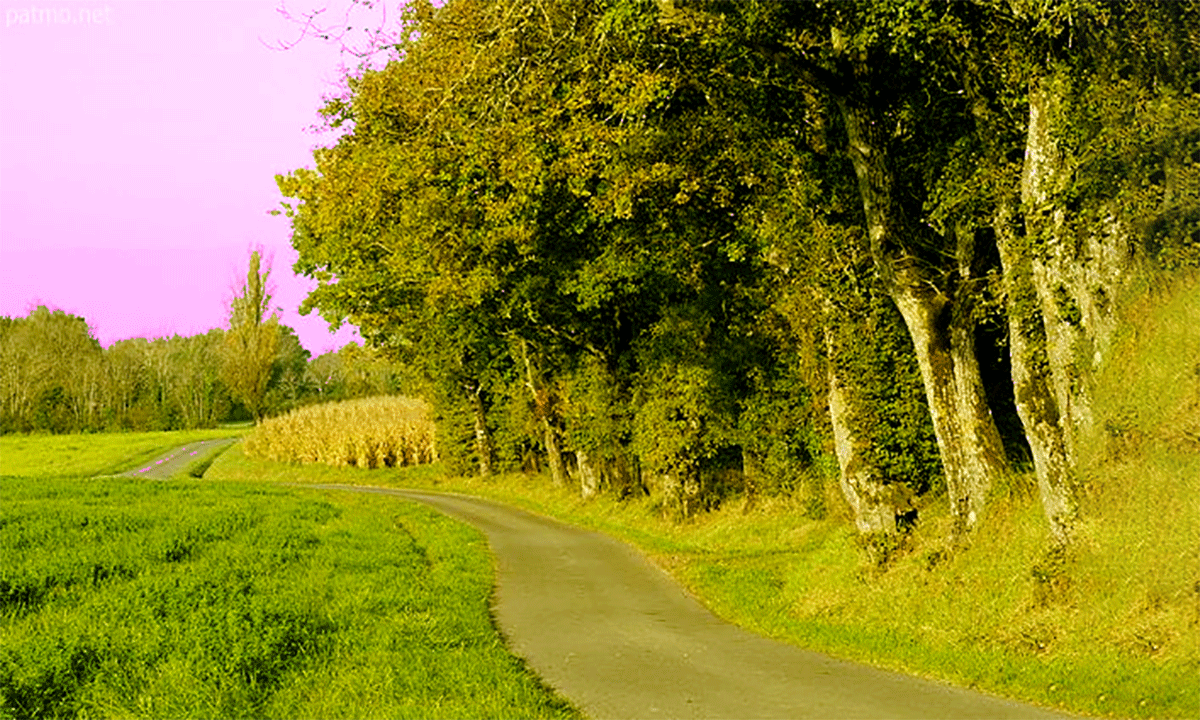
We arrived at Jean-Pierre’s place by a narrow road, so narrow that it seemed to exist only for those who already knew where they were going. It would between ancient, knotted hedges, patiently carved by vanished hands.
It walked along meadows where the grass had that indecisive hue that life takes when things don’t try to be noticed. There was neither a sign nor a portal worthy of the name. Only a tired wooden barrier, which creaked like a friendly warning: here, we enter slowly.
Jean-Pierre has lived there forever, or perhaps even before his birth, as he seemed to be at one with the place. He had never left his region, not out of the world’s refusal, but because he felt that the world came to him anyway. And he came, the world, in the form of tired beasts, worried herds, low-shouldered peasants, carrying a mute worry that they deposited with him as one entrusts a secret to a well.
Jean-Pierre was a caregiver. That’s how they called him, for lack of anything better. Osteopath, some said, a man with hands, murmured others, bonesetted at last. He never corrected. Words are useful tools, he thought, but they sometimes make more noise than gestures.
He cared for animals. Not like fixing a machine, but like addressing a memory. The first thing we noticed about him was his slowness. An assumed slowness, almost provocative at the time of rapid diagnostics and ready-to-use solutions.
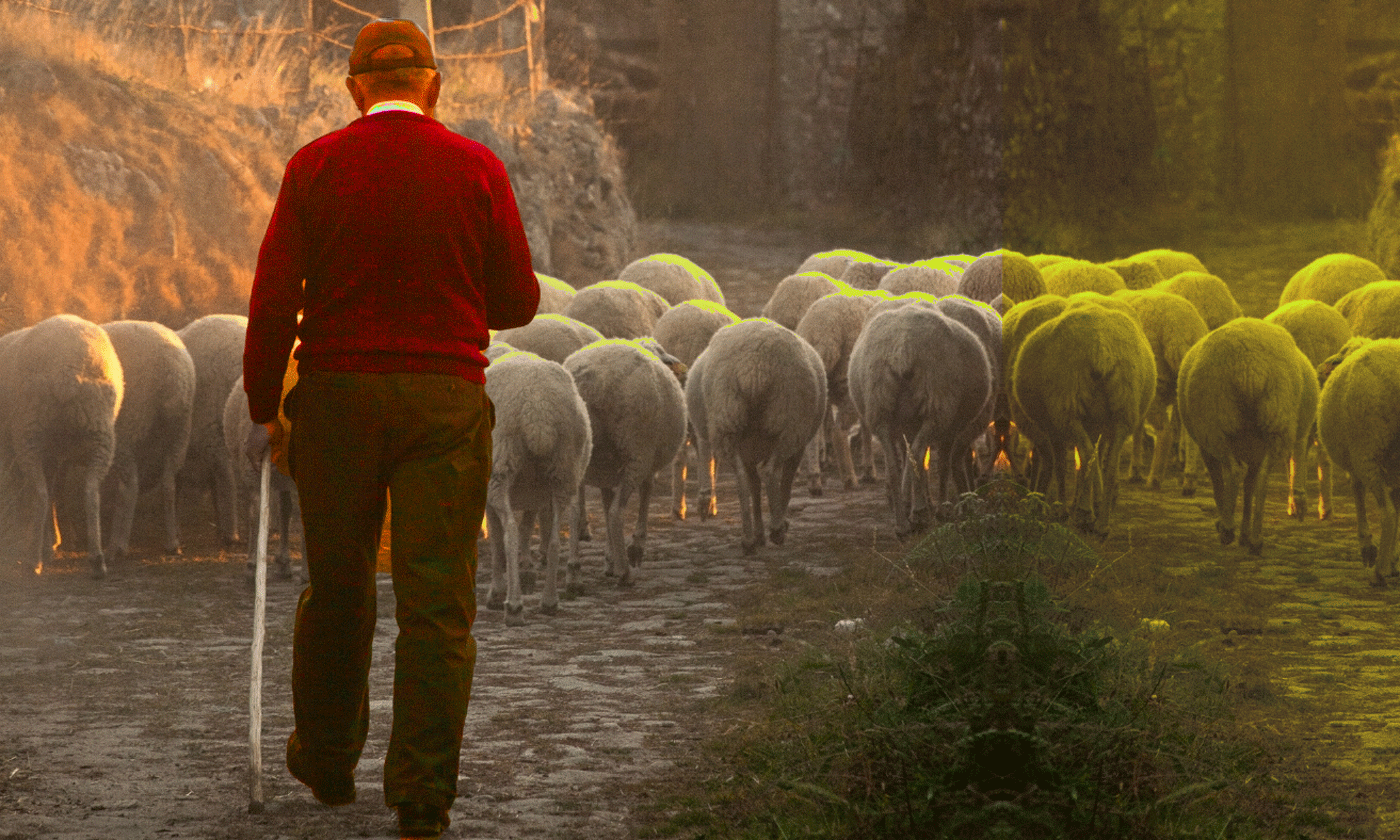 He believed that rushing was already a form of violence.
Jean-Pierre walked slowly, not out of weakness, but out of loyalty. He believed that rushing was already a form of violence. The world, according to him, did not ask to be dominated, but to be joined. He spoke slowly, placed his hands with infinite caution, as if asking for forgiveness before touching.
He who is aware of his strength and keeps the gentleness of the woman has the Tao in his hands.
His hands were wide, strong, marked by the seasons. They had worked the earth before caring for the bodies. He had never forgotten that. He sometimes said—when questioned, which rarely happened — that the hands know before the head.
He often said that animals do not need to be understood, but need to be listened to. And listening, for him, did not go through the ears. When he entered a stable, he always stopped at the threshold. The cows then looked at him, not with curiosity, but with a form of anticipated recognition, as if something in them already knew that he was not coming to compel.
He breathed with them, took the time to feel the air, the heat, the invisible tensions that circulated in the place. Then only, he advanced. Useless to indicate the animal to be treated: by a silent signal, the animal called him.
Jean-Pierre had learned this very young. As a child, he spent hours in the meadows, lying down in the grass, observing the animals. He did not play with them, did not try to tame them. He was content to be there. One day, an old wounded mare had approached him and had stopped, side by side. He had done nothing. He had simply placed his hand on the warm neckline, and waited. That day, he had understood that care was not an act, but a presence.
Later, when he had learned techniques, gestures, and knowledge transmitted by others who were silent, he never took them for recipes. He had integrated them as one integrates an ancient language: with respect, without seeking to modernize it.
The knowledge of man cannot extend beyond his own experience.
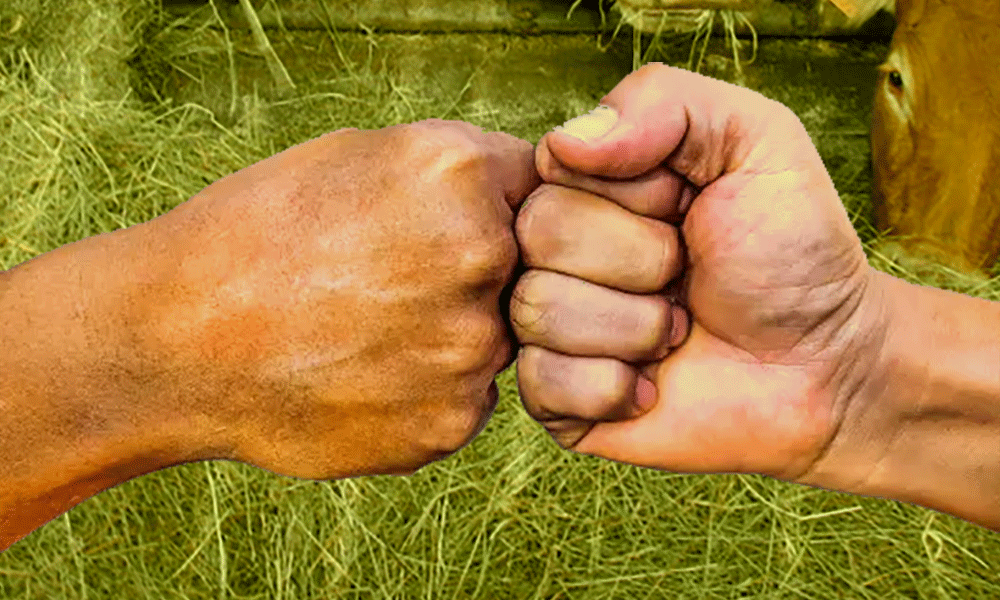
He never separated the body from the whole story. For him, an animal carried more than its own weight. He carried the place, the herd, the human gestures, the ancient fears. He sometimes said that certain pains came from too far away to be treated brutally. “You have to ask for permission,” he almost murmured. And he asked for it.
His father, a silent peasant, said nothing. His mother nodded silently, as if she had always known. In the countryside, we respect silent realities. Over the years, Jean-Pierre had developed a very personal way of caring. He never separated the body from history. A limp, according to him, was never just a limp. It was often the memory of a fear, a shock, an imbalance older than the pain itself.
“Animals do not forget,” he sometimes said, adding: “They forgive better than us.”
When he placed his hands on a cow, he did not seek to correct, but to dialogue. When he placed his fingers on a beast, he was not looking for anything, he was waiting for the body to speak. Because animals speak. Not with words, of course, but with absolute sincerity. A tension, a refusal, an abandonment. Jean-Pierre had learned to recognize these minute variations, these inner movements that speak much more than visible symptoms.
His fingers seemed to listen to the bones, muscles, invisible streams that passed through the body. He was waiting for an answer, a relaxation, a different breath. And when it came, he knew that the work had begun. The peasants looked at this with a form of worried respect. They did not understand everything, but they saw the results. Beasts that stood up, that ate again, that found a strange peace, almost contagious.
But Jean-Pierre did not only take care of animals. He would never have said it like that, but the men and women who called him often came to seek something other than alternative care. They came to deposit their fatigue, their solitude, their feeling of having become strangers to a world that was going too fast.
Jean-Pierre also listened to them, in his own way. He spoke little, but his silences were vast, hospitable. He had learned to keep quiet before learning to speak. He thought that pain was never an enemy, but a signal. And that ignoring her, or fighting against her head on, amounted to depriving oneself of what she had to say.
He had understood this very early and knew that certain pains did not need answers, only to be recognized. He would sometimes say: “When a beast goes bad, look around it.” And often, around it, there was a tired human.
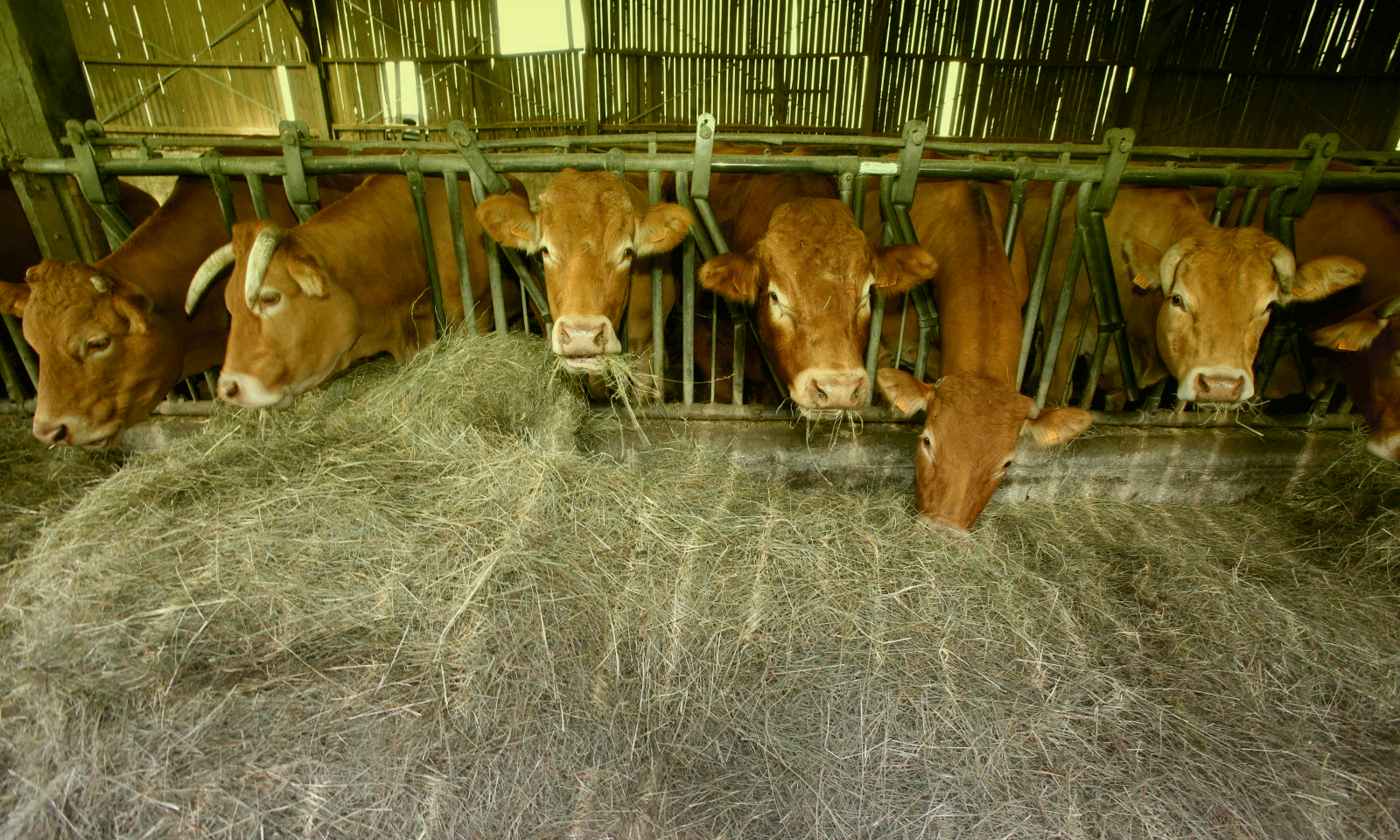
One winter day, he was led to a cow who refused to get up for three days. The veterinarians had come by, shrugged their shoulders. The breeder, a still young man but already bent, no longer really believed in it. He had called Jean-Pierre out of habit, almost by superstition. Jean-Pierre entered the stable, stopped and observed for a long time. He didn’t touch the cow right away. He sat down on a bale of straw, closed his eyes.
Then he got up, placed one hand on the animal’s side, the other on the ground. He remained thus for a long time, immobile, like a fragile bridge between earth and flesh. When he stood up, he simply said: “It is carrying a pain that is not its.”
The breeder lowered his head. The cow got up the next day.
Jean-Pierre knew that what he was doing would never quite fit into modern boxes. He did not suffer from it. He had that rare elegance of those who seek neither to convince nor to resist.
He continued, that’s all.
For him, the animal world was not a world apart. It was the same world, seen from another rhythm. The animals did not cheat, did not theorize their pain. They inhabited it, then let it go when they were given the opportunity. He often thought that humans had unlearned this.
The seasons passed. Jean-Pierre was barely aging, or rather he aged like trees: in silence, in depth. His hands, they remained safe. They had this rare quality of never imposing themselves. They proposed. He also knew that his world was fragile. That it relied on few things: a listening, a slowness, an ancient respect. He also knew that this world was retreating, that gestures were lost, that speed was gaining. But he was not struggling.
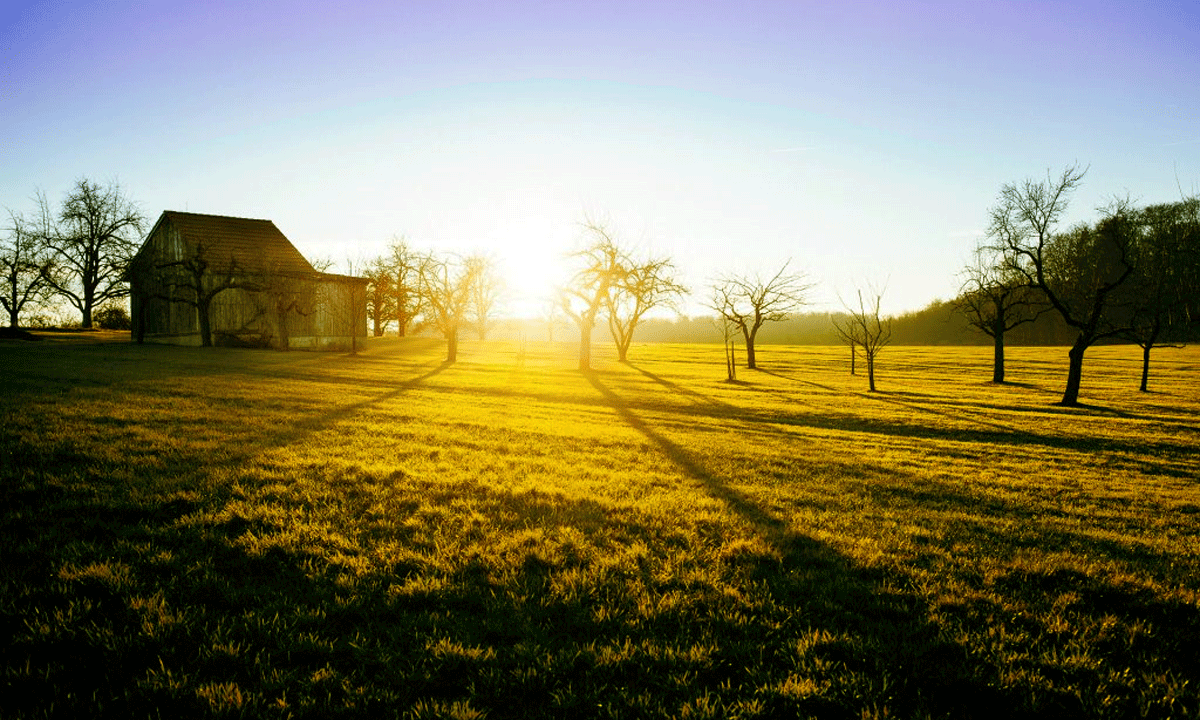
One summer evening, as the sun slowly goes down behind the hills, Jean-Pierre stays alone for a long time in a meadow, after a day of work. After a life of work. The cows graze around him, calm. He sits on the grass, places his hands on the ground. He tells himself—without sadness — that everything is fine. He never sought to leave a trace. And yet, at the moment of leaving, he knows that something will continue thanks to him. A fragile balance, a gentle way of being in the world.
There will be no statue for Jean-Pierre. He leaves as he came, in silence, with hushed steps. Maybe he won’t even leave a precise memory.
But there will be, for a long time yet, animals that will allow themselves to be approached without fear, humans who will speak a little lower in the stables and this idea, transmitted without words, that care always begins with respect.
Something will continue.
A gentle way of holding the world.
An invisible line, fragile, but essential.
And without noise, without fury, the world will still hold.
Alain Aillet Sayings
- Song of Roots
- The Leather Notebook
- Aurora Into Resonance
- Aide-memoire
- The Chickadee
- Harvey the Elder
- The Garden of Facts
- She and the Painted Cave
- The Hardware Fault 2
- Shadows Hardware 1
- Message in a Bitter
- The Distorted I
- Star Traveler
- The Purple Ribbon
- Immortals Café
- Aurochs Ford 2
- Aurochs Ford 1
- Pech Merle
- The Sons of Light
- Eternally
- Planet E
- From Tautavel To Bozouls
- Odious Odin, Frightening Freya
- Teutonic, Archetypal Language
- Planet Babel
- Sounds And Languages
- The Golden Tongue
 Alain Aillet, The Sons of Light