


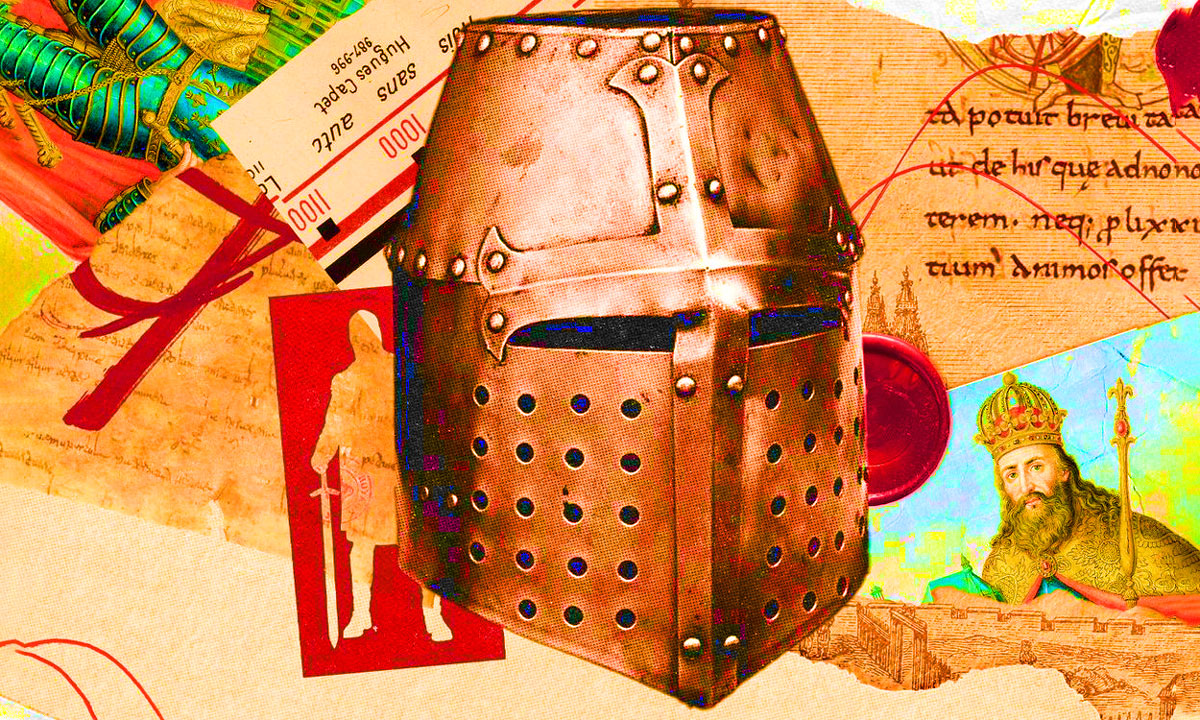
A rather puzzling theory that we owe to a 76-year-old Russian mathematician, Anatoly Fomenko. This academician of sciences asserts and demonstrates that everything we know about the history of antiquity is a vast lie created from scratch by Jesuits in the 17th century.
History Begins in the Year 1000
Fomenko is convinced that the entire ancient history of Greece, Rome, Egypt, or China is a rewriting of much more recent events. According to him, history with a capital M only begins around the year 1000 and all that precedes it is nothing but fiction.
The thesis is not to displease me, I know very well that innumerable manipulations have been carried out over the centuries by the scrivening monks of the Roman church, on the orders of their hierarchy to which they owed perfect obedience.
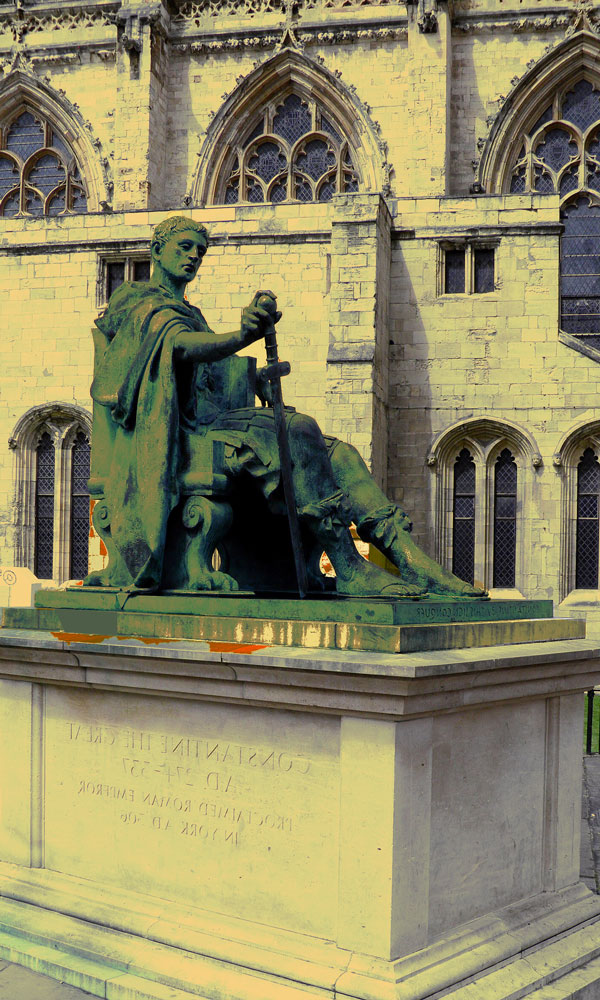
The Council of Nicaea is the true beginning of a new religion. That of Jesus? No. That of Constantine.
Jesus or Constantine?
In fact the Council of Nicaea, that is to say the assembly of the Emperor, established the new official dogma of the empire: the cult of Christ-Emperor replacing that of Mithra Sol Invictus.
According to Tradition, at the end of this council, Constantine and his new church (from the Latin ecclesia = assembly) assimilated the monotheistic principles of the Manichaeans and Christians in the cult of Sol Invictus and created the new religion (from the Latin religio = respect, worship, veneration). Not that of Jesus but that of the Christ-Emperor, son of the only god.
“The Christian religion became Christianized and thus became a Greek religion, o Christianismos, that is, worship of Constantine, the only representative of the One God in his Empire on the way to unification.
This reminded scholars of the cult to the glory of Alexander the Great.” (source)According to the site “Critical History of Roman Christianity”.
This statement by a courageous historian is in line with Fomenko’s thesis, Recentness.
 Mithras or Jesus ?
What Middle Ages?
According to Fomenko, the Middle Ages as we know them never existed. It was made in the 13th century in Avignon by Roman legates. In today’s falsified computus, it is the 13th century AUC – ab urbe condita – that is, after the founding of Rome. In fact, it happens only three centuries after Constantine and the construction of cathedrals. The Roman legates wanted to justify an even more important invention that they had to make: the creation of a religion.
Why the devil do such a thing? I have already explained it, but the question is important. So I come back to it.
A dreadful plague had ruined Europe. The survivors were only a handful, the totally disorganized central power had to face a first emergency: to discipline a little all these barbarian Mad Max who ransomed, looted, raped, burned what remained of human in the landscape.

A Recent Invention
 Rome still had money and material power, but its spiritual and moral power had almost completely disintegrated. The hundreds of temples dedicated to Constantine could no longer be used for anything: without an emperor to honor, they had become hideouts for brigands.
The religion invented by Christ the Emperor could no longer seduce these thieves and hangmen, heaps of good-for-nothings who have returned from everything. So to save what remained of the Empire from a certain disappearance, it was urgent to rely on love, gentleness, forgiveness, generosity, hope, charity, the certainty of a better world after this hell on earth that had become Europe. That is why the Roman legates invented the baby Jesus.
Invented, by the way, that’s saying a lot… The composers of Christianity took up many elements of Mithraism, the ancient religion of Mithra; many elements of Judaism, the expectation of the Messiah, the parables of Enoch; a little of the mysteries of Isis, redemption by divine grace; a little of Sol Invictus, the ancient official religion inaugurated in Rome by Elagabalus and taken up again by Constantine.
The fathers of the church have combined all this with intelligence, and told us the beautiful story of a savior who would have come among the distant Jews seven centuries ago.
Si non e vero e bene trovate … If that’s not true, it’s a good one!
I walk on the path which is no longer the path but the walk.
Gutenberg Is A Game Changer
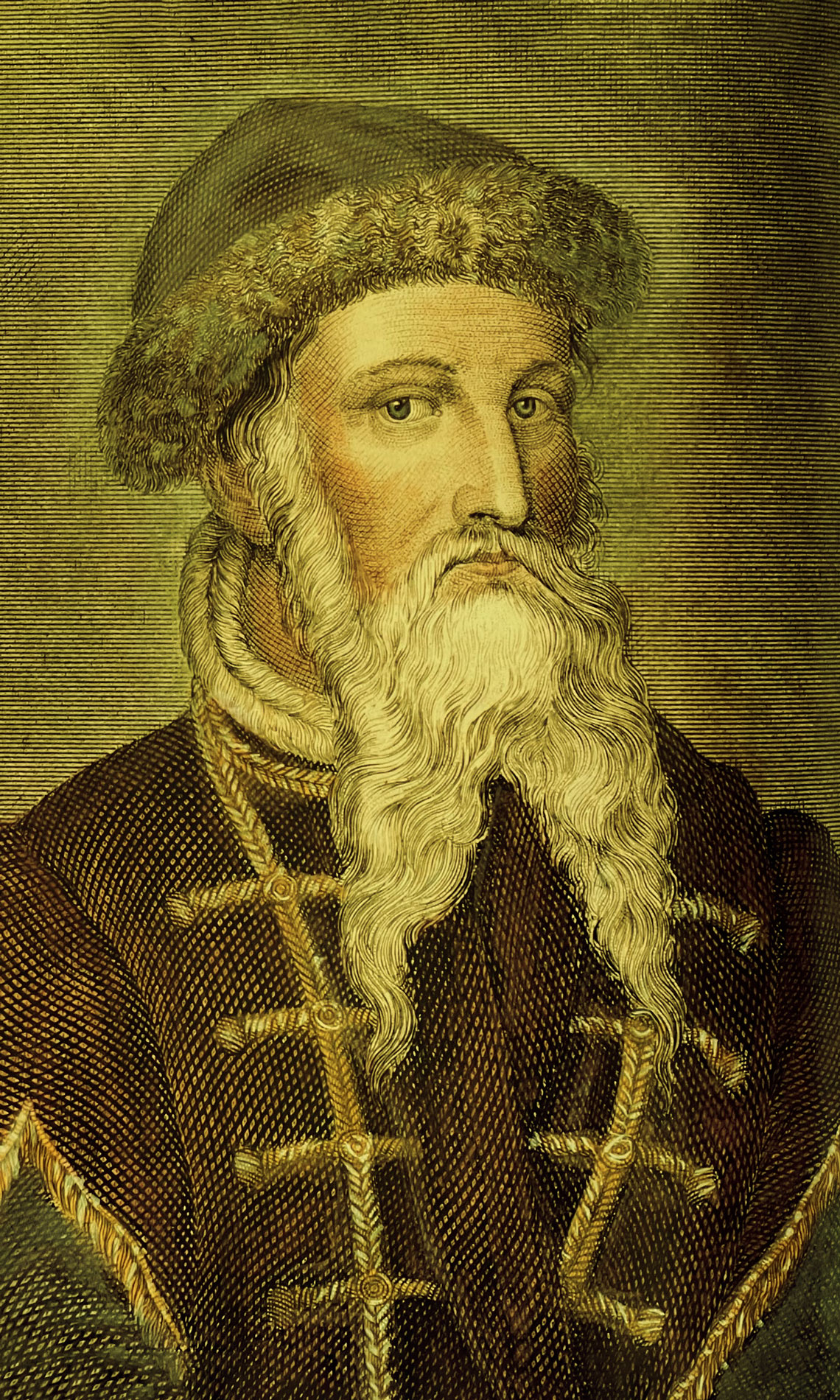 The invention of the printing press dates back to 1450. Gutenberg, whose real name was Johannes Gensfleisch, invented the printing press with movable metal characters in his workshop in Mainz, Germany.
It is thanks to its hand press that it saves a considerable amount of time in the reproduction of written works.
Before this invention, the texts were copied by hand by scribe monks. The printing press will allow the transmission of a perennial knowledge, because it puts in the sidelines the monks forgers, as we see it in the Name of the Rose by Umberto Eco.
It is a major invention in the history of humanity since it will allow to spread and sustain culture and knowledge through time.
Where Fomenko is delirious is when he identifies the counterfeiters of the Roman church too late. He says that all antiquity was rewritten by the Jesuits in the 17th century.
It would have been noted: the printing press had already existed for two centuries.
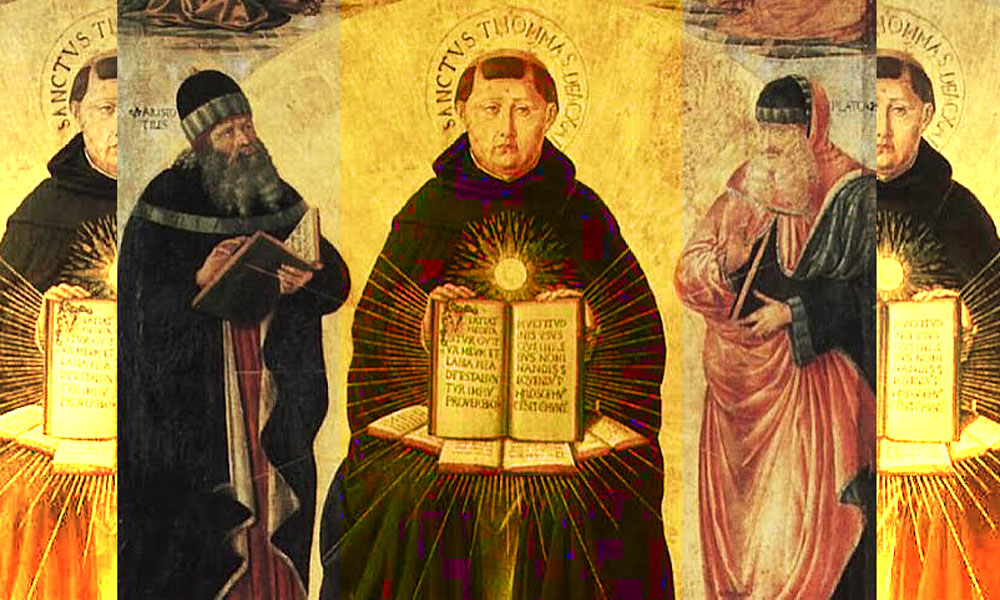
Thomas Aquinas, Father of Jesus
Thomas Aquinas was born in 1225 or 1226 near Aquino, Kingdom of Sicily, and died in 1274 in an abbey in the Papal States. Italian religious of the Dominican order, he is famous for his theological and philosophical work. Before the printing press, Thomas had plenty of time to invent the so-called Jesus.
As soon as Jesus was invented, so many servile monks calligraphed a new version of the Christianism further on, which became official. It stopped changing at the whim of the popes from the moment Gutenberg invented printing. The era of the printed word signed the end of ecclesiastical tinkering.
Thank you dear Gutenberg. Good mountains, in German. Good because it is too difficult for the priests to climb. The first book that came out of his press is actually the Holy Bible in Latin, according to the Vulgate. It is called the Gutenberg Bible or B42 because the pages had 42 lines. We only have about fifty copies left.
So Then
To each his own beliefs, and the sacred cows will be well guarded. Our ancestors have swallowed everything. They swallowed snakes with the ease of a snake charmer. It was counting without the web and the worldwide distribution of all the texts that were once strictly protected by the Holy See.
A host of bogus anecdotes, full of errors and anachronisms, was added by the copyists. That this does not prevent believers from believing, nor unbelievers from not believing. I am a mythologist, I look at all mythologies critically: is it true? Is it distorted? Is it exaggerated? For what reasons? My work has no other purpose than to face the truth — if such a thing exists! — with a critical eye and a mind free of all preconceptions. That’s why many of you are reading me. You know that your convictions belong to you. They help you to live, far from me the idea of dynamiting them — from the ancient Greek dunamos, which means angel.
All beliefs deserve respect. For me, I align myself with the eternal principle of uncertainty:
In the face of eternal lies, it is good to believe without believing.
The Big Bazaar of Dates
- Uneasy Dating
- Archaeological Singularities
- The Lying History
- Dinosaurs And Humans
- The Dawn of Time
- Parallels Calendars
- Göbekli Tepe
- The Zodiac of Dendera
- Fomenko’s Recentness
- The Myth of Jesus
- The Universal Lie
- Seven Fake Centuries
- What Middle Ages?
- Pompeii 2.0