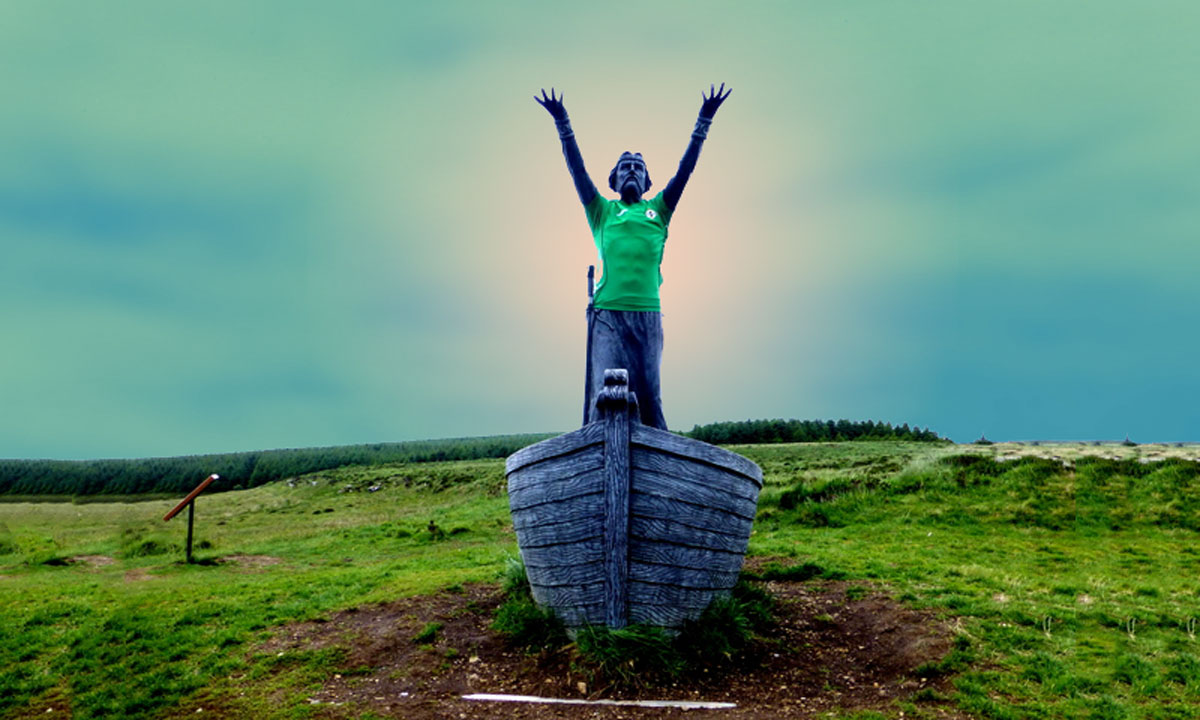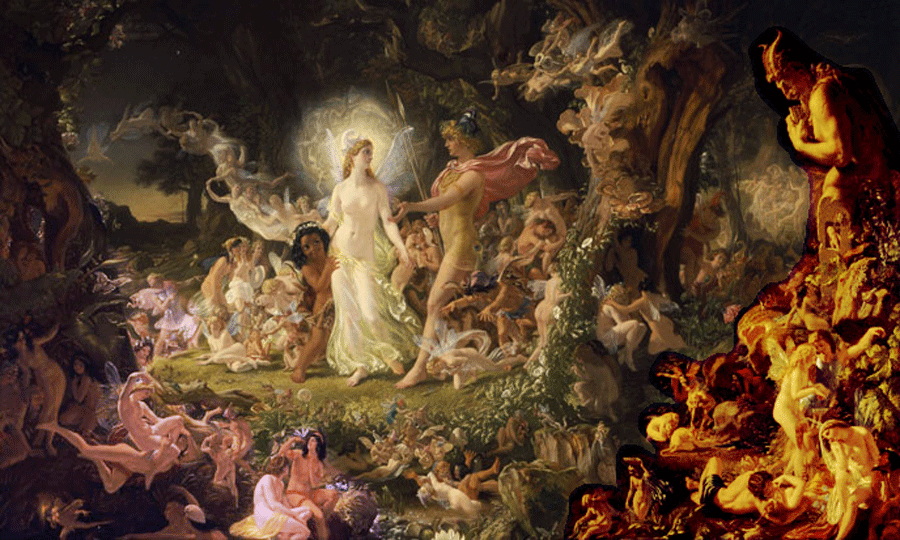
A people of reptilian giants lived in ancient Ireland, the Tuatha Dé Danaan, “people of Goddess Dana“. Heirs of science and wisdom of Atlantis, they were considered as gods. They stayed there until the arrival of the Celts. Without fighting, they left for a mysterious country called Sid or Sidh, in the inner earth, at the center of the world. My gut says that they are not alone there…
Notre Dame Ann
Tuatha De Dan Ann means ‘the people of the Goddess Dana-Ann‘. These reptilians are themselves called Those of Lady Ann or Lady Ana, the Great Goddess of origins. It is to her that the initiates, builders of cathedrals, have consecrated most of their great vessels of stone, many of which are called Notre Dame.Our Lady
Owners of the Atlanteans’ wisdom, the reptilians have great powers. Their tall stature and superhuman strength liken the Tuatha to another species than ours. They come from another world — or at least from a different age than the Celts.
When the latter arrived on the island of Ireland, they found there these demigods of the ancient Elven people, and they drank their teaching to the dregs.
Black Skinned Giants
Fascinated, the Celts drank their teaching to the last. Many aspects of the wisdom and initiation of the Celts were transmitted to them by the Tuatha Dé Danaan. The Celts listened to them, eager for their wisdom, amazed by their magic.
Outside of Ireland, this people of black giants were known, the Celts of the Closed Seas called them Ligurians. Liguria is also a small region of Italy. Between the Alps and the Apennines, it forms an arc around the Gulf of Genoa, part of the Ligurian Sea. It also borders the eastern part of the Alpes-Maritimes department in France, Piedmont to the north, Emilia-Romagna and Tuscany to the east and southeast. (Wikipedia)
The Closed Seas
At that time, the Celts, heirs of the Peoples of the Sea, were distributed a little everywhere in the vast world. Some of them had settled in the Mediterranean basin.
The Closed Seas is the old name for the Mediterranean. They included several large freshwater ponds, of which the Ligurian Sea, mentioned above, was part. At that time, the Strait of Gibraltar was not open, the level of these seas was lower, and by much. In the southern mountains, a narrow passage wound between the cliffs of the Moroccan coast. Greek and Roman legends say that the giant Heracles/ Heracles dug this passage with their bare hands. Also, the Romans named it the Gates of Hercules.
Fir Bolg Magicians
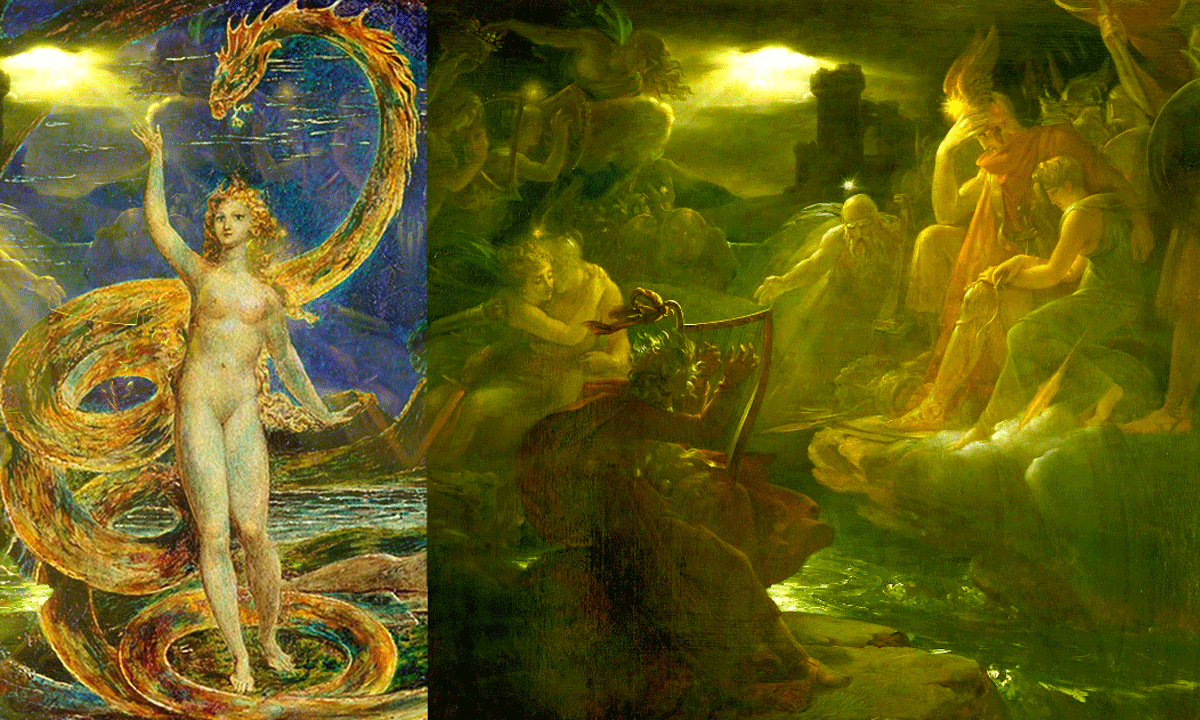
Centuries before, the Tuatha Dé Danaan had conquered Ireland. Their predecessors, the Fir-Bolg, were semi-wild magicians, very cunning, who practiced cannibalism on defeated enemies. Like the Tuatha DD, these cruel magicians belonged to the ethnic group of the Serpents, the Nāgas and the Sarpas of India. The first gods of Sumer were Serpents like them. In India, they are called Dravidians. They cohabited with humans until the Universal Flood.
Cùchulainn the Tuatha DD exterminated the cruel Fir Bolg at the battle of Maegh-Tuired or Mag Tuired — which is pronounced Moitura. Since then, it seems that the Tuatha Dé Danaan have lived in peace on the land of Ireland. Yet their legend suggests that the Tuatha Dé Danaan lived not only in Ireland, but also in another world, the Sidh or Sidhe.
Fianna Warriors
What do we know about the Sidhe? Not much. It is the promised land of the Tuatha DD. They alone knew its access, according to ancient legends. Which is not entirely true. It seems that other pre-Celtic peoples could go there too. The Fianna in particular.
In Irish Celtic mythology, the Fianna are a troop of warriors and hunters. Their adventures are recounted in the Fenian cycle, also called the Ossianic cycle. They are also described in ancient Irish manuscripts, such as O’Grady’s Silva Gadelica. According to the legend, their last leader was Finn Mac Cumaill, also spelled Finn MacCumhaill. He was the son of Cumhaill MacBaiscne, and the father of Ossian. They are supposed to have served the king of Ireland in the 3rd century.
Their role was to maintain order and levy taxes. They were sometimes called upon as mercenaries.
Ossian the Bard
The legend evokes the beautiful Niahm, blonde daughter of the King of Sidhe. This princess does not bother with morals or principles. Humans are there to distract her, and she doesn’t hesitate to.
She deceives them, she lights them, she entertains them, she uses them, she abuses them. Never accept food or drink from the blonde Niahm of the Sidhe. The slightest sip would make you her slave forever. Niahm-niahm, she swallows you up and licks it… Ask the bard Ossian what he thinks about it.
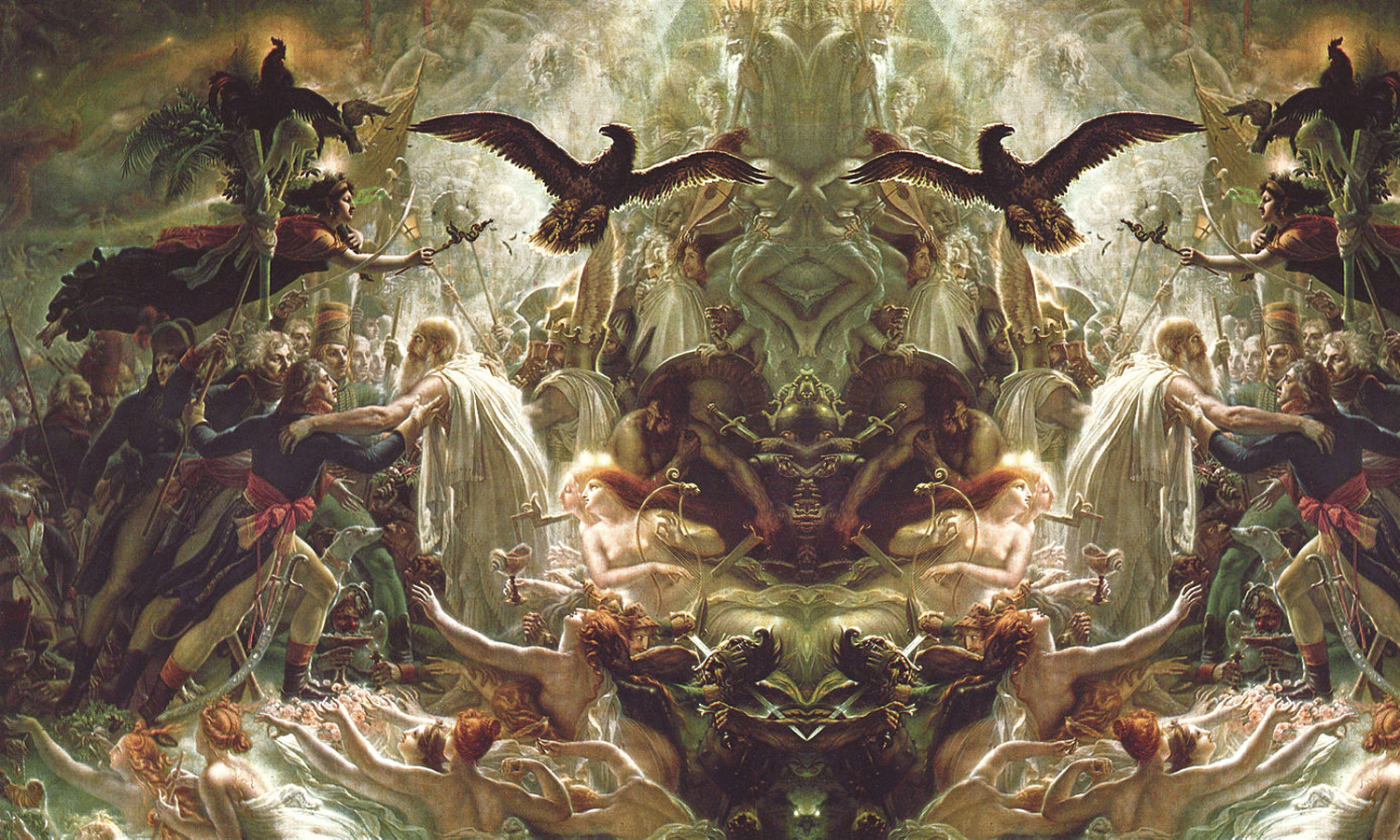
Ossian — or Oisín, “little fawn” in Irish is a Scottish bard of the 3rd century, author of a series of Gaelic poems translated into English in the 18th century, which had a huge impact throughout Europe.
Niahm the Fairy
One day, Oisín wanted to explore the moorland with the Fianna, skilled hunter warriors. During their hunt, they stopped in front of an extraordinary sight: a splendid young woman with long red hair who dances on a white mare. Her name is Niamh. She is the daughter of Manannan Mac Lir, king of Tír na ncolig. It seems that this kingdom is not on earth, but in the Sidhe.
Oisin’s eyes met those of Niamh, and they fell in love. — Come with me to Tír na ncolig, she told him. This is how together they crossed the sea to the bottom, and through a passage that Niahm opened while singing, settled in this inner kingdom.
300 years have passed on the surface of Terra, but for Oisín it was only one day. No one in Tír na ncolig was aging or falling ill. They lived moments of youth filled with happiness.
Despite the beauty of the inner earth, despite the deep love that the eternal lovers shared for each other, Oisin felt alone. He informed Niamh of his desire to see his family again. But when we leave the Enchanted Land, we pay a high price…
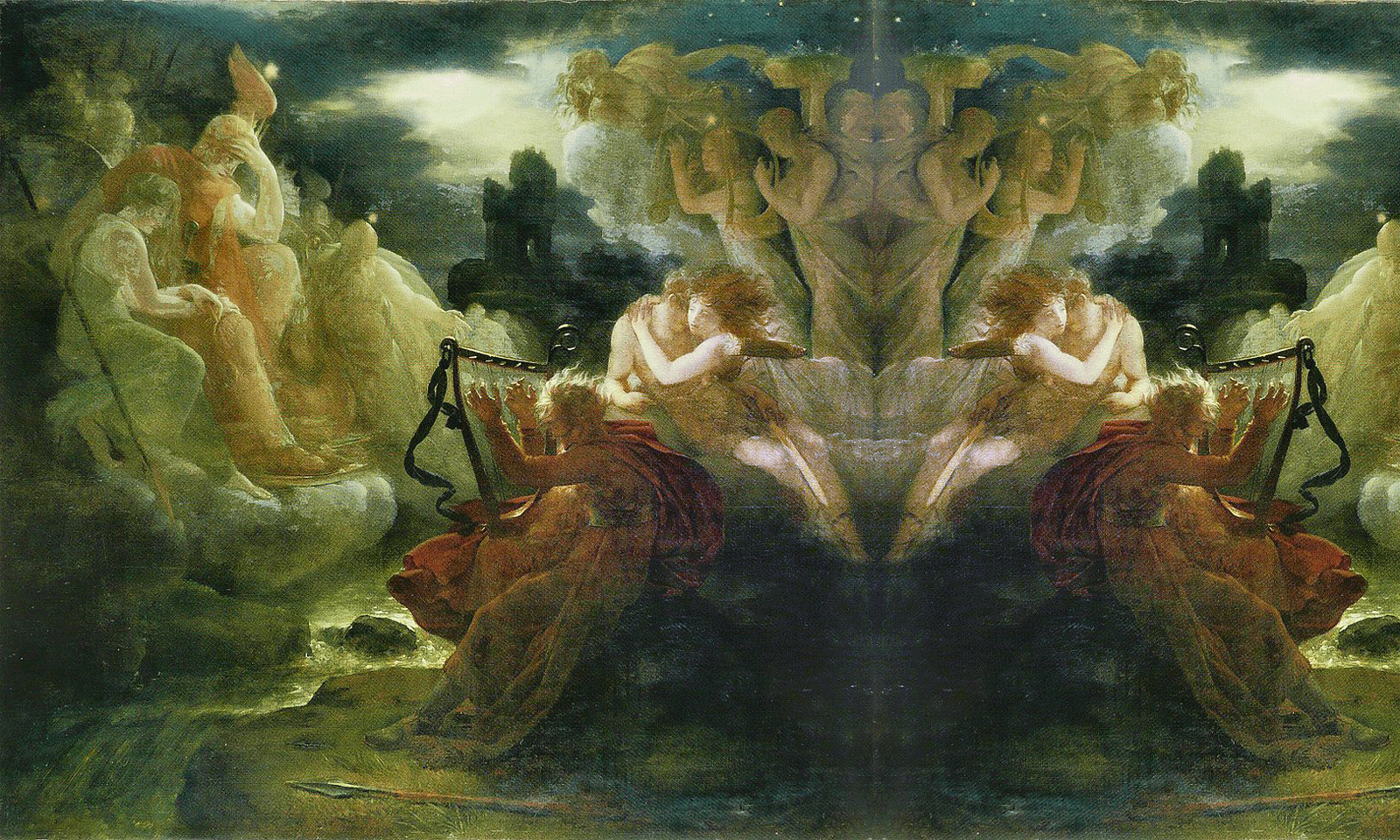
Where Is the Sidhe?
In some ways, the Sidhe appears as an imaginary place. In others, it is as real as Ireland. Some think that the Sidhe is elsewhere, on another level … It is said that the dolmens and the covered alleys are the secret entrances to the Sidhe. Would it be an underworld? Is the Sidhe the Hell, the Abzu, the Agartha? Possible… but not certain. Several authors believe that dolmens are Stargates. Or any passage to another world. Real? imaginary? astral?
An underground entrance does not necessarily lead to an underworld. See the version of Tolkien, in the Lord of the Rings. It was assumed that Tolkien, without his knowledge no doubt, found an important page in our history that he drew from the Akashic annals, while remaining convinced that he invented fables. Is it not always so for our imagination? For our dreams?
Like a blazing comet, I’ve traversed infinite nights, interstellar spaces of the imagination, voluptuousness and fear.
Very soon I realized that what we were taught in textbooks had a provincial side – unimaginative, lacking air.
Reason is intelligence with an office; imagination is intelligence with an erection.
Imagination is more important than knowledge.
Which takes nothing away, quite the opposite, from his immense talent. Authors who do like him are the most appreciated: readers also have antennas… They too know the path of Akasha … This profound authenticity could explain part of the enormous global success of this masterpiece, while the new era launches us in search of our true roots.
Underground or in Space?
Wouldn’t Gandalf be the real Merlin, the original version anyway? Merlin-Gandalf was one of the most famous sorcerers of the Bronze Age, when the Elves ruled as masters in Middle Earth, which would be the Ireland of the Tuatha. At the end of the Lord of the Rings, the Elves embark on their magical ships for other lands… in the sky.
The Lord of the Rings tells us about this relay passage in Middle-earth. The moment when the Elves-Tuatha left the earth to men. “Here comes the time for men,” said one of Tolkien’s Elves as he left Middle-earth.
In the Lord of the Rings as in the Irish legend, the Elves-Tuatha embarked for the Sidh, their secret country where they have lived since then, invisible to the eyes of men. This close kinship is not due to chance, which does not exist.
There is no chance. Everything that happens is willed.
But the Sidh does indeed exist. It could be the name that the ancient Irish gave to Nibiru, the mother ship of the Anunna.
So? We are well advanced… Is the Sidhe in the air, above the pole, in the large ship Hyperborée? Or is he hiding instead in the depths of the globe, which, according to some Russian divers, are indeed inhabited by not convenient giants…
This confusion between the depths of the earth and the great altitude of an island-ship was reproduced by a quasi-contemporary, Admiral Byrd.
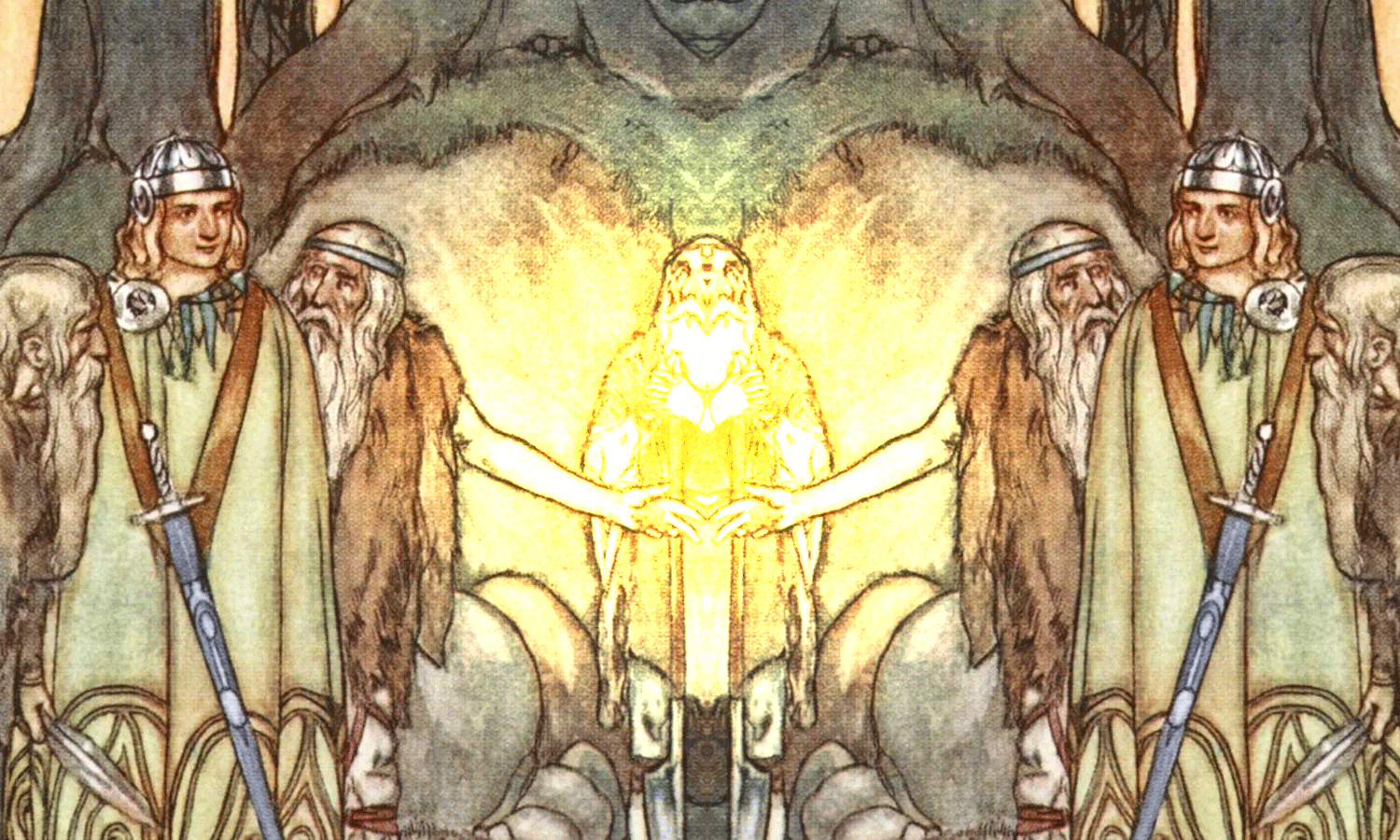
Inhabitants of Sidh
The Irish name aos sí or aes sídhe literally means ‘inhabitant of Sidh’. It refers to a people or a supernatural being linked to the Celtic mythology of the Gaels. This non-human people is sometimes confused with the deities Tuatha De Danann in medieval Gaelic literature.
Since the Middle Ages, legends and beliefs about these beings have been very important in the Gaelic regions: island of Ireland, Isle of Man, Scotland. The aes sídhe are subsequently referred to simply as sidhes, the supernatural people inhabiting the hills and ancient tumulus.
The belief and memory of the aes sídhe gradually disappear between the 17th and 19th centuries. The Gaelic people gradually confused them with the legendary creatures of Anglo-Saxon folklore, fairies and elves.
Goddesses of Ireland
The Tuatha DD are called deities because they are more than humans. But they would be better named Elves, the title they gave themselves to be them, and which is faithfully found in Tolkien.
The true divinities of Ireland are goddesses, which is why I admire them for the quality of their memory. The former gods are very kind, but their power is subject to that of the Goddesses, their mothers and our mothers to all.
Etain or Eithne, queen of Ireland, mother of all gods. Boann or Brigit, eponymous goddess of the Boyne. Morrígan, warrior goddess, patron of sovereignty. Macha, another aspect of Morrígan, responsible for the weakness of the Ulates. Her love for horses is such that she often takes their appearance.
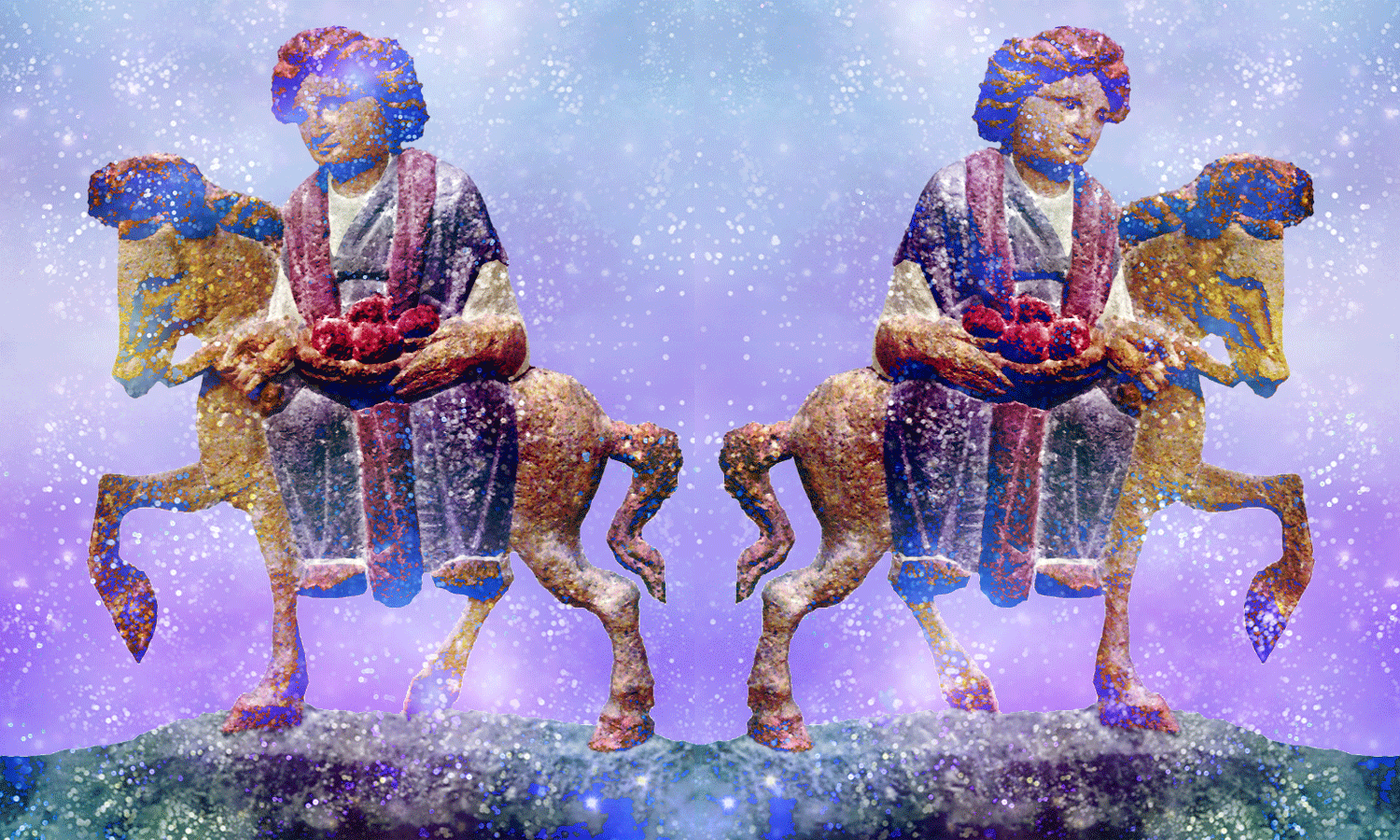
Epona = Pomone?
By this equine character, she evokes the Goddess Epona, protector of horses venerated by the Gauls. She is a very popular goddess whose representations are varied: rider sitting in a sidesaddle or straddling on a mare, nursing mare her foal…
According to Roman custom, Epona was integrated into the Roman pantheon. The Roman conquerors did this with all the gods they met among the defeated. He who believes in everything does not believe in anything, said Socrates, who loved to make fun of them.
Very clever, master Socrates…in a position when he scratches But you could have said many things overall… That the Epona of the Gauls recalls a nymph that the Romans had already joined to their pantheon. Its name resembles her very much, and not just the name. Epona and Pomone are both protective of fruits.
Pomone and Vertumne
The fruit nymph Pomone is so beautiful that all the country gods are in love with her, but she despises them. She remains indifferent to them, preferring to ignore the love of these gods to devote herself only to her garden.
According to the Metamorphoses of Ovid, the garden god Vertumne, madly in love with her, does not give up easily and resorts to disguises using his powers to approach her. He comes to her first as a grape picker, then as a keeper of a vineyard, fisherman and soldier, each time praising the merits of the god Vertumne. She continues, however, to despise him and ignore him.
In a final attempt, he comes to her under the appearance of an old woman, describing the virtues of marriage and the dangers that exist in rejecting love. But Pomone, tired of the old woman, simply refuses to listen. Finally, Vertumne decides to appear under his true face. Pomone then gives in to his advances and she falls in love with him. (source)
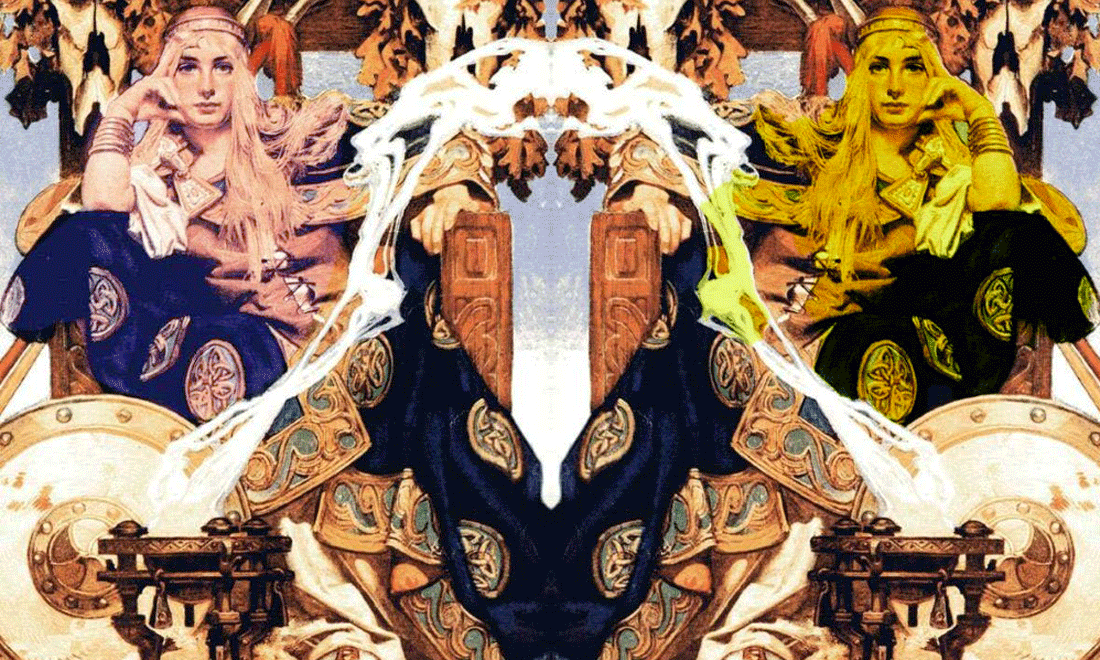 The Gate of the Sidhe
The black giants introduced agriculture and livestock,
architecture, astronomy, gastronomy,
makeup and the art of seduction.
In short, they refined the customs,
transformed the barbarians into civilized.
Before these gods, our species was wild.
But they have domesticated us. Tears of joy. Allelluia.
Creation for the Celts
- Our Celtic Origin
- Gwenwed The White World
- Cuchùlann of Ulster
- The Magic Weapon of Cuchùlann
- Cuchùlann Killed His Son
- From Cuchùlann To Kukulkan
- Cyclops Lugh
- The Roaring Sword of Lugh
- Pericles, Lug and Buddha
- Manannan Mac Lir