


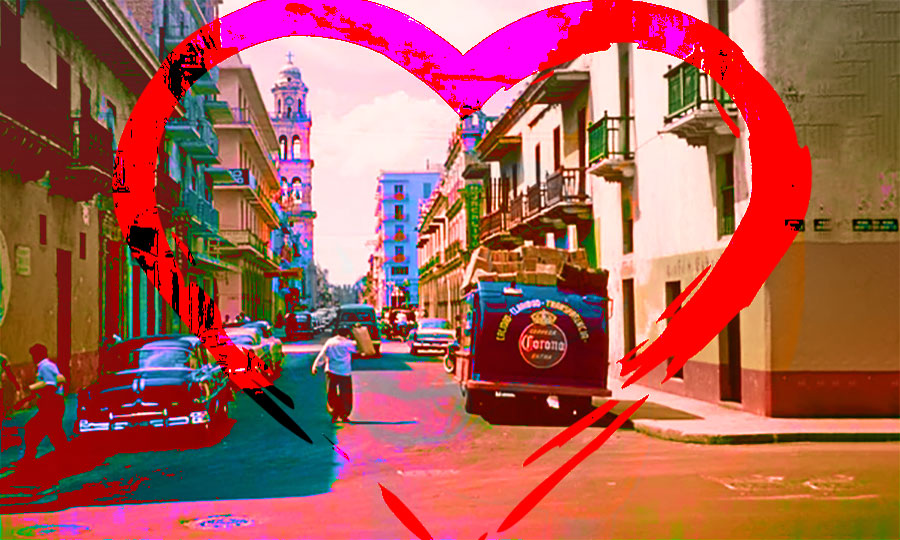
Harvey shudders. Faced with so many horrors, he questions Western society, what it has become, its place in the world. Henceforth irreducible, the great gap between the recent past and the current enslavement, deeply worries him. The lack of elegance of youth goes hand in hand with its quiet vulgarity and growing indifference to elders. Any contempt makes one despicable.
Decline
Harvey is 64 years old and lives near a big city. He sees his gentle suburb of yore — yet popular, certainly, but dignified and alive —transform into a theatre of alienation. He questions, acid but lucid, the quest for meaning in a declining world.
It is not the bitterness that pervades the old one, but a melancholic despair. And especially the refusal. He thinks of the courage—no matter how it may be — to simply say no. Accepting everything as a whole is much more convenient cowardice.
Harvey considers humanity as an inheritance value. The elder feels that if everything tilts, the need for otherness will become a fundamental necessity again.
Change it all for a life worth living. Change it all, it all, change it all.
He knows too well that the division was thought out, organized, premeditated. But what the elites have underestimated is the quiet, irreducible power of no. And without the need for theory or utopia, he guesses deep within himself that only beauty will save what remains to be saved.
For in the midst of the ruins, there still remains a citadel: that, inviolable, which each one carries within him.
Three ideals have illuminated my path and often given me the courage to face life with optimism: goodness, beauty and truth.
Before the Ruins
The sky is low, as if it weighed with all its weight on the gray roofs of this suburb that he knew otherwise. He walks slowly, his hand at the bottom of the pocket of his worn-out coat, his eyes half squinted under the harsh light of a morning without heat. A smell of burnt plastic floats, mixed with the more familiar one — but now rare—plane trees oozing after the rain.
Harvey advances on this street that he once called “his street”. It is no longer his own. It hasn’t been for a long time. He looks at her as one looks at a beloved woman who has become a stranger, repainted with loud blows of bad taste, made up excessively, rowdy.
Tags cover the walls of the school where he had learned to read. The outdated elegance of the cursive letters that he had to copy hundreds of times has given way to anonymous insults, words of hollow violence, quickly daubed with no other message than a vain cry of defiance. This refusal is not his…
He remembers. He sees the faces of laughing children, the rocky accent of the elders, the voices that carried without screaming. Today, young people pass by without seeing it, screwed earphones, shapeless joggings, absent glances or arrogant. No hello, not even a shiver of attention. It is more than a decor, a silhouette that the wind can carry away without disturbing anyone.
Useless Watchman
If he is surprised by this indifference, he rather regrets it with an acid lucidity. Respect, this old word that one no longer dares to pronounce, has dissipated like the smoke of coal, like the silence of Sunday, like the joy of being together, young and old, around the table.
Harvey does not blame only the young. No need to look for a culprit. He knows that this world has been slowly unraveled, without a crash, through compromise, successive cowardice, polite renunciation. A society that has preferred comfort to duty and the right to sacrifice. He thinks of his parents, modest but worthy, and wonders what they would think about all this. Himself, he no longer knows very well whether to be indignant or resigned.
He suddenly feels like one too many. A useless watchman. The West, he said to himself, is like that cracked bench on which he sits for a moment—worn out, abandoned, once solid and welcoming, now dirty, unsound, doomed to disappear. He thinks of Rome, of Byzantium, of all those civilizations that collapsed not under the blows of the barbarians, but long before, when they ceased to believe in themselves.
Harvey thinks of Cicero, Suetonius, Aristotle and all those elders who experienced the same lucid nostalgia. His ancient history teacher had a list of quotes, spread over several thousand years going back to ancient Sumer, from old people who complained about the young: they drive their tanks too fast in the streets, they have weird hairstyles, they wear strange foreign clothes, they have lost the virtues of their ancestors…
Humans are three kinds : the living, the dead, and those who sail on sea.
Progress? What progress?
“In the Kali Yuga, young people will have no respect for their elders and rebel against traditional values. The customs prescribed by the Vedas will be ignored.” (The Manusmṛti or Laws of Manu, prior to the Kali Yuga)ie 2000 BCE
“I see no hope for the future of our people if it depends on the frivolous youth of today, because it is certain that all young people are inconsiderate beyond words. When I was young, we were taught to be discreet and respectful of the elders, but today’s youth is extremely disrespectful and impatient of any constraint.” (Hesiod, 8th century BCE).
“What is happening with our young people? They disrespect their elders, they disobey their parents. They ignore the law. They revolt in the streets, inflamed by crazy ideas. Their morals deteriorate. What will become of them?” (Plato, The Republic, 5th century BCE)
«Young people are idealistic because they have not yet been humiliated by life, nor experienced the force of circumstances. … They think they know everything, and are always quite sure of it.’ (Aristotle, Rhetoric, 4th century BCE).
“The age of our fathers was worse than that of our grandfathers. We, their sons, are worse than they are; thus, in our turn, we will give the world an even more corrupt offspring.” (Horace, Book III of Odes, 1st century BCE).
“The young people of today think only of themselves. They have no respect for their parents or the elderly. They are impatient with any constraint. They speak as if they knew everything, and what passes for wisdom with us is madness to them.” (Peter the Hermit, 13th century).
Soulless World
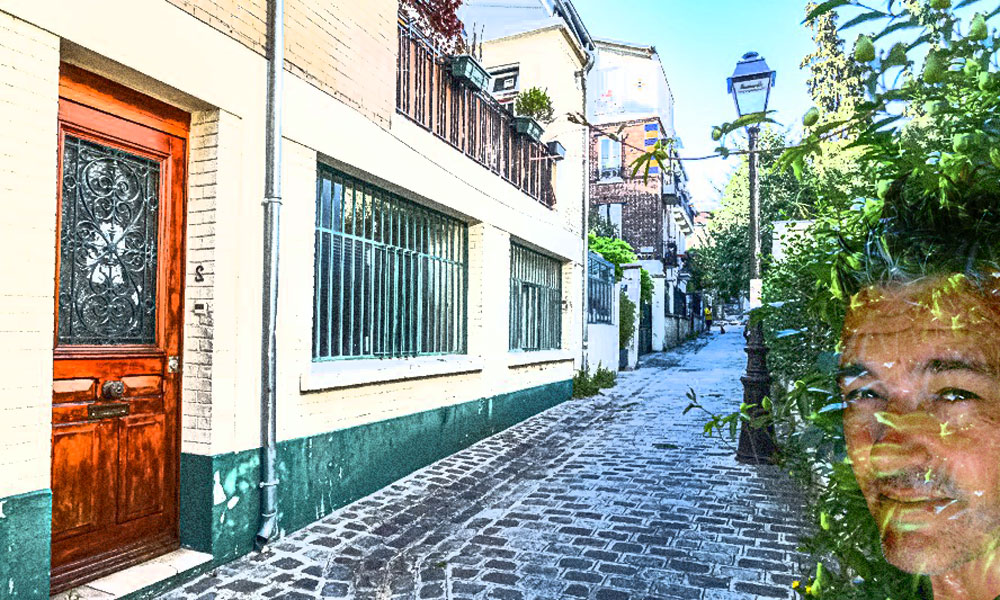
In his pocket, his fingers hold an old lighter without a flame. Hervé has not been smoking for a long time. He keeps the object out of habit, useless talisman from another time. All around him rustle a language that is not his own, not that of his memories, nor even that of his dreams. He is not afraid, no. But he no longer understands. And the worst thing, perhaps, is that no one tries to explain anymore.
It works because there is nothing else to do. He always walks, the step a little heavier, not because of fatigue, but because of that inner gravity that settles when we know too much. Not on the sidelines, but in excess. Bitterness follows him, crouching behind his dragging step, but he doesn’t give in. Not yet. It’s a walk, after all. A walk in the ruins of a world that ignores itself.
As if the world, in its frenetic race, had crossed some invisible threshold that one cannot cross without leaving their soul there. It is not anger that holds him back. It is no longer bitterness. It is a calm, vast despair, all the more profound as he no longer seeks to struggle. He is not one of those who whine. He hates the complaint. He has always held her to be a sister of defeat.
But he feels within him that something sad that floats, persistent, this mist of melancholy that rises when we look at a world we no longer believe in for too long. Not because it would have become brutal — it has always been —, but because it became empty. Hollow. A world of screens and signals, trivial emergencies and soft convictions. Nothing is held back. Nothing is weighed anymore. Everything dissolves in the instant and the abandonment.
Never forget that everything is ephemeral, so you will never be too happy in happiness, nor too sad in sorrow.
Refusal
He thinks of this word, suddenly, as a silent revolt: refusal. Say no. To this onslaught of vulgarity, to the elimination of differences, to the tyranny of entertainment, to organized amnesia.
Say no, not out of reactionary nostalgia, but out of loyalty. Loyalty to what he loved, to what he knew to be beautiful, noble, worthy.
Say no because saying yes would be a lie. He does not dream of turning back the clock—he is not fooled — but he refuses to endorse what comes next. To pretend to understand what, fundamentally, is the horror. This world that has erected excesses in freedom and indifference in tolerance.
Hervé thinks about courage. Not the one of bronze heroes, but the one, more humble, more silent, of those who hold on. Who do not give up thinking, judging, naming things. He thinks of this sentence read once in a forgotten book: “The last act of courage is to remain standing in a world on its knees.” (1)
Even alone, even old, it still holds.
(1) “Es mejor morir de pie que vivir toda una vida arrodillado”, ie “Better to die standing than live a whole life on bended knee.” ~~Emiliano Zapata (1879-1919)
All Is Signed
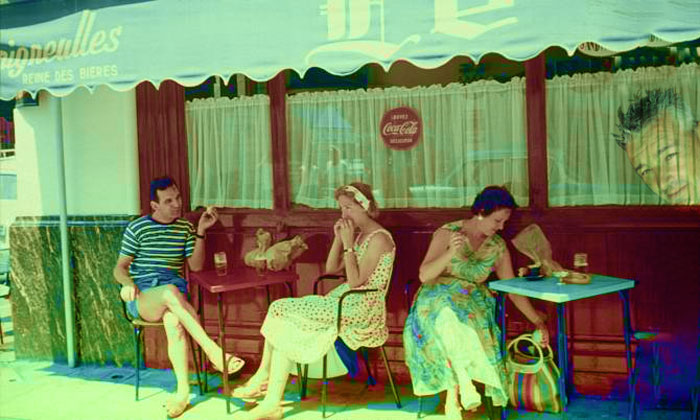
He looks up. The street of his childhood is there, disfigured, noisy, foreign. But he still sticks to it, straight, even if it serves no purpose. He does not ask that the world resemble him. He asks for nothing, in truth. He does not demand a return of order, nor a miracle. He just wants to keep the right to say no. Not to bend. Not to abandon oneself to joyful nothingness.
And in this refusal, there may be, despite everything, a form of hope. Fragile, but tenacious. An ember. A remnant of humanity.
You must not loose faith in humanity. Humanity is an ocean. If a few drops of the ocean are dirty, the ocean doesn’t become dirty.
Despite himself, without thinking about it, Harvey stopped at the corner of the street, where an old newspaper kiosk once stood, now replaced by a parcel dispenser. The consumption of each replaces information for all. Sign of the times…
The Elder observes, immobile. Absent in appearance, but in him, everything is presence. Nothing escapes him. His tense, lucid consciousness weighs every detail. The children who no longer play. The looks that avoid each other. The facades without grace. And this humanity, once palpable, carnal, vibrant in simple exchanges, he sees it only implicitly — like a residual memory in cracked concrete.
Organized Decline
Humanity, for him, is not a slogan. It is neither a project nor a conquest. It is a legacy, a fragile deposit received from his fathers and that he would have liked to pass on, intact, or at least alive. She lodges in the outstretched hand, the right word, respectful silence before the elder, modesty in the face of suffering. It is made of simple gestures, silent fidelity, discreet elegance. All that seems to have evaporated.
And yet — he feels it—that humanity there, which was believed to be outdated, will become necessary again. Not out of morality, but out of survival. He guesses that if everything wavers—and everything is already wavering—, then the need for the other will resurface, as a first obvious fact. Not the abstract, communitarized or protest-oriented ‘other’, but the other human, a companion of disarray, similar in collapse. The real, concrete otherness in the face of fear, chaos, and the immense solitude that already settles in hearts saturated with individualism.
He no longer believes in grand speeches. He knows from experience that this division, this fracture of the common fabric, is not the result of chance. He watched her too much methodically set up. Fragmenting, separating, isolating: pitting men against each other, diluting affiliations, mocking transmission, destroying landmarks—all this was intended. Thought. Organized. He is sure of it. But he also knows —small comfort— that the powerful, in their icy cynicism, have not measured the scope of a simple no.
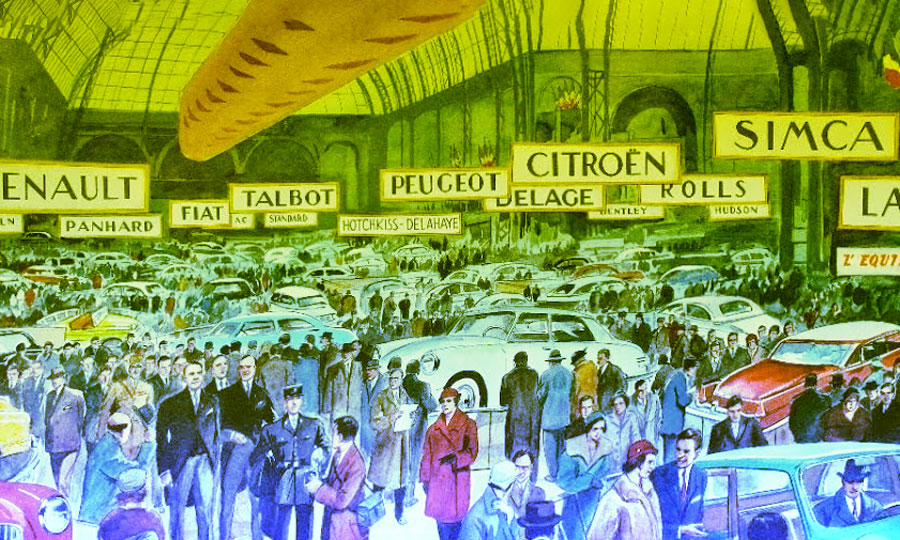
Certainty
This not that one does not scream but that one wears. This not that one experiences, this intimate, radical refusal to let oneself be taken in. Refusal of ugliness. Refusal of lies. Refusal of servitude in all its forms. Our inviolable citadel is a cathedral of silence at the heart of the clamor.
And then, amidst these thoughts that are linked like tectonic plates, an intuition floods Hervé with a limpid certainty, almost violent in its clarity: beauty is the only way out.
Not the decorative or complaisant beauty, but the one, naked, demanding, that elevates. Beauty as a counterpoison, as resistance. A light that cannot be discussed, that cannot be consumed, that cannot be traded.
He knows it now: nothing will be able to tear him away from that nucleus. Neither the ambient vulgarity, nor the organized indifference, nor the speeches of experts and managers.
Citadel
Because beauty is not governed.
It receives itself. It contemplates itself. It saves.
And he, an old man discreet in a street that no longer
recognizes him, may only have one role to play: stay.
To be that presence that says no, in silence.
And who, out of fidelity to the legacy of standing men,
still watches, somewhere in the depths of collapse, for the return of a glimmer.

Alain Aillet Sayings
- Harvey the Elder
- The Garden of Facts
- The Hardware Fault 2
- Shadows Hardware 1
- Message in a Bitter
- The Distorted I
- Star Traveler
- The Purple Ribbon
- Immortals Café
- Aurochs Ford 2
- Aurochs Ford 1
- Pech Merle
- The Sons of Light
- Eternally
- Planet E
- From Tautavel To Bozouls
- Odious Odin, Frightening Freya
- Teutonic, Archetypal Language
- Planet Babel
- Sounds And Languages
- The Golden Tongue
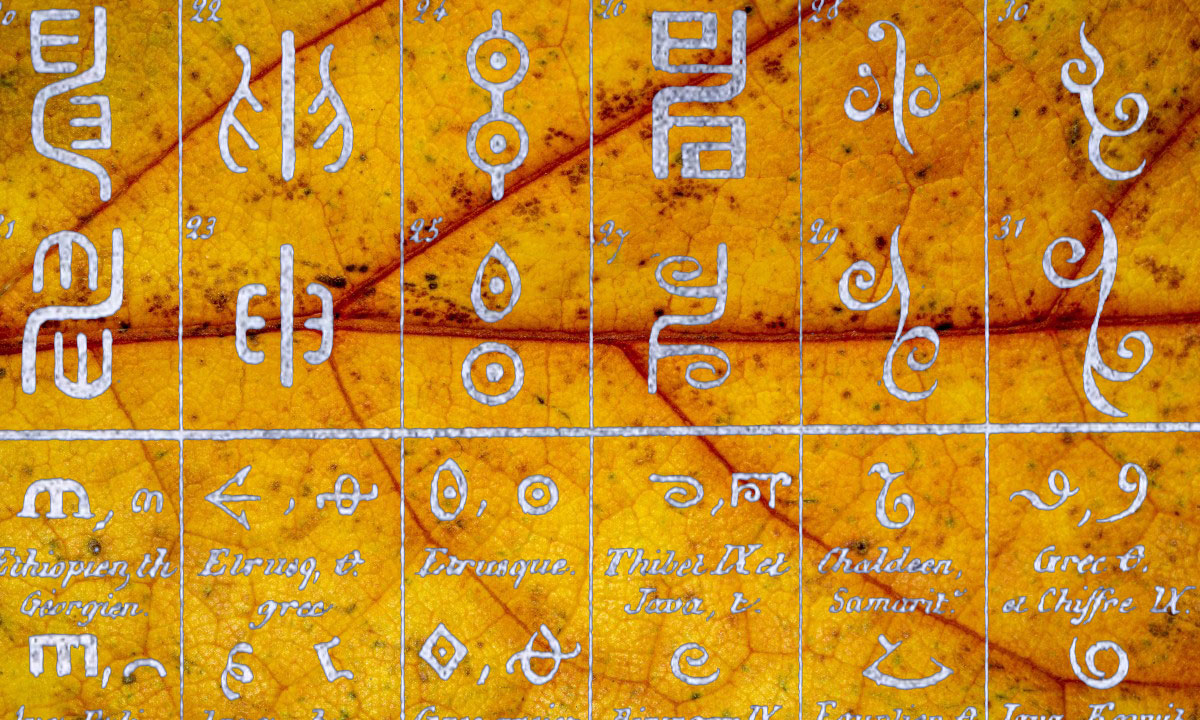
They came from the planet Ur,
like Urals. They had a mission,
they came to arrange the Earth.
(read the rest)