


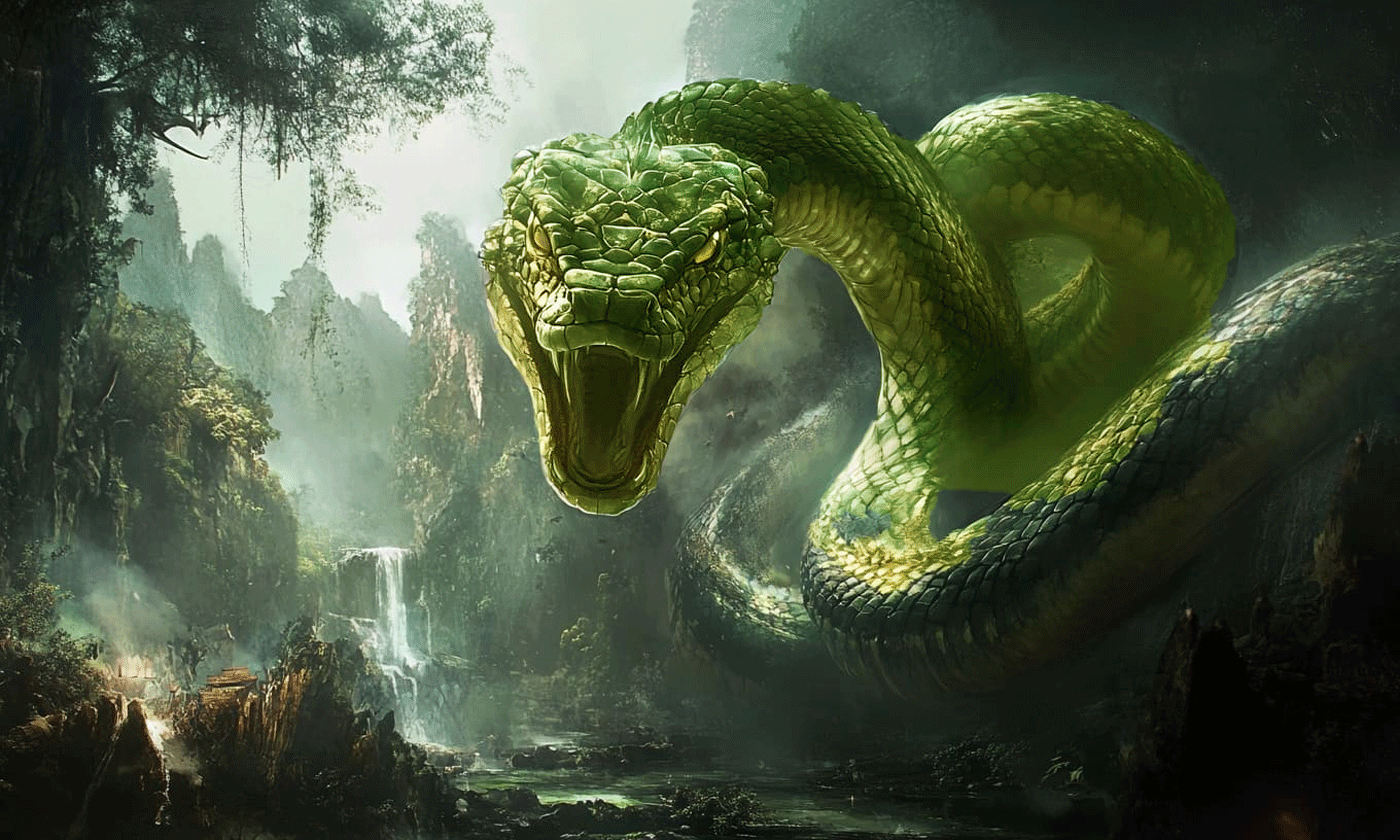
It may be that the Nāgas and the Sarpas are one and the same animal, the Serpent. Not a snake as we know it today, the Serpent. A higher being, more noble, more intelligent, more learned, more pedagogical: in a word, closer to the human — She is called Lilith in the Bible. The Snakes created her to help… and to distract them.
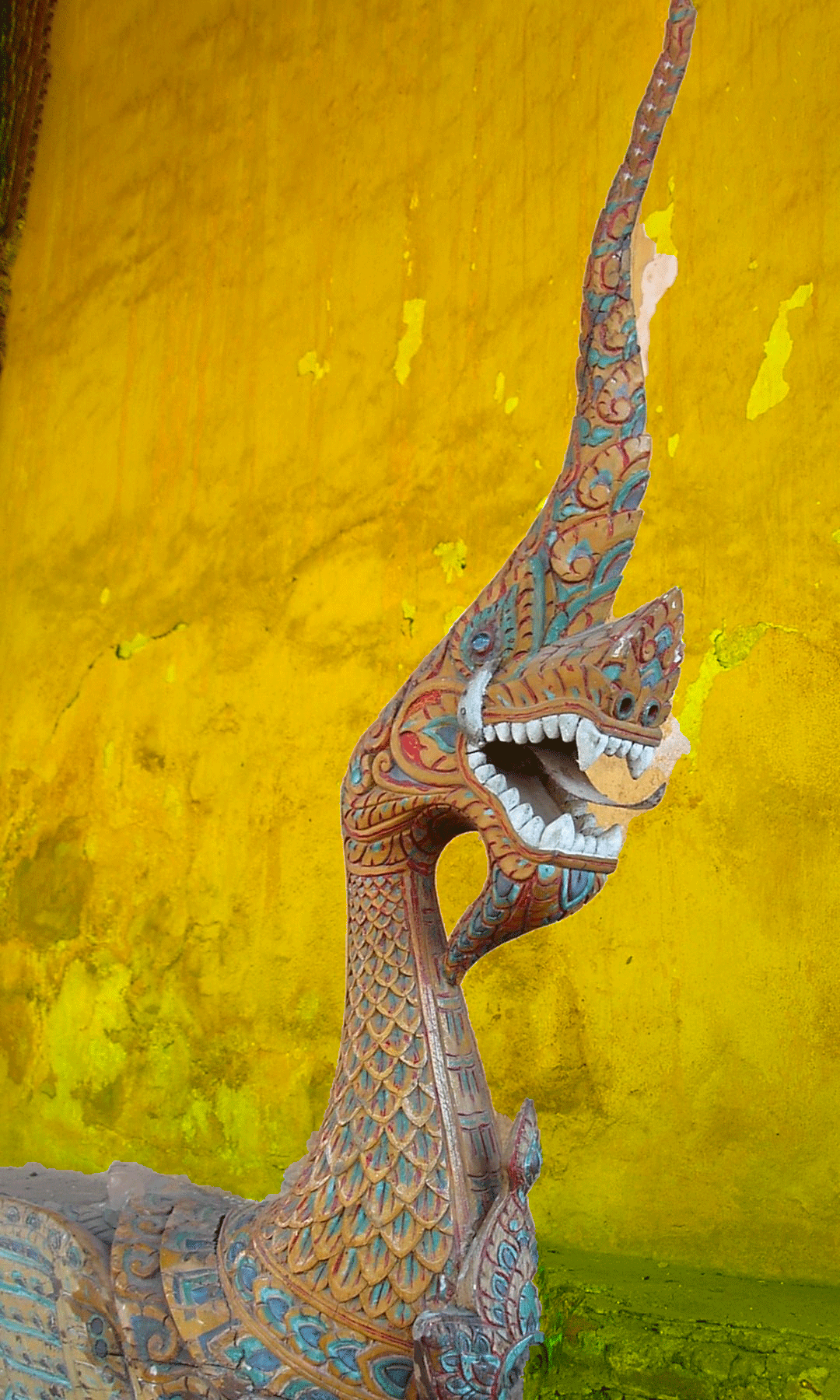 Sarpas or Seraphs?
The Nagas are semi-divine and have powers. The Sarpas are not divine and have no power.
The Nagas can take any form at will. The Sarpas do not have this power.
The Nagas have their own underworld. The Sarpas have no world of their own, so they live on earth.
Nagas are generally associated with the gods Shiva, Vishnu and the Devas. Sarpas are most often associated with demons.
They seem to have some negative qualities.
An Indian ethnic group still bears the name of Nāga, which means snake.
“The Nāgas form an ethnic group of about two and a half million people in north-eastern India.
They are distributed among the states of Nagaland (where they are the majority), Manipur, Assam, Arunachal Pradesh and near the border with Burma (Union of Myanmar).
Originating from Yunnan and Burma, their dialects are part of the Tibeto-Burmese language family.” (source)
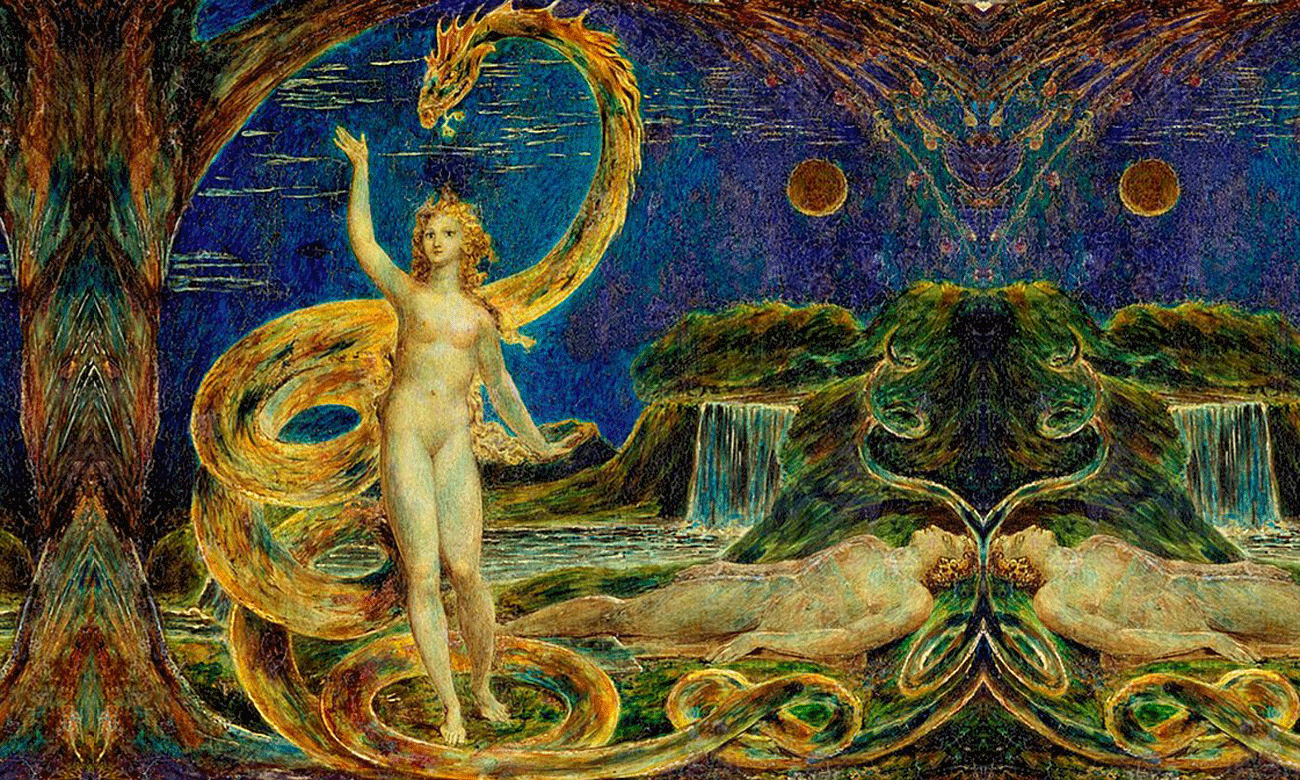 Eve et the Snake, from William Blake
The Biblical Nakash
In Hebrew, the same root Na-aa is found in the term נ ח ש (nāḥāš or nākāš). Nakash refers to the Serpent in the Bible. It notably designates the snake of Genesis, which brings about the fall of Adam and Eve. It is also the term used when the staff of Moses turns into a serpent in the Book of Exodus and in the episode of the brass serpent from the Book of Numbers.
Nakash is found 31 times in the Bible. Here are some instances:
Genesis 3.1 Nakash was the most cunning of all the animals of the field.
Genesis 49:17 Dan will be nakash on the road, viper on the path.
Exodus 4:3 And the LORD said, “Cast it on the ground.” He threw it on the ground, and it became nakash.
Numbers 21:6 The LORD sent burning nakash upon the people, and many died in Israel.
Psalms 58.4 They have a venom similar to the venom of the nakash.
Ecclesiastes 10:8 He who digs a pit shall fall into it; and he who breaks down a wall shall be bitten with the nakash.
Isaiah 27:1 The Lord will strike the leviathan, nakash fleeing, nakash tortuous and he will kill the monster of the sea.
Amos 9.3 I will order the nakash to bite them.
Nāgas and Sarpas
One and the same animal, Nāga and Sarpa? Yes and no. The Sanskrit texts give them two different names, it seems that the Nāgas and the Sarpas are not the same beings. Whether they belonged to one or the other species, or whether these two species were but one, all ancient Serpents were capable of emotions, reflection, writing and speaking.
Maybe they taught articulated language like writing to our ancestors Adam?
Nagarjuna, Prince of Snakes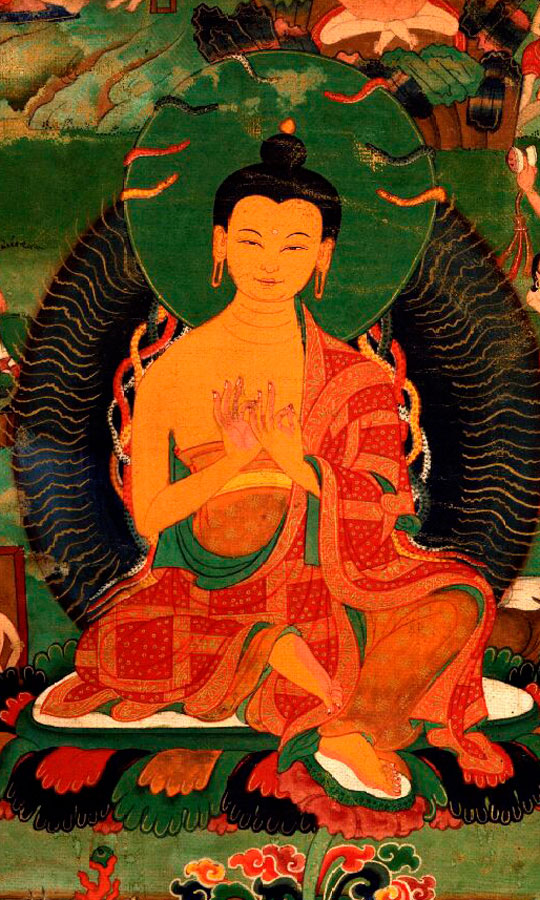
Some texts say that the Buddha, when he began to preach his doctrine, quickly understood that men were not ready to accept it entirely.
Then he entrusted the profound interpretation of reality to an audience of Nāgas, who agreed to take responsibility until humanity was ready to understand it.
The Nāgas waited seven centuries for a great sage to be able to penetrate Buddha’s first secret. Nāgārjuna, Nāga Arjuna, the Prince of Serpents, was initiated by the Snake Kings in the certainty that everything is empty (śūnya). It is he who transmitted to humans the completed Buddhist teachings, those of the Mahāyāna. (source)
A virtuoso dialectician, he indeed relies on the Buddhist corpus, made up of religious texts and a myriad of erudite commentaries, but he prefers logical rigor to the argument of glosses, which he deconstructs.
It is in the Stances du milieu par excellence, his flagship book also known as Traité du Milieu, that he defends the idea of a void with a certain consistency, always in motion, «impermanent», which he makes the spring of reality.
Nāgārjuna is the promoter of another conception of reality, based on ’emptiness’. The life of this Buddhist monk, born between the second and third centuries in the south-east of India, remains little known and widely mythical.
Nāgārjuna is however reputed to have founded the Middle School, in homage to the Middle Way advocated by the teaching of Buddha.
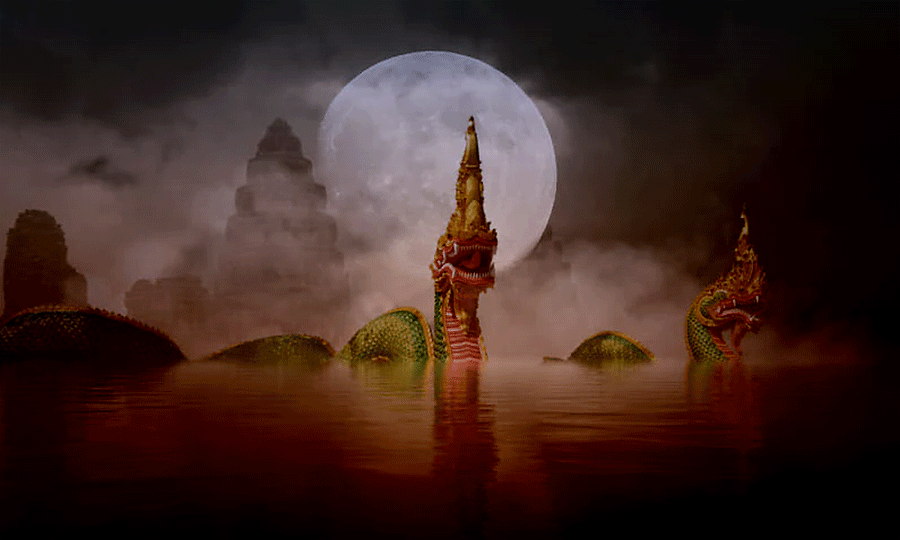 King-snake Mucalinda protecting Buddha
Buddha and Mucalinda
The motif of the snake-king Mucalinda sheltering under his hood the Buddha from bad weather is a favorite theme in Buddhist art, including outside of India. In Nepal, the Nāgas are linked to Amoghasiddhi whose canopy they adorn and to Dīpamemberkara of which they are the ‘vehicle’. They are also attached to the cult of Rāto Matsyendranāth, which is also called Avalokiteśvara.
Snake-spirits, their heads extended by a tongue darted outward, decorate the canopy of this god. They provided, it is said, the ritual lustrations of Matsyendranāth when the priests in charge of the divinity had fled at the time of the attack on king Mukunda Sena of Palpa. Vāsuki, moreover, helped King Narendradeva to introduce Matsyendranāth in Nepal (ch. VI) and many details of the feast of this god evoke snake-spirits. (source)
Nāgas in Hinduism
Stories involving the Nāgas are still part of contemporary cultural traditions in the predominantly Hindu regions of Asia, notably India, Nepal and the island of Bali. In the Hindu fold, the Nāgas are considered nature spirits, protecting bodies of water such as rivers, lakes, seas, springs and wells. If they are rightly worshipped, they bring rain, and with it wealth and fertility. However, they are also believed to cause disasters such as floods, famine and drought if they are despised by humanity’s disrespectful actions on the environment because such actions encroach upon their natural habitats.
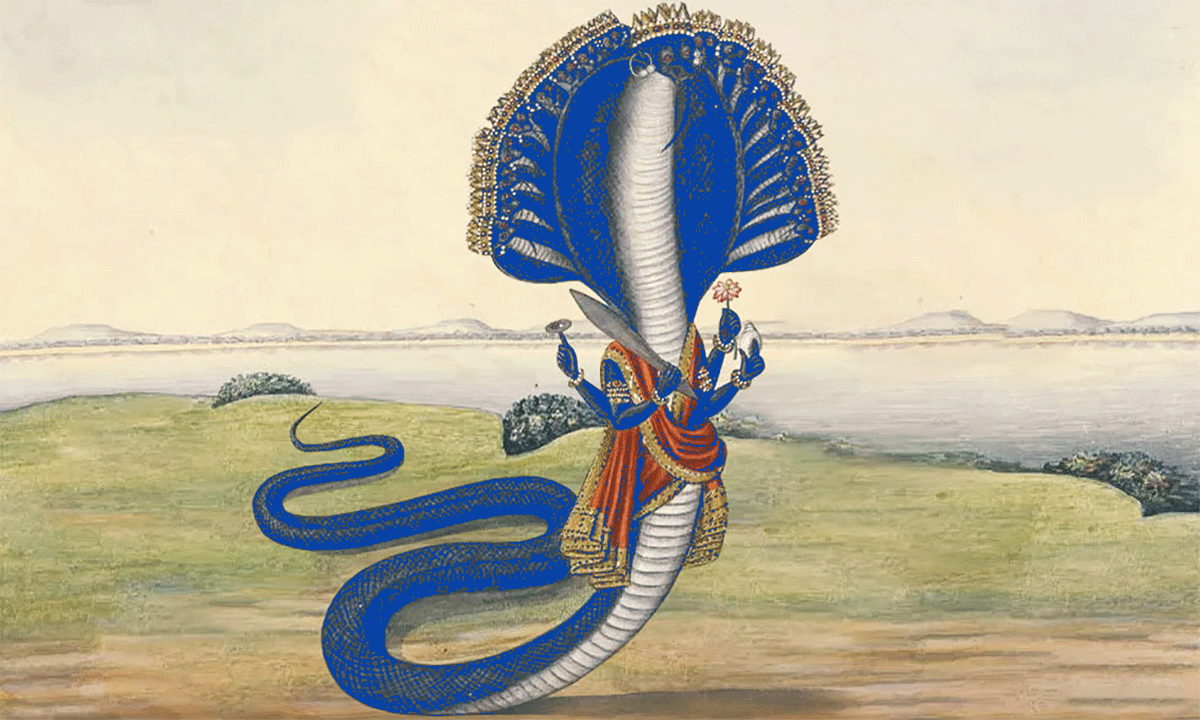 Shesha with one hundred heads
Nāga Shesha
The most famous Nāga in the Hindu tradition is undoubtedly Shesha, the most recognizable with its one hundred heads. He is often depicted with Vishnu, who sometimes shelters under him, sometimes lies down on him. In any case, Shesha stubbornly persists in reproducing. Overlapped or riding, it constantly mates and gives abundant offspring.
Balarama, brother of the incarnation of Vishnu Krishna, was sometimes identified as an incarnation of Shesha. The snake is not exclusively related to Vishnu: it is also very present in the iconography of Ganesh and Shiva.
In the case of Ganesh, the snake is often draped around his neck or belly, or wrapped around his stomach like a belt, around a hand or ankles, or wrapped in the shape of a throne. For Shiva, the snake is most often in a garland around its neck. Shiva’s lingas often show him sheltered by many heads of nagas. (source)
The lingam or linga (plural lingas) is an object in which Shiva is present; when invoked, it is conceived as a pratika, a symbol of devotion. This Sanskrit word is found with us in religious practices.
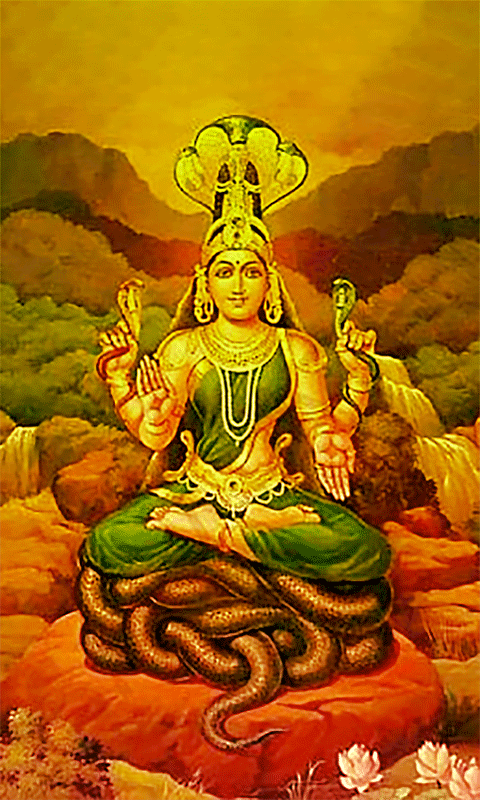
Mahabharata and Ramayana
Much of the evidence that Dravidian, Dasyus and Nagas were all different names for these people can be found in the great Epics of India, the Mahabharata and the Ramayana.
“The two Epics concern the contacts of the Aryans with this snake race, some, friendly and others, hostile. Due to the intermarriage of the Aryans with these people, a kind of atmosphere, a love-hate relationship emerges from these two great Epics.
In the Epic of the Mahabharata, a group of ‘celestial’ beings arrive by air car to attend the wedding feast of the Aryan kings: “The gods arrived in bored wagons to see the beautiful scene. Winged Suparnas, Scaly Naga, Bright Celestial Wagons, all together navigating the cloudless sky.” (source)R.A. Boulay – Le passé reptilien de l’humanité
Human Crosses
These Nagas united with Aryans, producing kings and heroes. For example, in the Rig Veda, names like Divodasa indicate that there was a cross between the Dasyus and the Aryans shortly after 1500 BCEBefore Common Era
Several ancient Hindu gods united with humans and, as at Sumer, produced a reptile mammal hybrid, the semi-divine kings who haunt the literature of Sumer and India.
Hindu literature claims that divine people descended and conducted biological experiments with apes. In fact, Hanuman, the monkey god who, with Rama, the hero of the Epic Ramayana, was conceived when the god Shiva gave a sacred cake to Anjan, the monkey. This obvious reference to a genetic experiment produced Hanuman, the super-monkey, evocative of the Enkidou from the Epic of Gilgamesh.
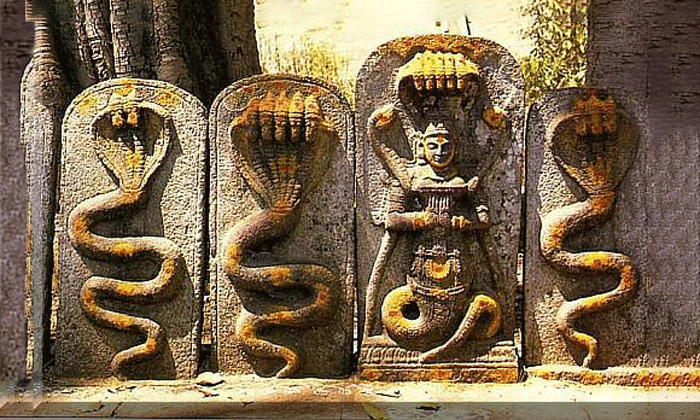
Sarpavidyā, Science of Snakes
The term ‘vidyā’ means knowledge, and Sarpavidyā is mentioned in the Śatapatha Brāhmana. Sarpavidyā is the knowledge of snakes, encompassing toxicology and remedies against poison.
Sarpavidyā is synonymous with Gārudavidyā, which concerns the control of snakes and the management of their poison. Toxicology is considered a branch derived from Sarpavidyā.
Snakes are mentioned in the Vedic literature, which emphasizes their ritual and symbolic importance. Three seers snakes are mentioned in the Rigveda. The Yajurveda and the Atharvaveda refer to snake worship and include mantras to soothe snakes.
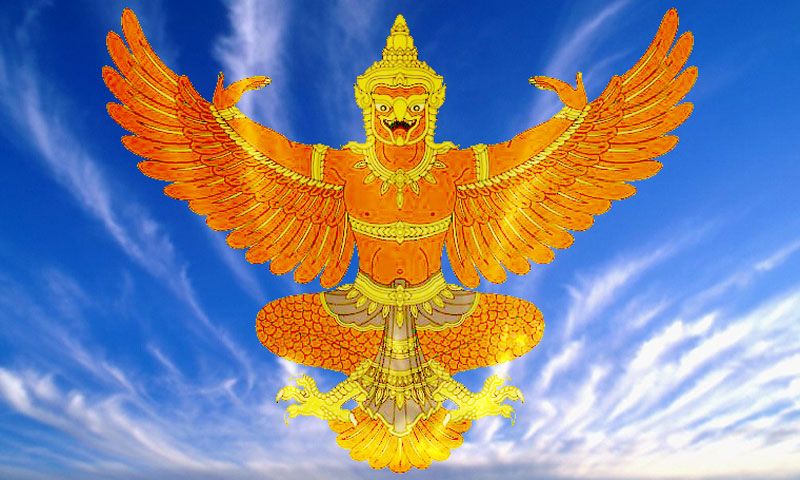
Garuda and the Snakes
Garuda’s legends illustrate the antagonism between Garuda and snakes, symbolizing control over poison. Garuda, born from Vinatā, is in conflict with the snakes, son of Kadru. The legend of Garuda shows its role in the fight against snakes and their poison. The Mahābhārata and the Rāmāyana contain accounts of this rivalry.
The Sarpasattra is an important ritual in the Mahābhārata, aimed at destroying snakes. This sacrifice was made for the first public narration of the Mahābhārata. The priests specialized in the Sarpasattra played a key role in this ritual. Many snakes were destroyed during this sacrifice.
The Purānas contain myths and knowledge about snakes and their poison. The Garuda Purāna provides methods for diagnosing and treating poisons.
Our Reptilian Masters
- The Religion of Adam
- Flying Serpents Anunnaki
- The Serpent God
- The Serpent People
- Mythical Serpent Kings
- Nagas and Sarpas
- Baal Marduk
- Nephilim
- Zohar Devils
- The Seven Archons
- Archon Ways
- The Archons By John Lash
- The Snake and the Vulture
- Predatory Archons
- Archon Yaldabaoth
- Dragons of Hades
- Head Eaters
- Archons in Questions
- Win Together
- Happy the Archon …
- Serve God and Mammon
- Wars on Marduk
- Central Earth and Back
- Infinity Limits
- Dinosaurs Are Back
- The Pre-Existing
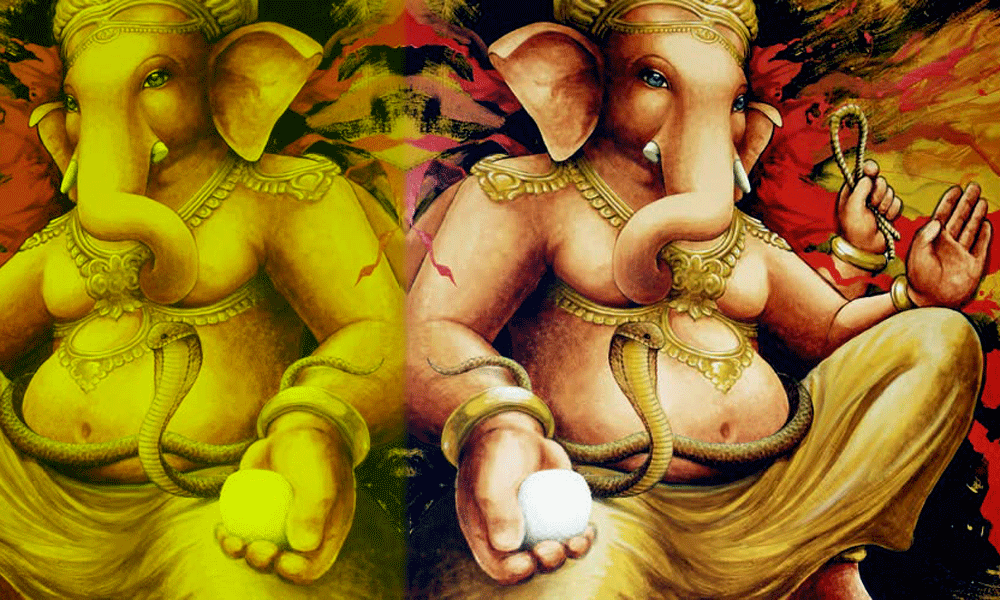 Ganesha and his Serpent